
The Legacy of Slavery in America: Economic, Social, Cultural, and Spiritual Impact
The United States is often regarded as a beacon of democracy, freedom, and innovation, celebrated for its unprecedented rise to global economic and military dominance. With a GDP exceeding $32.6 trillion, according to the U.S. Bureau of Economic Analysis (BEA) and the most powerful military on Earth, this country commands respect and influence around the world. Remember that the Gross Domestic Product, is a measure of a country's economic output and income. It's calculated by adding up the total value of all goods and services produced in a country, as well as any product taxes, and then subtracting any subsidies. The GDP is a key indicator of the health of the US economy and is used by the Federal Open Market Committee to help decide interest rates.
Beneath this triumphant narrative lies a deeply unsettling truth: much of the nation’s wealth and power was built on the backs of our African ancestors. The foundational role of slavery in shaping the modern United States is not a mere footnote in history—it is the cornerstone of the nation’s economic, political, and cultural trajectory.
Between 1619 and 1865, millions of our African ancestors endured the horrors of enslavement. Our ancestors were bought and sold as property, their labor extracted to build plantations, cultivate crops, and construct the economy of a fledgling nation. The wealth they generated enriched white landowners, funded Northern industrial expansion, and positioned the United States as a major player in global markets. The profits derived from slavery not only bolstered the economy but also laid the groundwork for the country’s industrialization and, later, its military power.
The economic structures and cultural institutions born out of slavery continue to influence American society today. Marcus Garvey, the renowned Pan-Africanist and Black nationalist leader, once observed, “A people without the knowledge of their past history, origin, and culture is like a tree without roots.” His words emphasize the importance of understanding history to make sense of the present. The wealth and power of the United States cannot be fully understood without reckoning with the legacy of slavery—a history often obscured, downplayed, or sanitized in popular narratives.
This literary offering aims to uncover and articulate the profound ways in which slavery shaped the United States’ economic development, infrastructure, and global dominance. It explores the institution’s role in fueling industrialization, financing financial institutions, and building the wealth of a nation that would become a superpower. Furthermore, it examines the enduring spiritual authority of African Americans, who have used their resilience and faith to transform their suffering into a force for liberation and justice, leading to a freer and more equitable society.
The Importance of Reckoning with History
For much of its history, the United States has struggled to come to terms with its dependence on slavery. In schools, history textbooks often frame slavery as a regional issue, confined to the antebellum South and resolved with the Civil War. This narrative fails to capture the national and global significance of slavery as a system that enriched not only Southern plantation owners but also Northern industrialists, bankers, and merchants. Northern textile mills thrived on Southern cotton, while shipping companies in New England and the Mid-Atlantic grew wealthy transporting slave-produced goods to Europe.
James Baldwin, one of the most incisive critics of American history, once wrote, “Not everything that is faced can be changed, but nothing can be changed until it is faced.” His words challenge Americans to confront the full scope of slavery’s impact on the nation. Far from being a relic of the past, slavery is deeply embedded in the structures of modern capitalism, politics, and culture. Its legacy persists in the racial wealth gap, systemic inequalities, and the ongoing struggle for racial justice.
A System Built on Forced Labor
Slavery was not just a labor system; it was a comprehensive economic engine that fueled the rise of the United States. Enslaved Africans were the cornerstone of plantation agriculture, which dominated the Southern economy and produced commodities like cotton, tobacco, and sugar—key drivers of global trade in the 18th and 19th centuries. The profits from these goods enriched the planter class and financed the industrial revolution in the North and Europe.
The institution of slavery also shaped the financial systems that undergirded the American economy. Banks issued loans to plantation owners, using enslaved people as collateral. Insurance companies developed policies to protect the "property" of slave owners, ensuring their financial stability in case of loss. These practices tied human lives directly to the growth of financial institutions, many of which exist today as major players on Wall Street.
Malcolm X succinctly captured the relationship between capitalism and racism when he said, “You can’t have capitalism without racism.” Slavery exemplifies this connection, as it relied on the systemic dehumanization of Africans to create wealth for white Americans. The commodification of human beings not only enriched individuals but also built the infrastructure and institutions that propelled the U.S. economy.
Spiritual Resilience and Liberation
While slavery dehumanized and brutalized millions, it also gave rise to an enduring legacy of spiritual resilience among African Americans. Stripped of their freedom, culture, and families, enslaved people turned to faith and spirituality as sources of strength and hope. They transformed Christianity, which was often used by slave owners to justify their oppression, into a powerful tool for resistance and liberation. The spirituals—songs like “Swing Low, Sweet Chariot” and “Go Down, Moses”—embodied their yearning for freedom and justice, offering solace in the face of unimaginable suffering.
Toni Morrison, the Nobel Prize-winning author, once remarked, “Definitions belong to the definers, not the defined.” African Americans redefined their spiritual lives to affirm their humanity and dignity, even in the face of systemic dehumanization. This spiritual authority has continued to inspire movements for justice, from abolition to the Civil Rights Movement and beyond.
Relevance to Contemporary America
The legacies of slavery are not confined to history books—they are evident in the persistent inequalities and systemic racism that plague American society today. The racial wealth gap, mass incarceration, and disparities in education, healthcare, and housing are all rooted in the structures established during slavery. Understanding this history is essential for addressing these issues and creating a more just and equitable society. As James Baldwin noted, “People are trapped in history, and history is trapped in them.” To move forward, the United States must confront the ways in which slavery shaped its economy, culture, and identity. This essay seeks to illuminate these connections, demonstrating that America’s greatness is inseparable from the contributions—and sacrifices—of enslaved Africans and their descendants. Preview of the Essay
The following sections will delve deeply into the historical, economic, and cultural dimensions of slavery's legacy. First, we will explore the historical context of slavery, tracing its origins and expansion in the United States. Next, we will examine the economic power of slavery, focusing on its role in building wealth and financial institutions. The discussion will then shift to infrastructure development and the ways in which slavery-funded projects laid the groundwork for America’s industrial and military dominance.
We will also explore the spiritual authority of African Americans, highlighting how their resilience and faith have shaped a more liberated and equitable country. Finally, the essay will reflect on the contemporary implications of slavery's legacy, including the reparations debate and ongoing struggles for racial justice. By addressing these interconnected themes, we aim to provide a comprehensive understanding of how slavery continues to shape the United States.

Historical Context of Slavery in the U.S.
The Arrival of Slavery
The transatlantic slave trade began as a way for European colonial powers to address the labor shortages in the New World. Starting in the early 16th century, European traders forcibly transported millions of Africans across the Atlantic to work on plantations in the Americas. By the time the United States came into existence, slavery was already deeply embedded in the colonial economy. In 1619, a Dutch ship brought 20 enslaved Africans to Jamestown, Virginia. This moment marked the beginning of African slavery in what would become the United States.
Initially, African laborers were treated as indentured servants, working alongside poor Europeans who eventually gained their freedom. However, by the late 17th century, laws in Virginia and other colonies codified the enslavement of Africans and their descendants as a perpetual condition. The system evolved into a brutal and dehumanizing institution that stripped enslaved individuals of their rights, families, and humanity. They were treated as chattel, bought and sold like livestock to serve the growing agricultural economy.
The enslaved brought with them a wealth of cultural traditions, spiritual practices, and agricultural expertise. Despite the dehumanizing conditions of slavery, African cultural influences persisted, blending with European traditions to shape the unique fabric of American society. James Baldwin once remarked, “The great force of history comes from the fact that we carry it within us, are unconsciously controlled by it in many ways, and history is literally present in all that we do.” Enslaved Africans, through their resilience and ingenuity, became essential contributors to the development of the American economy, even as they were denied their humanity.
Expansion of Slavery
The expansion of slavery in the United States was driven by the economic opportunities it presented, particularly in agriculture. In the 18th century, tobacco was the dominant crop in the colonies, particularly in Virginia and Maryland. Enslaved Africans provided the labor necessary to cultivate and harvest this labor-intensive crop, which became a cornerstone of the colonial economy. By the mid-1700s, the Southern colonies had fully embraced slavery as the foundation of their agricultural system.
The invention of the cotton gin in 1793 by Eli Whitney transformed the Southern economy and solidified slavery’s role in American society. This device made it possible to efficiently separate cotton fibers from seeds, dramatically increasing the profitability of cotton production. Cotton quickly became the dominant cash crop, and the South became the world’s leading cotton producer. By 1860, the United States supplied 75% of the world’s cotton, most of which was cultivated by enslaved Africans under brutal conditions.
The economic boom fueled by cotton led to the rapid expansion of slavery. As new territories in the Deep South were acquired, enslavers moved westward, bringing the institution with them. The demand for enslaved labor was so great that a domestic slave trade emerged, with enslaved people being bought and sold across state lines. Families were torn apart as individuals were forcibly relocated to meet the labor demands of plantation owners.
This period of expansion also deepened the divide between the Northern and Southern states. While the North was moving toward industrialization, the South remained heavily reliant on agriculture and slavery. However, Northern merchants, bankers, and manufacturers also profited from slavery, as they were involved in the trade of cotton, textiles, and other goods. Slavery was not just a Southern institution—it was an integral part of the national economy.
A National Institution. One of the most pervasive misconceptions about slavery is that it was a regional issue confined to the Southern states. In reality, slavery’s economic and social impact extended across the entire nation. Northern states, while not directly reliant on enslaved labor for agriculture, played a significant role in the broader system of slavery. Financial institutions in New York, Boston, and Philadelphia provided loans to Southern plantation owners, often using enslaved people as collateral. Insurance companies in the North issued policies to protect enslavers against the loss of their "property."
Shipping companies based in the North transported cotton, tobacco, and other goods produced by enslaved labor to international markets, particularly in Europe. Northern textile mills processed Southern cotton, fueling industrial growth in states like Massachusetts and Rhode Island. Even after many Northern states abolished slavery, their economies continued to benefit from the institution through their involvement in the global trade network.
The interconnected nature of slavery highlights its centrality to the development of the United States. As Ida B. Wells, a pioneering journalist and activist, once wrote, “The way to right wrongs is to turn the light of truth upon them.” Understanding slavery as a national institution, rather than a regional one, is essential to confronting its legacy.
The Human Cost of Slavery
While the economic benefits of slavery are often emphasized, it is equally important to acknowledge the immense human suffering it caused. Enslaved Africans were subjected to physical violence, psychological abuse, and social degradation. They were denied basic human rights, including the right to marry, raise their children, or even control their own bodies. Families were frequently separated as individuals were sold to different owners, creating generational trauma that persists to this day.
Resistance to slavery took many forms, from subtle acts of defiance to organized rebellions. Enslaved people sabotaged equipment, slowed their work, and used music and storytelling to preserve their cultural heritage. Some, like Nat Turner and Harriet Tubman, led revolts and escapes, inspiring others to fight for freedom. These acts of resistance demonstrated the humanity and agency of enslaved individuals, even in the face of overwhelming oppression.
Historical Memory
The legacy of slavery has been contested and debated throughout American history. For much of the 19th and 20th centuries, narratives about slavery were shaped by those who sought to minimize its brutality and downplay its economic significance. Textbooks often portrayed enslaved people as passive participants in a benevolent system, ignoring their resistance and resilience.
The Civil Rights Movement of the 20th century brought renewed attention to the history of slavery, as activists highlighted its centrality to American inequality. James Baldwin's assertion that “History is not the past. It is the present” reminds us that the effects of slavery are still felt today. From the racial wealth gap to systemic inequalities in education, housing, and healthcare, the legacy of slavery continues to shape American society.
Slavery was not just a system of forced labor; it was a comprehensive economic, social, and political institution that shaped the United States in profound ways. From its arrival in 1619 to its abolition in 1865, slavery fueled the nation’s growth, enriched its elites, and laid the groundwork for its rise to global prominence. Understanding this history is essential for addressing its enduring impacts and creating a more equitable future.
This section now provides a detailed exploration of the historical context of slavery, covering its origins, expansion, and national implications. Let me know if you’d like to proceed with the expansion of the next section, "The Economic Power of Slavery."
The Economic Power of Slavery
The economic impact of slavery on the United States cannot be overstated. By the mid-19th century, slavery was the engine driving the nation's economic growth, fueling both regional and global markets. The forced labor of enslaved Africans created immense wealth for plantation owners, merchants, industrialists, and financial institutions. This section explores how slavery shaped the U.S. economy, focusing on the cotton industry, labor productivity, and the broader financial networks that sustained the institution.
Cotton: The King of the Economy
Cotton was the most important commodity in the United States during the antebellum period, earning the moniker "King Cotton." By the 1830s, it accounted for over half of all U.S. exports, making it the backbone of the national economy. The vast majority of cotton production relied on enslaved labor, with millions of Africans toiling on plantations in the Deep South under brutal conditions.
The invention of the cotton gin in 1793 revolutionized cotton production. This machine, invented by Eli Whitney, made it possible to process cotton more efficiently, increasing demand for enslaved labor. As Southern plantations expanded, the United States became the world’s leading cotton producer, supplying raw materials to textile mills in Britain, France, and New England. By 1860, the U.S. produced 75% of the world’s cotton, and this single crop accounted for approximately 60% of all American exports. The global demand for cotton tied the United States to international markets. British textile mills relied heavily on Southern cotton, creating a transatlantic economic network rooted in slavery. The profits generated by this trade enriched plantation owners in the South, industrialists in the North, and merchants and shippers in both regions. Cotton’s dominance illustrates how slavery was not just a Southern institution but a cornerstone of the entire U.S. economy.
The Valuation of Enslaved People
Enslaved people were not only laborers but also valuable assets. By 1860, the total value of enslaved Africans in the United States exceeded $3 billion—more than the value of all railroads, factories, and banks combined. Enslaved people were often used as collateral for loans, ensuring that their financial worth was deeply embedded in the nation’s economic structures.
This commodification of human beings reveals the profound dehumanization at the heart of slavery. Enslaved individuals were treated as property to be bought, sold, and leveraged for financial gain. This system allowed plantation owners to expand their operations, purchase more land, and increase their profits. The cycle of exploitation created enormous wealth for the enslavers while perpetuating the suffering of those who labored under the system.
Malcolm X’s observation, “You can’t have capitalism without racism,” underscores the systemic nature of this economic exploitation. The institution of slavery relied on the racial hierarchy that deemed Africans inferior and justified their subjugation. This ideology not only sustained the economic system but also shaped American society in ways that persist today.
Labor Productivity and Efficiency
The productivity of enslaved labor was staggering, particularly in agriculture. Historian Edward Baptist, in his book The Half Has Never Been Told, argues that enslaved workers in the South were among the most efficient labor forces in the world, largely due to the violent and coercive methods used by enslavers. These methods included physical punishment, psychological abuse, and constant surveillance, all designed to maximize output.
The forced labor of enslaved Africans enabled plantation owners to achieve economies of scale that would have been impossible with free labor. Cotton plantations in the South produced an average of 150 pounds of cotton per worker per day—a level of productivity unmatched by other labor systems at the time. This efficiency translated into enormous profits for the enslavers and their financial backers.
Slavery and Industrialization
While the South relied heavily on agriculture, the North was becoming increasingly industrialized. This industrialization was fueled, in part, by the profits generated from slavery. Northern textile mills processed Southern cotton into finished goods, creating a lucrative manufacturing industry. Cities like Lowell, Massachusetts, became industrial hubs, producing textiles that were exported to global markets.
The interconnectedness of Northern and Southern economies demonstrates how slavery underpinned the industrial revolution in the United States. Northern merchants and bankers provided the capital needed to finance plantation operations, while Northern factories depended on the raw materials produced by enslaved labor. This symbiotic relationship ensured that the wealth generated by slavery was distributed across the nation, benefiting both regions.
The Role of Financial Institutions
Financial institutions played a critical role in sustaining the system of slavery. Banks in cities like New York, Boston, and Philadelphia issued loans to Southern planters, using enslaved people as collateral. These loans allowed planters to expand their operations, purchase more land, and increase their workforce. The profits from slavery were reinvested into Northern industries, creating a feedback loop of wealth generation.
Insurance companies also profited from slavery. They issued policies to protect slave owners against the loss of their "property" due to death, escape, or injury. This practice further dehumanized enslaved individuals, reducing their lives to financial assets to be insured and traded.
The involvement of financial institutions highlights how deeply embedded slavery was in the fabric of American capitalism. These institutions not only facilitated the growth of slavery but also benefited from its profits, laying the foundation for modern financial systems.
Global Economic Impact
The wealth generated by slavery had a profound impact on the global economy. The United States’ dominance in cotton production made it a central player in international trade. British textile mills relied on American cotton, creating economic ties between the two nations. European banks and investors also profited from the American slave economy, as they financed plantations and traded in slave-produced goods.
This global interconnectedness demonstrates how slavery was not just an American institution but a driver of international capitalism. The profits from slavery fueled industrialization in Europe and created economic dependencies that shaped global markets.
The Human Cost of Economic Growth
While slavery generated immense wealth for white Americans, it came at an incalculable human cost. Enslaved Africans endured physical violence, psychological trauma, and social degradation. Families were torn apart as individuals were bought and sold, leaving deep scars that persisted for generations.
The dehumanization of enslaved people was not only a moral atrocity but also a systemic feature of the economy. The commodification of human beings ensured that their suffering was transformed into profit, creating a system in which wealth was built on the exploitation of others.
The Legacy of Slavery in the Modern Economy
The economic structures established during slavery continue to influence the United States today. Many of the financial institutions that profited from slavery, such as banks and insurance companies, remain powerful players in the modern economy. The racial wealth gap, a direct legacy of slavery, highlights the enduring economic disparities between Black and white Americans.
Understanding the economic power of slavery is essential for addressing these inequalities. As historian Sven Beckert argues in Empire of Cotton, the global capitalist system owes much of its development to the wealth generated by enslaved labor. Recognizing this history is the first step toward creating a more equitable future.
The economic power of slavery was central to the development of the United States. From the dominance of cotton in global markets to the rise of financial institutions, the wealth generated by enslaved labor shaped the nation’s economy in profound ways. However, this economic success came at an unimaginable human cost, highlighting the moral contradictions at the heart of American capitalism. Confronting this history is essential for understanding the United States’ past and addressing the inequalities that persist today.
Slavery's Role in Building Financial Institutions
Slavery was not only a labor system; it was also a foundational pillar of the American financial industry. The wealth generated by enslaved labor fueled the rise of banks, insurance companies, and commodities markets, creating financial institutions that remain central to the U.S. economy today. This section explores the intricate relationship between slavery and finance, revealing how enslaved Africans became critical to the development of American capitalism.
Banking and Loans
Banks were among the first institutions to profit directly from slavery. In the 18th and 19th centuries, Northern banks issued loans to Southern plantation owners, often using enslaved people as collateral. These loans were used to purchase land, supplies, and additional enslaved workers, allowing plantation owners to expand their operations and increase their profits. The reliance on enslaved people as financial assets tied human lives directly to the growth of American banking.
New York City, a major financial hub, had deep ties to the slave economy. Banks like the Bank of America and Citizens’ Bank (which eventually merged into modern giants like JPMorgan Chase) financed plantations, while merchants in New York facilitated the trade of cotton, sugar, and other slave-produced goods. By 1860, an estimated 40% of all cotton revenue passed through New York’s financial institutions, illustrating the city’s dependence on slavery.
This financial relationship extended beyond the South. Northern banks actively courted Southern clients, reaping profits from the interest on loans and the sale of financial products tied to slavery. These profits were then reinvested in other sectors of the economy, fueling industrialization and infrastructure development in the North.
The Commodification of Enslaved People
Enslaved individuals were not only workers but also valuable financial assets. By 1860, the total value of enslaved people in the United States exceeded $3 billion, making them one of the largest forms of capital in the country. Plantation owners frequently mortgaged their enslaved workers to secure loans, using human lives as collateral for financial transactions.
This commodification extended to the domestic slave trade. Enslaved people were bought and sold at auctions, with their prices reflecting their age, health, and perceived productivity. The buying and selling of enslaved people created a robust market, complete with brokers, auction houses, and speculators. These transactions not only enriched slave traders but also generated fees and commissions for financial institutions.
The Role of Insurance Companies
Insurance companies also profited from slavery, offering policies to protect enslavers against the potential "loss" of their enslaved workers. Policies covered risks such as death, escape, or injury, ensuring that plantation owners could mitigate their financial risks. Prominent insurers like Aetna issued policies that explicitly listed enslaved people as property, further embedding their dehumanization into the financial system.
These insurance policies were critical to the expansion of slavery, as they provided enslavers with the financial security needed to invest in more land and labor. They also enriched insurance companies, many of which became powerful institutions that exist to this day. The involvement of the insurance industry highlights how deeply slavery was integrated into the American financial system.
Commodities Markets and Trade
The global trade in slave-produced goods, particularly cotton, sugar, and tobacco, created lucrative opportunities for commodities markets. American merchants traded these goods on international markets, generating profits that flowed back into the U.S. economy. The trade in cotton alone tied the United States to the global economy, with British textile mills relying heavily on Southern cotton.
Commodities markets in cities like New York and New Orleans became central to this trade, facilitating the buying and selling of cotton and other goods. These markets not only enriched merchants but also created opportunities for speculation and investment. The wealth generated by these markets fueled industrialization in the North and strengthened the United States’ position in global trade.
The Interconnectedness of North and South
While slavery was concentrated in the Southern states, its economic benefits were distributed across the nation. Northern merchants, bankers, and manufacturers all profited from the system, creating an interconnected economy that relied on the exploitation of enslaved Africans. This relationship challenges the notion that slavery was solely a Southern institution. As historian Sven Beckert argues in Empire of Cotton, "The violence and exploitation of slavery were essential to the rise of modern capitalism, not just in the South, but throughout the United States and Europe."
The interconnectedness of North and South reveals how slavery was a national enterprise. Northern banks financed plantations, Northern insurance companies protected enslaved property, and Northern factories processed Southern cotton. This economic symbiosis ensured that slavery’s profits enriched the entire nation, not just the Southern elite.
The Legacy of Financial Institutions
Many of the financial institutions that profited from slavery remain powerful players in the modern economy. Banks like JPMorgan Chase, Wells Fargo, and Bank of America trace their origins to firms that directly financed slavery. Similarly, insurance companies like Aetna have acknowledged their historical involvement in insuring enslaved people.
The wealth accumulated during slavery laid the foundation for the growth of these institutions, allowing them to expand into other sectors of the economy. While these companies have since diversified their operations, their histories are a stark reminder of the systemic exploitation that shaped American capitalism.
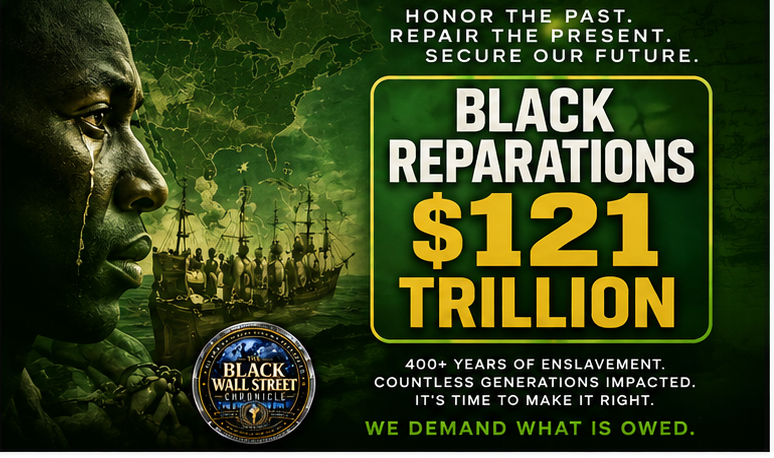
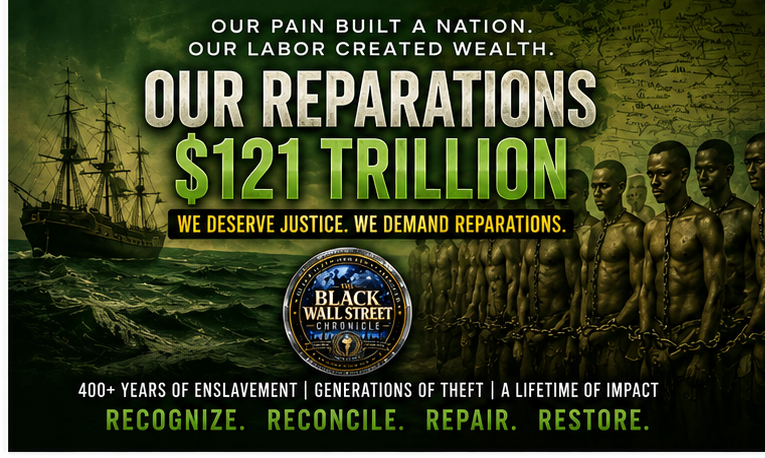
Reparations Estimated at $121 Trillion and Accountability
The financial ties between slavery and modern institutions have fueled calls for reparations. Advocates argue that the wealth generated by enslaved labor continues to benefit white Americans while disadvantaging Black communities. Addressing this legacy requires acknowledging the role of financial institutions in perpetuating slavery and exploring ways to redress its impacts.
Some institutions have taken steps toward accountability. In 2005, JPMorgan Chase publicly acknowledged its historical ties to slavery, apologizing for its role in financing plantations and using enslaved people as collateral. Other companies, including Aetna and Lehman Brothers, have faced similar scrutiny. However, these acknowledgments are often seen as symbolic, with little concrete action to address the economic disparities created by slavery.
Slavery was not just a labor system; it was a financial engine that fueled the growth of American capitalism. From banking and insurance to commodities markets, the exploitation of enslaved Africans created immense wealth that shaped the U.S. economy. Understanding the financial ties between slavery and modern institutions is essential for addressing the inequalities that persist today. As Toni Morrison observed, “Definitions belong to the definers, not the defined.” The financial institutions that defined enslaved people as assets played a central role in shaping the United States, leaving a legacy that continues to influence the nation’s economy.
Infrastructure Development Tied to Slavery
Slavery was not just a system of labor; it also funded the physical development of the United States. The wealth generated by enslaved labor financed the construction of railroads, ports, canals, and urban centers, creating the infrastructure necessary for economic growth and industrial expansion. This section explores how slavery’s profits were reinvested into America’s infrastructure, laying the groundwork for the nation’s rise as an industrial and military superpower.
The Role of Slavery in Financing Infrastructure
The economic surplus generated by slavery played a critical role in funding infrastructure projects. Enslaved labor produced commodities like cotton, sugar, and tobacco that were exported to global markets, generating immense wealth for plantation owners, merchants, and financiers. This wealth was often reinvested into infrastructure projects that connected agricultural regions to domestic and international markets.
For example, Southern planters, flush with profits from cotton production, invested heavily in railroads to transport their goods to ports. These railroads, in turn, facilitated the export of slave-produced commodities to Europe and the Northern states. Ports like Charleston, Savannah, and New Orleans thrived on this trade, becoming vital hubs for the export of cotton and the import of manufactured goods.
In the North, the profits from slavery indirectly financed infrastructure projects such as canals, bridges, and urban development. Northern merchants and bankers, who profited from the trade of Southern cotton, reinvested their earnings into industrial and transportation infrastructure, further intertwining the economies of the North and South.
The Construction of Railroads
Railroads were one of the most transformative infrastructure developments of the 19th century, and their expansion was closely tied to the wealth generated by slavery. Southern railroads, in particular, were built to connect plantations to ports, enabling the efficient transportation of cotton and other slave-produced goods to global markets.
Enslaved people were often directly involved in the construction of railroads, performing the grueling labor required to lay tracks, build bridges, and excavate tunnels. For example, enslaved workers played a significant role in the construction of the Western and Atlantic Railroad, which connected Atlanta to the Tennessee River. Their labor was essential to completing these projects quickly and cheaply, ensuring the profitability of the railroads.
In addition to their direct involvement, the profits from slavery financed the expansion of railroads in both the North and South. Northern banks and investors provided the capital needed to build railroads, often using enslaved people as collateral for loans. This relationship highlights how deeply slavery was embedded in the development of American infrastructure.
The Growth of Ports and Urban Centers
Ports were critical to the American economy during the era of slavery, serving as gateways for the export of slave-produced goods and the import of manufactured products. Southern cities like Charleston, Savannah, and New Orleans became major economic hubs, thriving on the trade of cotton, sugar, and tobacco.
New Orleans, in particular, exemplifies the connection between slavery and urban development. As one of the largest ports in the United States, New Orleans handled vast quantities of cotton and other agricultural goods produced by enslaved labor. The city’s growth was fueled by the wealth generated by this trade, with profits reinvested into infrastructure such as docks, warehouses, and transportation networks.
Northern ports also benefited from slavery, even after the abolition of the institution in those states. Cities like New York and Boston became centers of trade and finance, handling the shipping and insurance of Southern goods. These ports facilitated the flow of cotton to European markets and the importation of manufactured goods, creating a feedback loop that enriched both Northern and Southern economies.
The Role of Canals and Waterways
In addition to railroads and ports, canals and waterways played a critical role in the transportation of goods during the 19th century. The Erie Canal, completed in 1825, connected the Great Lakes to the Hudson River, facilitating the movement of goods between the Midwest and New York City. While the canal itself was not built with enslaved labor, its construction was indirectly financed by profits from slavery.
The Erie Canal allowed Northern manufacturers to access Southern cotton, which was essential to their textile mills. The wealth generated by this trade flowed back into the construction of additional infrastructure, including railroads and urban development projects. This interconnected system highlights the ways in which slavery’s profits were reinvested into the national economy.
Urban Development and Slavery’s Profits
The wealth generated by slavery also played a critical role in the development of American cities. Northern cities like New York, Boston, and Philadelphia grew rapidly during the 19th century, fueled by the trade of slave-produced goods. Merchants, bankers, and industrialists in these cities profited from the cotton trade, using their earnings to fund urban development projects such as housing, factories, and public infrastructure.
New York City, in particular, became a global financial center thanks to its connections to the slave economy. The city’s banks, insurance companies, and shipping firms thrived on the trade of Southern cotton, making New York one of the wealthiest cities in the world by the mid-19th century. The construction of buildings, roads, and public works in New York was often financed by the profits from slavery, demonstrating the far-reaching impact of the institution.
Enslaved Labor in Infrastructure Construction
In addition to financing infrastructure, enslaved people were often directly involved in its construction. From railroads and canals to bridges and buildings, enslaved workers provided the labor needed to complete these projects. Their work was grueling and dangerous, often performed under harsh conditions with little regard for their safety.
For example, enslaved workers were instrumental in the construction of the James River and Kanawha Canal in Virginia, which was designed to connect the Atlantic Ocean to the Ohio River. These workers dug trenches, built locks, and cleared land, enduring backbreaking labor that made the project possible.
The use of enslaved labor in infrastructure projects highlights the dual role of slavery in shaping the United States. Enslaved people not only generated the wealth needed to fund these projects but also provided the physical labor required to build them.
The Legacy of Slavery in Infrastructure
The infrastructure built with the wealth and labor of enslaved people laid the foundation for America’s industrial and military dominance. Railroads, ports, and canals created the transportation networks needed to move goods efficiently, while urban centers became hubs of commerce and innovation. These developments positioned the United States as a global economic power, with the capacity to expand its influence on the world stage. However, the legacy of this infrastructure is not without controversy. The wealth generated by slavery enriched white Americans while excluding Black Americans, creating economic disparities that persist today. Many of the cities and institutions that benefited from slavery’s profits have yet to fully acknowledge their historical ties to the institution.
The development of American infrastructure was deeply intertwined with the institution of slavery. The wealth generated by enslaved labor financed the construction of railroads, ports, and urban centers, creating the physical foundation for the nation’s economic growth. Enslaved people also provided the labor needed to build this infrastructure, enduring unimaginable suffering to create the systems that would propel the United States to global prominence. Recognizing slavery’s role in infrastructure development is essential for understanding the nation’s history and addressing its enduring inequalities.
Industrialization and Its Military Implications
Slavery not only fueled the economic growth of the United States but also laid the groundwork for its industrial expansion and military dominance. The wealth generated by enslaved labor created the capital necessary to fund industrialization, while the infrastructure and production systems built during the slavery era evolved into the backbone of the nation’s military-industrial complex. This section examines how the legacy of slavery shaped the United States’ transition from an agrarian economy to an industrial powerhouse and explores its role in establishing the country as a global military superpower.
Industrialization in the North The industrial revolution in the United States was driven, in large part, by the profits of slavery. Although slavery was concentrated in the South, its economic benefits extended to the North, where textile mills, factories, and other industries depended on raw materials like cotton. Northern cities like Lowell, Massachusetts, became industrial hubs, processing vast quantities of Southern cotton into finished goods that were sold domestically and internationally.
The relationship between Northern industry and Southern agriculture illustrates the interconnected nature of the U.S. economy during the antebellum period. Northern manufacturers relied on the cheap, slave-produced cotton from the South to keep their mills running, while merchants and bankers facilitated the trade of these goods. This economic symbiosis ensured that the wealth generated by slavery was reinvested into industrialization, helping the North develop the factories, railroads, and urban centers that would later give it a strategic advantage during the Civil War.
The profits from slavery-funded industries in the North also enabled technological innovation. Investments in machinery, transportation, and infrastructure were made possible by the capital accumulated through the slave economy. For example, the development of steam-powered machinery, which revolutionized manufacturing and transportation, was financed, in part, by the wealth generated from slavery. This technological progress laid the foundation for the rapid industrial expansion of the late 19th century.
The Economic Transition After the Civil War
The abolition of slavery in 1865 marked a turning point in the U.S. economy, but the wealth generated during the slavery era did not disappear. Instead, it was reinvested into new industries and markets, fueling the nation’s transition from an agrarian economy to an industrial one. Formerly enslaved people, although technically free, were often forced into exploitative labor arrangements such as sharecropping, which continued to enrich white landowners while providing a cheap labor force for the agricultural economy.
Meanwhile, the industrial base established during slavery expanded rapidly in the post-war years. The construction of transcontinental railroads, funded by Northern financiers who had profited from the cotton trade, connected the East and West coasts, opening new markets and facilitating the movement of goods and people. Factories in cities like Chicago, Pittsburgh, and Detroit began producing steel, machinery, and other goods on a massive scale, further solidifying the United States’ position as an industrial power.
This economic transition also had profound implications for the U.S. military. The industrial capacity developed during this period provided the tools and resources needed to modernize the military, laying the groundwork for its rise as a global superpower. Railroads and telegraphs improved communication and logistics, while advances in manufacturing allowed for the production of more sophisticated weaponry.
The Civil War and Military Modernization
The Civil War (1861–1865) was a pivotal moment in the United States’ industrial and military development. The Union’s victory over the Confederacy was due, in large part, to its superior industrial base, which had been funded by the wealth generated from slavery. Northern factories produced weapons, ammunition, uniforms, and other supplies at a scale that the agrarian South could not match. Railroads allowed Union forces to transport troops and supplies quickly, while naval blockades disrupted Southern trade.
The war also spurred innovation in military technology. The use of ironclad ships, rifles, and artillery marked a shift toward modern warfare, and the logistical challenges of the war prompted advances in transportation and communication. These developments provided a blueprint for the industrialization of warfare, which would become a defining feature of the 20th century.
Slavery’s Legacy in the Military-Industrial Complex
The military-industrial complex that emerged in the United States during the 20th century owes much to the foundations laid during the slavery era. The wealth generated by slavery funded the construction of factories, railroads, and other infrastructure that later became critical to the nation’s military capabilities. During World War I and World War II, these resources were mobilized to produce weapons, vehicles, and supplies on an unprecedented scale, solidifying the United States’ position as the “Arsenal of Democracy.” World War II, in particular, marked the United States’ transition to a global military superpower. Factories that had once processed cotton and other agricultural goods were repurposed to produce tanks, planes, and ships, enabling the U.S. to outproduce its rivals and achieve victory. The industrial capacity developed during this period not only secured military dominance but also transformed the U.S. economy, creating jobs and driving innovation.
The post-war era saw the continued expansion of the military-industrial complex, with defense contractors, research institutions, and government agencies collaborating to develop advanced technologies. This system, which relies on the infrastructure and industrial base established during the slavery era, remains a central feature of the U.S. economy today.
Global Military Dominance
The industrial and economic advantages built during the slavery era have allowed the United States to maintain its position as the world’s leading military power. The wealth and infrastructure generated by slavery provided the foundation for technological innovation, strategic planning, and logistical efficiency, all of which are essential to military success.
The United States’ global influence is also tied to its ability to project power through its military. From the Spanish-American War to the Cold War, the U.S. has used its industrial and military capabilities to assert its dominance on the world stage. This legacy, rooted in the wealth created by enslaved labor, highlights the enduring impact of slavery on American power and influence.
The Moral Contradictions of Slavery and Military Power
While the United States’ rise to military dominance is often celebrated, it is important to acknowledge the moral contradictions inherent in this history. The industrial and military systems that have made the U.S. a global superpower were built, in part, on the exploitation of enslaved people. This legacy raises questions about the ethical foundations of American power and the responsibilities of the nation to address its historical injustices.
James Baldwin once wrote, “It is certain, in any case, that ignorance, allied with power, is the most ferocious enemy justice can have.” Recognizing the connections between slavery, industrialization, and military power is essential for understanding the contradictions at the heart of American history.
The industrial and military power of the United States is deeply rooted in the wealth generated by slavery. From the factories and railroads built with the profits of enslaved labor to the military-industrial complex that emerged in the 20th century, the legacy of slavery continues to shape the nation’s economic and military systems. Understanding this history is not only important for acknowledging the contributions and sacrifices of enslaved Africans but also for addressing the inequalities and injustices that persist today.
The Social and Cultural Legacy of Slavery
Slavery in the United States did not just build wealth and infrastructure; it left an indelible mark on the nation’s social and cultural fabric. The institution shaped American society, embedding systemic racism and inequality that persist to this day. At the same time, the resilience, creativity, and cultural contributions of African Americans have profoundly influenced the nation’s identity, offering a counter-narrative of resistance and hope. This section examines the social hierarchies created by slavery, the enduring impacts of systemic racism, and the vibrant cultural legacy born from the African American experience.
Systemic Racism and Social Hierarchies
Slavery created a racial hierarchy that positioned white Americans as superior and Black Americans as inferior, a social structure that persisted long after emancipation. Laws, customs, and institutions were designed to maintain this hierarchy, ensuring that African Americans remained politically, socially, and economically marginalized. The legal codification of racial inequality began with slave codes and evolved into Jim Crow laws, redlining, and discriminatory practices that shaped the 20th century.
One of the most enduring legacies of slavery is the racial wealth gap. At the time of emancipation, African Americans owned almost no wealth, having been denied the opportunity to accumulate property or resources for generations. Even after emancipation, systemic barriers, including sharecropping, racial violence, and exclusion from federal programs like the New Deal, prevented Black Americans from building wealth at the same rate as their white counterparts. Today, the typical white family holds about six times the wealth of the typical Black family, a stark reminder of slavery’s economic and social impact.
Toni Morrison captured this dynamic in her novel Beloved, which examines the haunting legacy of slavery on both individuals and society. She wrote, “Definitions belong to the definers, not the defined.” This quote underscores how systemic racism shaped narratives about African Americans, casting them as inferior to justify their exploitation and exclusion.
The Psychological Impact of Slavery
The trauma of slavery extended beyond physical violence to include profound psychological harm. Enslaved people were stripped of their identities, denied the right to form stable families, and subjected to constant surveillance and punishment. This dehumanization created a lasting sense of alienation and disconnection, both for those who experienced slavery directly and for their descendants.
Generational trauma has been a recurring theme in African American literature and scholarship. James Baldwin observed, “Anyone who has ever struggled with poverty knows how extremely expensive it is to be poor.” His words highlight how the psychological and economic scars of slavery continue to affect Black Americans, perpetuating cycles of poverty and inequality.
The Creation of African American Culture
Despite the immense suffering caused by slavery, African Americans created a rich and enduring culture that continues to shape American identity. Music, art, literature, and cuisine born out of the African American experience have become defining elements of U.S. culture.
Music, in particular, has been a powerful vehicle for expression and resistance. Spirituals, blues, jazz, gospel, and hip-hop all trace their roots to the African American experience, reflecting themes of struggle, resilience, and hope. Songs like “Swing Low, Sweet Chariot” and “Go Down, Moses” carried messages of liberation and solidarity, often serving as coded communications for those seeking freedom.
The Harlem Renaissance of the 1920s marked a cultural explosion, with writers like Langston Hughes and Zora Neale Hurston using their work to celebrate Black identity and challenge racial stereotypes. This period laid the groundwork for later cultural movements, including the Black Arts Movement of the 1960s and 1970s, which sought to reclaim African American history and empower marginalized communities.
The Role of the Black Church
The Black church has been a cornerstone of African American life since slavery, serving as both a spiritual sanctuary and a center for social activism. During slavery, African Americans transformed Christianity into a source of hope and resistance, blending African spiritual traditions with biblical teachings. The church became a place where enslaved people could find community, express their faith, and organize for freedom.
After emancipation, the Black church played a critical role in advancing civil rights. Leaders like Dr. Martin Luther King Jr., who emerged from the Black church tradition, used its moral authority to challenge systemic racism and advocate for justice. King’s leadership during the Civil Rights Movement exemplified how the spiritual legacy of slavery could be harnessed to fight for social change.
Resistance and Resilience
Throughout history, African Americans have resisted the dehumanizing effects of slavery and systemic racism. This resistance has taken many forms, from rebellions like Nat Turner’s revolt in 1831 to the everyday acts of defiance by enslaved people who preserved their culture and humanity in the face of oppression. During the Civil Rights Movement, African Americans organized boycotts, marches, and sit-ins to challenge segregation and demand equal rights. The Freedom Riders, the March on Washington, and the Montgomery Bus Boycott all demonstrated the power of collective action. These movements were inspired by the legacy of resistance that began during slavery, showing how African Americans have consistently fought for liberation and justice.
Cultural Contributions and Global Influence
The cultural contributions of African Americans extend far beyond the United States. Jazz, blues, and hip-hop have become global phenomena, influencing music, fashion, and art around the world. Writers like Toni Morrison, James Baldwin, and Maya Angelou have given voice to the African American experience, shaping global discussions about race, identity, and justice.
Athletics and entertainment have also been arenas where African Americans have excelled, breaking barriers and challenging stereotypes. Figures like Jackie Robinson, Muhammad Ali, and Serena Williams have not only achieved greatness in their respective fields but also used their platforms to advocate for social change.
The Legacy of Resistance in Modern Movements
The legacy of resistance born out of slavery continues to inspire modern movements for racial justice. The Black Lives Matter movement, founded in 2013, draws on the history of African American activism to address police violence and systemic racism. Like the abolitionist and Civil Rights movements before it, Black Lives Matter uses protests, social media, and grassroots organizing to demand accountability and reform.
Contemporary artists, writers, and musicians also continue to address the legacy of slavery in their work. Films like Ava DuVernay’s 13th and Ta-Nehisi Coates’ book Between the World and Me explore how the systemic racism created by slavery persists in modern institutions. These works challenge audiences to confront the ongoing impacts of slavery and advocate for change.
The social and cultural legacy of slavery is both painful and profound. While the institution created systemic inequalities and racial hierarchies that persist to this day, it also gave rise to a rich cultural tradition that has shaped American identity and inspired global movements for justice. As James Baldwin wrote, “The place in which I'll fit will not exist until I make it.” African Americans have continuously reshaped the narrative of America, transforming their suffering into resilience, creativity, and activism. Recognizing this legacy is essential for understanding the United States’ history and building a more equitable future.
The Spiritual Authority and the Quest for Liberation
The spiritual resilience of African Americans, forged during the crucible of slavery, has been a cornerstone of the struggle for liberation and justice in the United States. Enslaved Africans brought with them diverse religious traditions and spiritual practices that, when combined with Christianity, evolved into a unique expression of faith. This spirituality not only provided solace in the face of unimaginable suffering but also became a powerful tool for resistance, advocacy, and social change. The enduring spiritual authority of African Americans has profoundly influenced the nation, leading it closer to its ideals of freedom and equality.
The Roots of African American Spirituality
When enslaved Africans were forcibly taken from their homelands, they carried with them not only their physical bodies but also their rich cultural and spiritual traditions. These traditions included a mix of animist beliefs, Islamic practices, and other spiritual systems that emphasized community, connection to ancestors, and reverence for nature. Upon their arrival in the Americas, many enslaved Africans were forcibly converted to Christianity, as enslavers sought to impose European cultural norms and religious doctrines as a means of control.
Rather than passively accepting this imposed faith, enslaved Africans reinterpreted Christianity, blending it with their existing spiritual practices to create a distinct form of worship. This syncretic spirituality emphasized themes of liberation, justice, and hope, often centering on the biblical story of Exodus, in which God delivers the Israelites from slavery in Egypt. For enslaved Africans, the promise of deliverance was both a spiritual and a political ideal, inspiring resistance to their own oppression.
One of the most enduring legacies of this spiritual synthesis was the creation of the spirituals. Songs like “Go Down, Moses” and “Swing Low, Sweet Chariot” articulated the pain of enslavement while expressing a profound hope for freedom and salvation. These songs also served as coded messages, often used to communicate plans for escape or resistance. In this way, African American spirituality became both a source of solace and a tool for survival and defiance.
The Black Church as a Sanctuary
The Black church emerged as one of the most significant institutions in African American life, providing both spiritual nourishment and a base for social and political organizing. During slavery, secret prayer meetings—known as “hush harbors”—offered enslaved people a rare opportunity to worship freely and express their faith without interference from enslavers. These gatherings often included singing, preaching, and storytelling, creating a participatory and emotionally resonant form of worship that reflected African traditions.
After emancipation, the Black church became a central institution in African American communities, serving as a sanctuary from the violence and discrimination of the broader society. Churches like the African Methodist Episcopal (AME) Church, founded by Richard Allen in 1816, played a pivotal role in providing education, social services, and leadership for newly freed African Americans. The church became a symbol of self-determination, demonstrating that African Americans could create and sustain their own institutions despite systemic oppression.
The Black church also played a critical role in fostering a sense of community and collective identity. Through worship, fellowship, and mutual aid, the church provided African Americans with a space to affirm their humanity and dignity in the face of dehumanization. This sense of community would prove vital in later struggles for civil rights and social justice.
Spirituality and the Civil Rights Movement
The Black church’s role as a moral and spiritual leader reached its zenith during the Civil Rights Movement of the 1950s and 1960s. Leaders like Dr. Martin Luther King Jr., Ralph Abernathy, and Fannie Lou Hamer drew upon the teachings of Christianity to frame the struggle for civil rights as a moral and spiritual imperative. King, in particular, used his background as a Baptist minister to articulate a vision of justice rooted in faith, equality, and nonviolence.
In his iconic “I Have a Dream” speech, King declared, “I have a dream that one day every valley shall be exalted, every hill and mountain shall be made low.” This imagery, drawn from the Bible, resonated deeply with both Black and white audiences, grounding the movement in a shared moral framework. King’s leadership demonstrated how African American spirituality could inspire not only resistance but also reconciliation, challenging the nation to live up to its highest ideals.
The Civil Rights Movement also relied heavily on music as a source of inspiration and solidarity. Songs like “We Shall Overcome” and “Ain’t Gonna Let Nobody Turn Me Around” became anthems of the movement, blending the legacy of spirituals with the urgency of social change. These songs reinforced the idea that the struggle for civil rights was not just political but also deeply spiritual, rooted in the belief that justice was both a moral and divine mandate.
Liberation Theology and Social Justice
The Black church has long been a proponent of liberation theology, a form of Christian thought that emphasizes the connection between faith and social justice. Liberation theology asserts that God is on the side of the oppressed and calls for believers to challenge systems of inequality and injustice. This theology became a driving force in the Civil Rights Movement, inspiring activists to view their struggle as part of a larger spiritual mission.
"Black Americans will become truly liberated when they realize that the Black church is not the backbone of the Black community. God and, God all by Him self is, and will always be The Backbone of the Black Nation. God has nothing to do with traditional church defication, church toxic and soffocating political flatulence or the today's black churches drip-drop community incontinence."
**Dr. Michael Carter, Sr.**
Fannie Lou Hamer, a sharecropper-turned-activist, embodied the principles of liberation theology in her fight for voting rights and racial equality. Her famous declaration, “I’m sick and tired of being sick and tired,” reflected both her personal frustration and her unwavering faith in the possibility of change. Hamer’s leadership in the Mississippi Freedom Democratic Party demonstrated how spiritual authority could empower marginalized communities to demand their rights.
Spirituality in Modern Activism
The spiritual legacy of slavery continues to shape modern movements for justice. The Black Lives Matter movement, founded in 2013, draws on the traditions of the Civil Rights Movement to address systemic racism and police violence. While not explicitly religious, Black Lives Matter often incorporates elements of African American spirituality, such as collective prayer, rituals, and songs, into its protests and gatherings.
Modern leaders like Reverend William Barber, founder of the Poor People’s Campaign, embody the ongoing connection between faith and social justice. Barber has called for a “moral revival” to address issues such as poverty, healthcare, and voting rights, framing these struggles as spiritual imperatives. His work demonstrates how the spiritual authority of African Americans continues to inspire advocacy and activism.
The Global Influence of African American Spirituality
African American spirituality has not only shaped the United States but also influenced global movements for liberation and justice. Leaders like Nelson Mandela and Desmond Tutu drew inspiration from the Civil Rights Movement, incorporating its spiritual and moral framework into the struggle against apartheid in South Africa. Similarly, the songs and sermons of the Black church have resonated with oppressed peoples around the world, serving as a source of hope and solidarity.
The global reach of African American spirituality highlights its power as a force for change. By affirming the dignity of all people and challenging systems of oppression, this spirituality transcends national boundaries, offering a universal vision of justice and liberation.
The spiritual authority of African Americans, forged during slavery and refined through generations of struggle, has been a transformative force in American history. From the hush harbors of the antebellum South to the sermons of Dr. Martin Luther King Jr. and the activism of modern leaders, this spirituality has inspired movements for justice, challenged systemic inequality, and pushed the nation closer to its ideals. As James Baldwin observed, “The world changes according to the way people see it, and if you can alter, even by a millimeter, the way people look at reality, then you can change it.” The spiritual legacy of African Americans continues to alter perceptions of justice and freedom, shaping a more equitable and liberated future
Contemporary Reflections on Slavery’s Legacy
The legacy of slavery in the United States is not confined to history books; its echoes are present in modern economic, social, and political systems. From persistent racial inequalities to ongoing debates about reparations, slavery’s impact continues to shape American society. This section examines how the legacies of slavery manifest today, exploring the racial wealth gap, systemic racism, and the fight for reparations, while highlighting efforts to acknowledge and address this historical injustice.
The Racial Wealth Gap
One of the most visible legacies of slavery is the racial wealth gap, a disparity that stems directly from the economic exploitation of African Americans during slavery and the systemic barriers that followed. At the time of emancipation in 1865, African Americans owned virtually no wealth, as they had been denied the right to accumulate property, savings, or resources for generations. The abolition of slavery did not come with economic compensation or land grants, leaving newly freed people to start their lives in poverty.
The Reconstruction period offered a brief window of opportunity, with initiatives like the Freedmen’s Bureau and efforts to redistribute land. However, the promise of “40 acres and a mule” was quickly rescinded, and most Black Americans were forced into exploitative labor arrangements like sharecropping. These systems perpetuated economic dependency and poverty, ensuring that wealth remained concentrated in the hands of white landowners.
Today, the racial wealth gap remains stark. According to the Federal Reserve’s 2022 Survey of Consumer Finances, the median wealth of a white family was approximately $285,000, compared to approximately $44,900 for a Black family. This disparity reflects not only the legacy of slavery but also decades of discriminatory policies, including redlining, segregation, and exclusion from federal programs like the GI Bill.
Economist Sandy Darity notes that the racial wealth gap is “the single best indicator of the cumulative economic effects of white supremacy in the U.S.” Addressing this gap requires acknowledging its historical roots and implementing policies to close it, such as targeted investments in education, housing, and entrepreneurship for Black communities.
Systemic Racism in Modern Institutions
Slavery laid the foundation for systemic racism, creating structures and ideologies that persist in modern institutions. Policing and the criminal justice system, for example, have roots in slave patrols and the enforcement of Black codes, which sought to control the movements and behavior of freed African Americans. Today, these historical precedents are evident in the over-policing of Black communities and the disproportionate incarceration of African Americans.
Mass incarceration is one of the clearest manifestations of systemic racism. Black Americans represented 13.5% of the U.S. population in the Census Bureau’s July 1, 2025 estimate, while Black people accounted for 38% of people held in local jails at midyear 2024, the latest preliminary jail data available as of 2026. This disparity reflects policies like the War on Drugs, which disproportionately targeted Black communities, as well as broader biases in policing, sentencing, and parole decisions.
The educational system also reflects the legacy of slavery. Historically, African Americans were denied access to education, a practice that persisted through segregation and continues to affect modern schools. Black students are more likely to attend underfunded schools, face harsher disciplinary measures, and have less access to advanced coursework than their white peers. These disparities limit opportunities for economic mobility and perpetuate cycles of inequality.
The Reparations Debate
The fight for reparations has gained renewed attention in recent years, with advocates arguing that the economic harm caused by slavery warrants direct compensation to African Americans. The concept of reparations is not new; it has been proposed in various forms since emancipation. However, it has faced significant political and social resistance, with critics questioning its feasibility and fairness.
Proponents of reparations argue that the wealth generated by enslaved labor continues to benefit white Americans while disadvantaging Black Americans. They point to historical precedents, such as German reparations to Holocaust survivors, as evidence that financial compensation can be an effective tool for addressing historical injustices.
Ta-Nehisi Coates, in his landmark essay “The Case for Reparations,” argues that reparations are not simply about money but about acknowledging the systemic harm caused by slavery and its aftermath. He writes, “Reparations are the price we must pay to see ourselves squarely.” Coates’ essay has sparked national conversations about the moral and practical dimensions of reparations, pushing the issue into the political mainstream.
Efforts to Acknowledge Slavery’s Legacy
In recent years, there has been a growing effort to acknowledge and confront the legacy of slavery. Universities, corporations, and local governments have begun to examine their historical ties to slavery and consider ways to make amends. For example, Georgetown University has implemented reparative measures for the descendants of enslaved people who were sold to fund the institution in the 19th century.
Cities like Asheville, North Carolina, and Providence, Rhode Island, have launched reparations programs aimed at addressing racial disparities in housing, education, and economic opportunities. While these initiatives fall short of direct financial compensation, they represent important steps toward reckoning with the past.
Monuments and memorials have also played a role in this reckoning. The National Memorial for Peace and Justice in Montgomery, Alabama, confronts the history of slavery and racial violence, offering a space for reflection and education. Such efforts are essential for fostering a deeper understanding of slavery’s impact and its ongoing effects.
The Role of Activism and Advocacy
Activism continues to be a driving force in the fight to address slavery’s legacy. The Black Lives Matter movement, founded in 2013, has drawn attention to the systemic racism rooted in slavery, particularly in the areas of policing and criminal justice. Through protests, policy advocacy, and public education, BLM has pushed conversations about racial justice into the mainstream.
Advocates for reparations and racial equity have also leveraged legal and political channels to advance their cause. H.R. 40, a bill introduced in Congress to study reparations, represents a significant step toward addressing the economic and social harms caused by slavery. While the bill has yet to pass, its reintroduction signals a growing willingness to confront these issues at the federal level.
The Global Perspective
The legacy of slavery extends beyond the United States, shaping global systems of inequality and oppression. The transatlantic slave trade connected Africa, the Americas, and Europe, creating a global economy that enriched colonial powers at the expense of enslaved peoples. This legacy is evident in the economic disparities between the Global North and the Global South, as well as in the enduring impacts of colonialism and imperialism.
Countries like the United Kingdom and France have also faced calls to address their involvement in the slave trade. While some governments have issued apologies or established memorials, efforts to provide reparations have been limited. The global nature of slavery’s legacy highlights the need for international collaboration in addressing its effects.
The Path Forward
Addressing slavery’s legacy requires both acknowledgment and action. Education plays a critical role in this process, as understanding the history of slavery and its impacts is essential for building a more equitable society. Schools, museums, and cultural institutions must ensure that slavery is presented accurately and comprehensively, challenging narratives that minimize its significance.
Policy changes are also essential. Investments in education, healthcare, housing, and economic development for Black communities can help address the disparities created by slavery and systemic racism. Reparations, whether in the form of direct payments or community-based programs, represent a moral and practical step toward redress.
Finally, collective reflection is necessary to confront the moral contradictions at the heart of American history. As James Baldwin wrote, “Not everything that is faced can be changed, but nothing can be changed until it is faced.” Reckoning with the legacy of slavery requires a willingness to confront uncomfortable truths and work toward a more just future.
The legacy of slavery is not confined to the past; it is woven into the fabric of modern American life. From the racial wealth gap to systemic racism, the effects of slavery continue to shape the United States in profound ways. However, efforts to acknowledge and address this legacy—through reparations, activism, and education—offer a path toward reconciliation and justice. By confronting this history, the United States can begin to fulfill its promise of liberty and equality for all.
This expanded section examines the contemporary implications of slavery’s legacy, highlighting ongoing struggles and potential pathways for addressing historical injustices. Let me know if you’d like me to refine any section or proceed with concluding the entire essay!
The story of the United States is inextricably linked to the institution of slavery, which played a foundational role in shaping the nation’s economy, infrastructure, culture, and global influence. While the rhetoric of freedom and equality has long been central to the American identity, the country’s history tells a more complex and contradictory tale. The wealth, industrial power, and military dominance that define the United States today were built, in part, on the forced labor of enslaved Africans, whose contributions have often been overlooked or diminished.
This essay has explored the multifaceted legacy of slavery, examining its profound impact on the United States from its earliest days to the present. By tracing the connections between slavery and economic growth, financial institutions, industrialization, infrastructure, cultural contributions, and contemporary inequalities, we have uncovered the ways in which this dark chapter in history continues to influence American society. As James Baldwin observed, “History is not the past. It is the present. We carry our history with us. We are our history.”
Slavery as the Foundation of American Power
At its core, slavery was an economic system designed to extract maximum profit from human suffering. The forced labor of enslaved Africans created the agricultural wealth that powered the U.S. economy, particularly through the production of cotton, sugar, and tobacco. These commodities were not just critical to the Southern economy but also to the industrial and financial systems of the North and Europe. The wealth generated by slavery laid the foundation for the United States’ rise as a global economic power.
Financial institutions, including banks and insurance companies, profited directly from slavery, providing the capital necessary to expand plantations and secure profits. The infrastructure that connected plantations to markets—railroads, ports, and canals—was built with the wealth generated by enslaved labor. Even after emancipation, the economic structures created during slavery continued to benefit white Americans while excluding Black Americans, perpetuating racial inequality.
Cultural Contributions and Spiritual Resilience
Despite the dehumanization and suffering caused by slavery, African Americans preserved and transformed their cultural and spiritual traditions, creating a vibrant and enduring legacy. From the spirituals sung in secret gatherings to the jazz, blues, and hip-hop that dominate global music today, African American culture has profoundly shaped the identity of the United States. These cultural contributions reflect the resilience and creativity of a people who refused to be defined by their oppression.
The spiritual authority of African Americans, rooted in the experience of slavery, has also been a powerful force for social change. The Black church, born out of the need for sanctuary and community, became a center of resistance and activism, leading movements for abolition, civil rights, and social justice. Leaders like Dr. Martin Luther King Jr. demonstrated how faith and morality could be harnessed to challenge systemic injustice and inspire collective action.
The Enduring Impact of Systemic Racism
The legacy of slavery is not confined to history—it is embedded in the systemic racism that continues to shape American institutions. The racial wealth gap, mass incarceration, and disparities in education, healthcare, and housing are all rooted in the structures created during slavery and perpetuated through policies like segregation, redlining, and the War on Drugs. These systemic inequalities underscore the need for comprehensive efforts to address the lingering effects of slavery.
Activists and scholars have highlighted the connections between historical injustice and contemporary inequality, advocating for reparations and systemic reforms. As Ta-Nehisi Coates wrote in his essay “The Case for Reparations,” “The idea of reparations is frightening not simply because we might lack the ability to pay. The idea of reparations threatens something much deeper—America’s heritage, history, and standing in the world.” Addressing the legacy of slavery requires confronting uncomfortable truths about the nation’s past and taking bold steps to build a more equitable future.
Lessons from History
The history of slavery offers critical lessons about the contradictions at the heart of American society. While the United States was founded on principles of liberty and equality, its early economic and political systems were built on the exploitation of enslaved people. This contradiction has shaped the nation’s identity, creating tensions that continue to play out in debates over race, justice, and democracy.
Understanding this history is essential for addressing its consequences. Education plays a key role in this process, as teaching the full story of slavery and its legacy can help foster empathy, understanding, and a commitment to justice. Efforts to include more comprehensive narratives in schools, museums, and public discourse represent an important step toward reckoning with the past.
Pathways Toward Reconciliation and Justice
Reckoning with the legacy of slavery requires both acknowledgment and action. Acknowledgment involves recognizing the central role of slavery in shaping the United States and honoring the contributions and sacrifices of enslaved Africans. This can take the form of public memorials, official apologies, and institutional reckoning, such as the initiatives undertaken by universities and corporations to examine their historical ties to slavery.
Action involves addressing the systemic inequalities created by slavery through policies and programs that promote racial equity. Reparations, whether in the form of direct payments, community investments, or educational initiatives, represent a moral and practical step toward redress. Addressing the racial wealth gap, reforming the criminal justice system, and ensuring equal access to education and healthcare are also essential components of this effort.
A Vision for the Future
As the United States continues to grapple with its history, there is an opportunity to create a more inclusive and equitable society. The resilience and contributions of African Americans, despite centuries of oppression, offer a model for building a nation that lives up to its ideals. By confronting the legacy of slavery and working toward justice, the United States can move closer to fulfilling its promise of liberty and equality for all.
James Baldwin’s words remind us of the urgency of this task: “Not everything that is faced can be changed, but nothing can be changed until it is faced.” The history of slavery challenges us to face uncomfortable truths and to commit to the work of reconciliation and transformation. This is not just a moral imperative but also an opportunity to create a stronger, more unified nation.
Slavery was not merely a chapter in American history; it was the foundation upon which the nation was built. Its economic, social, and cultural impacts continue to shape the United States, influencing everything from wealth distribution to racial inequality to national identity. Reckoning with this legacy requires a commitment to understanding, acknowledging, and addressing the ongoing effects of slavery.
Project 2030
$121 Trillion in Black Reparations Allocation Breakdown
Breaking down reparations estimated at $121 trillion requires a detailed examination of the potential areas of allocation, the mechanisms for distribution, and the populations eligible for these funds. Here's a comprehensive breakdown, itemized to reflect various categories where reparations might be applied.
1. Direct Cash Payments: $31 Trillion
Purpose: Provide immediate financial restitution to eligible African American descendants of enslaved people.
Amount per individual: Assuming 40 million eligible recipients (descendants of enslaved Africans in the U.S.), each person would receive approximately $775,000.
Distribution plan:
Payments spread over 10–20 years to ensure economic stability and sustainability. Options for lump sums, annual disbursements, or lifetime stipends. Federal agency oversight to prevent predatory financial practices targeting recipients.
2\. Education Investment: $20 Trillion
Purpose: Address systemic inequities in education and create long-term opportunities for Black communities.
Allocations:
$5 trillion for free tuition and fees at public colleges, universities, and vocational schools for African American students. $5 trillion to fund Historically Black Colleges and Universities (HBCUs), providing endowments, scholarships, and infrastructure improvements. $5 trillion for K-12 public school improvements in predominantly Black districts (teacher salaries, facilities, and resources). $5 trillion for educational grants, mentorship programs, and loan forgiveness for African Americans.
3\. Housing and Property Ownership: $15 Trillion
Purpose: Redress historical housing discrimination and promote homeownership.
Allocations:
$7 trillion for down payment assistance programs, covering up to 50% of the cost for eligible recipients purchasing homes. $5 trillion to address redlining and housing discrimination through investments in predominantly Black neighborhoods (infrastructure, parks, public services). $3 trillion to fund property tax relief and home repair grants for African Americans in disadvantaged areas.
4\. Economic Development: $15 Trillion
Purpose: Build generational wealth through business ownership and community investment. Allocations:
$8 trillion for small business grants and loans specifically for African American entrepreneurs. $5 trillion for creating and funding Black-owned banks and credit unions to improve access to capital. $2 trillion for cooperative economic initiatives, such as Black-owned community centers, grocery stores, and housing cooperatives.
5\. Healthcare Equity: $10 Trillion Purpose: Address health disparities rooted in systemic racism and provide free healthcare services.
Allocations:
$6 trillion for universal healthcare coverage for African Americans, including preventive care, mental health services, and maternal health programs. $2 trillion for hospitals and clinics in underserved Black communities. $2 trillion for medical education and scholarships to increase the number of Black healthcare providers.
6\. Criminal Justice and Legal Reforms: $10 Trillion
Purpose: Dismantle systemic racism in the criminal justice system and fund restorative justice initiatives.
Allocations:
$5 trillion for legal aid and public defenders to ensure equitable access to justice for African Americans. $3 trillion for community-based restorative justice programs. $2 trillion to address mass incarceration, including initiatives to expunge records for nonviolent offenses and reintegration programs for formerly incarcerated individuals.
7\. Cultural and Historical Preservation: $5 Trillion
Purpose: Recognize and honor the contributions and history of African Americans.
Allocations:
$2 trillion to fund museums, memorials, and cultural centers dedicated to African American history. $1 trillion for grants to preserve historic Black neighborhoods, landmarks, and cultural artifacts. $1 trillion to fund the arts, including support for Black artists, filmmakers, writers, and musicians. $1 trillion for research and documentation projects to ensure African American history is accurately represented in schools and media.
8\. Land Redistribution and Agricultural Grants: $5 Trillion
Purpose: Address historical land dispossession and promote agricultural independence.
Allocations:
$3 trillion to provide land grants to African Americans for farming, housing, or community development. $2 trillion to fund agricultural cooperatives, sustainable farming initiatives, and rural development programs in Black communities.
9\. Reparative Savings and Investment Fund: $5 Trillion
Purpose: Ensure long-term financial stability and growth for Black communities.
Allocations:
$3 trillion to create a trust fund managed by Black-led financial institutions, providing annual dividends to African Americans. $2 trillion for investment in Black-led non-profits, think tanks, and advocacy organizations focusing on racial equity and systemic reform.
10\. Global Solidarity and Diaspora Investment: $5 Trillion
Purpose: Strengthen ties with the African diaspora and support international development in Africa and the Caribbean.
Allocations:
$3 trillion for development projects in African nations, including education, infrastructure, and healthcare. $2 trillion for initiatives that promote cultural exchange, trade, and partnerships between the U.S. and the African diaspora.
Summary of $121 Trillion in Reparations Allocations
| CategoryAllocationPurpose | ||
| Direct Cash Payments | $31 Trillion | Financial restitution to descendants of enslaved Africans |
| Education Investment | $20 Trillion | Free education, funding for HBCUs, K-12 improvements, and loan forgiveness |
| Housing and Property Ownership | $15 Trillion | Homeownership programs, neighborhood investment, and property tax relief |
| Economic Development | $15 Trillion | Support for Black-owned businesses, banks, and cooperative initiatives |
| Healthcare Equity | $10 Trillion | Universal healthcare coverage and health equity initiatives |
| Criminal Justice and Legal Reforms | $10 Trillion | Restorative justice, legal aid, and reforms to address mass incarceration |
| Cultural and Historical Preservation | $5 Trillion | Museums, cultural centers, arts funding, and historic preservation |
| Land Redistribution and Agricultural Grants | $5 Trillion | Land grants, agricultural cooperatives, and rural development |
| Reparative Savings and Investment Fund | $5 Trillion | Long-term financial stability through trust funds and investments |
| Global Solidarity and Diaspora Investment | $5 Trillion | Development in Africa and cultural exchange with the African diaspora |
Implementation Challenges
Eligibility Criteria:
Defining who qualifies as a descendant of enslaved Africans. Establishing reliable documentation and ancestry verification systems.
Economic Stability: Managing the large-scale infusion of funds to prevent inflation or economic disruption. Providing financial literacy programs to ensure recipients can maximize their benefits.
Political Resistance:
Overcoming opposition from those who view reparations as divisive or impractical. Building bipartisan support through education and advocacy.
Potential Outcomes
Economic Empowerment: Significant reduction in the racial wealth gap and increased economic mobility for African Americans.
Social Equity: Improvements in education, healthcare, and housing outcomes for Black communities.
Cultural Renaissance: Strengthened preservation and promotion of African American history, arts, and culture.
Global Leadership: Enhanced U.S. reputation as a leader in addressing historical injustices and fostering racial equity.
This framework outlines a transformative approach to reparations, addressing both the immediate needs and long-term aspirations of African American communities while fostering systemic change. Let me know if you'd like to explore any part in greater detail!
The story of slavery is also a story of resilience, creativity, and transformation. Enslaved Africans and their descendants have not only endured but also enriched the United States, creating a cultural and spiritual legacy that inspires movements for justice and liberation. Recognizing these contributions is essential for building a more just and equitable society.
As we reflect on this history, let us remember the words of Marcus Garvey: “A people without the knowledge of their past history, origin, and culture is like a tree without roots.” By confronting the legacy of slavery, we can honor the sacrifices of those who came before us and work toward a future that embodies the values of freedom, equality, and justice for all.