Black Consumer Power, Cultural Authority, and the Urgent Need for Ownership Infrastructure


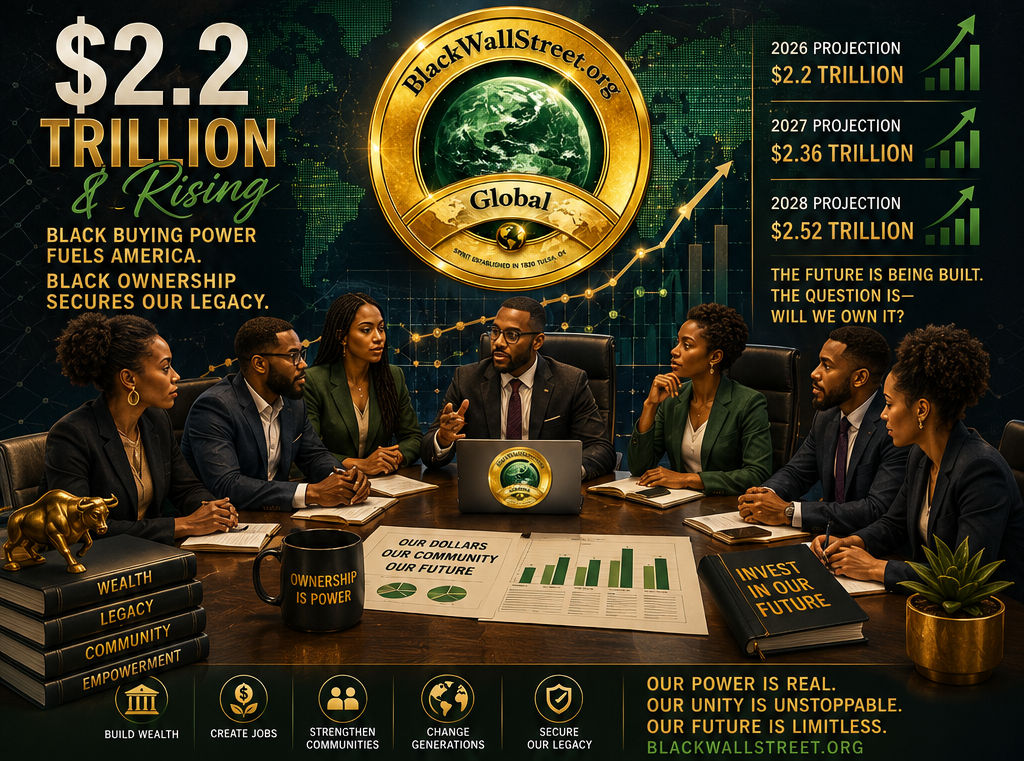
2026 Outlook: Black Consumer Power, Cultural Capital, and the Blueprint for Ownership
As reported to the Black Wall Street Chronicle, Black consumer buying power in the United States has crossed a historic threshold—projected to exceed $2.1 trillion by the end of 2026. This figure is not merely symbolic; it represents one of the most significant economic forces within the U.S. economy, rivaling the gross domestic product of entire nations. Yet, this moment is not just about scale—it is about direction. The defining question of this era is whether this unprecedented spending power will translate into lasting ownership, institutional control, and generational wealth, or continue to circulate outward with limited long-term retention.
To understand the magnitude of this moment, it is necessary to place it within historical context. Black economic advancement in the United States has long been constrained by systemic barriers—enslavement, segregation, redlining, and unequal access to capital markets. Even during periods of measurable progress, such as the early 20th century emergence of Black business districts, wealth accumulation was often disrupted by violence, policy shifts, or structural exclusion. Today’s $2.1 trillion milestone reflects not only demographic growth and increased participation in the labor force, but also the resilience of a community that has continuously generated economic value despite structural disadvantages.
However, consumer spending power alone does not equate to wealth. Spending reflects income flow, but wealth is built through ownership of assets—businesses, real estate, intellectual property, and financial instruments. A central challenge facing Black economic advancement is the persistent gap between consumption and ownership. Studies consistently show that a large portion of Black consumer spending flows to businesses that are not Black-owned, resulting in minimal recirculation within Black communities. This dynamic limits the multiplier effect—the process by which money spent within a community continues to generate additional economic activity.
The concept of the “Black dollar” must therefore evolve beyond its current framing. It is not simply about how much is spent, but where and how it is spent. Strategic consumption—directing spending toward Black-owned enterprises, cooperative ventures, and community-based institutions—has the potential to significantly increase economic retention. If even a modest percentage of the projected $2.1 trillion were intentionally redirected, the impact on business formation, job creation, and community development would be transformative.
Looking ahead to 2030, projections indicate that Black consumer buying power could approach or exceed $2.8 trillion, driven by population growth, rising educational attainment, and increased representation in higher-income professions. Key sectors expected to experience growth include technology, healthcare, financial services, and entrepreneurship. Black consumers are already leading adopters in digital culture, mobile technology, and social commerce—trends that create opportunities for innovation and ownership in emerging markets.
Despite these opportunities, significant structural challenges remain. Access to capital continues to be one of the most critical barriers. Black entrepreneurs are less likely to receive venture capital funding and often face higher interest rates and stricter lending requirements. Additionally, disparities in homeownership—a primary driver of wealth in the United States—limit the ability to leverage equity for business investment or intergenerational transfer. Without targeted interventions, these gaps risk widening even as overall spending power increases.
Education and financial literacy also play a pivotal role in shaping economic outcomes. While income growth has improved, the translation of income into assets requires knowledge of investment strategies, risk management, and long-term planning. Expanding access to culturally relevant financial education, mentorship programs, and investment networks is essential for converting consumption into capital. This includes not only traditional financial instruments, but also emerging asset classes such as digital assets and intellectual property.
Another critical dimension is institutional control. True economic power extends beyond individual success to the establishment of institutions—banks, credit unions, media platforms, manufacturing hubs, and distribution networks—that anchor economic activity within the community. Historically, the absence or destruction of such institutions has limited the ability to sustain economic gains. Rebuilding and scaling these institutions in the modern era requires coordinated effort, strategic investment, and policy advocacy.
Policy also plays a decisive role in shaping economic trajectories. Government programs, procurement policies, and regulatory frameworks can either facilitate or hinder Black economic advancement. Increased participation in public contracting, equitable access to infrastructure funding, and targeted support for minority-owned businesses are essential components of a comprehensive strategy. At the same time, community-driven initiatives—such as cooperative economics, group investment models, and local business alliances—can complement policy efforts and create grassroots momentum.
The cultural dimension of economic behavior should not be overlooked. Consumption patterns are influenced by identity, representation, and social norms. Elevating the visibility and credibility of Black-owned brands, celebrating entrepreneurship, and reinforcing the value of economic solidarity can shift behavior over time. Media, influencers, and community leaders all play a role in shaping these narratives and encouraging intentional economic participation.
Ultimately, the $2.1 trillion milestone represents both an achievement and a crossroads. It confirms the scale of Black economic influence, but also highlights the urgency of strategic action. Without a deliberate shift toward ownership and retention, much of this wealth will continue to flow outward, reinforcing existing disparities. With intentional planning, however, this moment can mark the beginning of a new era—one defined not only by consumption, but by control, sustainability, and generational impact.
The path forward requires a multi-layered approach: increasing support for Black-owned businesses, expanding access to capital, strengthening financial education, building and sustaining institutions, and advocating for equitable policy frameworks. It also requires a collective mindset shift—recognizing that every economic decision, from daily purchases to long-term investments, contributes to a broader ecosystem.
If effectively harnessed, Black consumer buying power has the potential to reshape not only individual communities, but the broader American economy. The question is no longer whether the economic influence exists—it clearly does. The question is how it will be used, who will control its direction, and whether it will serve as a foundation for lasting wealth and empowerment for generations to come.
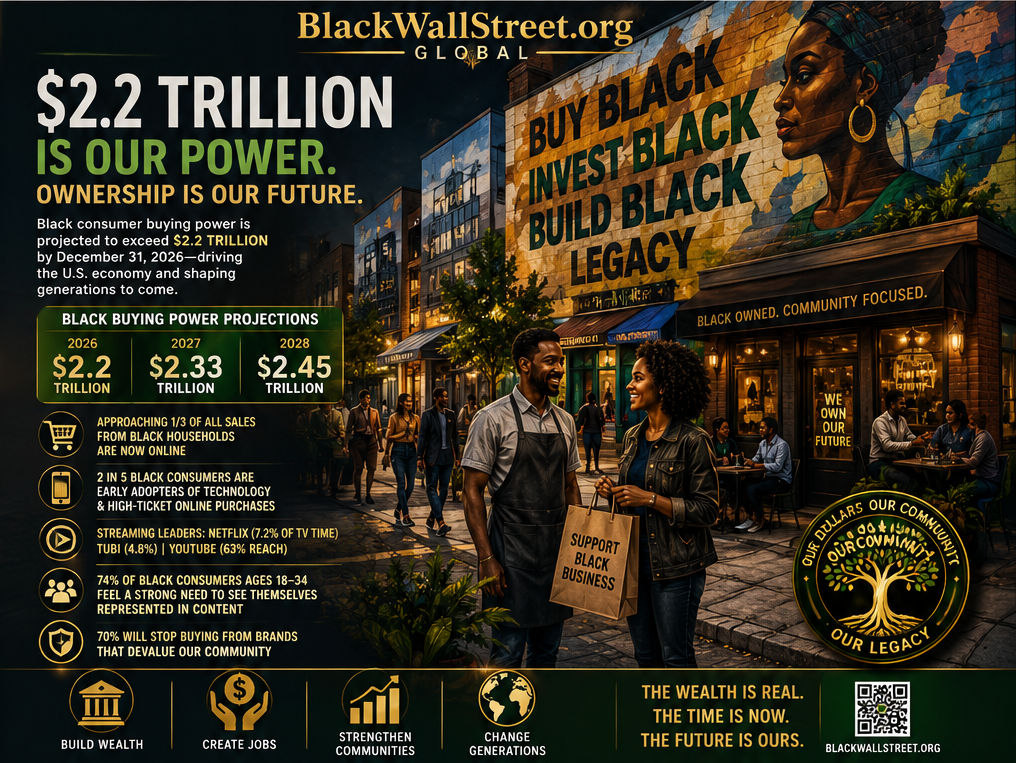
Historical Context: From Exclusion to Economic Emergence
To understand the magnitude of the $2 trillion milestone, one must first understand the economic history that shaped it. Black economic participation in the United States has long been constrained by systemic barriers—enslavement, segregation, redlining, and discriminatory lending practices that limited access to capital and ownership. These structures were not accidental; they were embedded in policies and practices that restricted wealth-building while extracting labor and value from Black communities over generations.
In the aftermath of emancipation, Black communities pursued economic independence through land ownership, skilled trades, and cooperative enterprise. Reconstruction briefly offered a window of opportunity, but that progress was undermined by Black Codes, sharecropping, and widespread violence. Even so, Black entrepreneurs and workers built economic foundations under immense pressure, establishing early models of resilience that would carry forward into future generations.
The late nineteenth and early twentieth centuries saw the rise of thriving Black business districts, often referred to as “Black Wall Streets.” These were not isolated ventures, but interconnected economic ecosystems that included banks, retail businesses, professional services, and cultural institutions. They demonstrated the power of internal economic circulation and collective growth, even within a segregated society that imposed strict limitations on opportunity.
However, these economic centers were frequently disrupted by racial violence and systemic disinvestment. Events like the destruction of Tulsa’s Greenwood District and later urban renewal policies dismantled thriving communities, erasing wealth and displacing residents. These disruptions created long-term setbacks that continue to shape economic disparities today.
The mid-twentieth century introduced new opportunities through industrialization and migration. Black workers moved to urban centers seeking employment, yet faced wage disparities and limited advancement. Redlining and housing discrimination further restricted access to property ownership, one of the most critical pathways to building generational wealth in the United States.
The Civil Rights Movement brought important legal changes, expanding access and challenging discrimination. However, while these gains improved opportunity, they did not fully address the structural inequities that had accumulated over time. As a result, disparities in wealth, access to capital, and business development persisted into the modern era.
Despite these barriers, Black entrepreneurship continued to evolve. Minority business programs, supplier diversity initiatives, and growing representation in professional industries created new avenues for participation. Black-owned businesses contributed significantly to cultural and economic landscapes, particularly in media, fashion, and entertainment, though access to large-scale capital remained limited.
The digital age introduced transformative opportunities. Technology reduced traditional barriers, allowing entrepreneurs to reach broader markets through e-commerce, social media, and digital platforms. These tools enabled faster growth, increased visibility, and new forms of economic engagement that were not dependent on legacy systems of access.
Consumer behavior also shifted. Black consumers increasingly prioritized authenticity, representation, and social responsibility in their purchasing decisions. This led to a rise in intentional spending, including renewed support for Black-owned businesses and community-based economic initiatives. Cultural awareness became a powerful driver of economic activity.
Corporate responses followed, though not always consistently. While many brands increased representation in marketing, consumers began demanding deeper engagement—seeking inclusion in leadership, ownership, and decision-making processes. This shift highlighted the difference between symbolic visibility and meaningful economic participation.
The $2 trillion milestone reflects both scale and recognition. Black consumer spending has reached a level where it is now acknowledged as a major force within the national economy. This moment represents a shift from marginalization toward visibility, supported by improved data tracking and market analysis that quantify economic impact more clearly than ever before.
However, spending power alone does not guarantee wealth creation. A central challenge remains: ensuring that economic activity translates into ownership, investment, and long-term stability within Black communities. Without this, much of the value generated may continue to flow outward rather than building internal wealth.
Efforts to strengthen economic ecosystems are expanding. Initiatives focused on access to capital, entrepreneurship, and community investment aim to convert spending into sustainable growth. Collaboration between organizations, businesses, and institutions is playing an increasingly important role in building infrastructure that supports long-term development.
Financial education is another critical factor. Increased awareness of wealth-building strategies—such as investing, asset ownership, and business development—empowers individuals to make informed economic decisions. Over time, these practices contribute to greater financial stability and opportunity.
Technology continues to enhance access to financial tools. Fintech platforms, digital banking, and mobile payment systems are making financial services more accessible and efficient. These innovations help bridge gaps created by traditional systems that have historically underserved Black communities.
Policy also remains a key driver of change. Government action can support economic equity through funding, regulation, and program development. Policies that expand access to capital, protect against discrimination, and encourage small business growth are essential to sustaining progress.
Cultural influence remains a powerful economic force. Black culture continues to shape industries and drive consumer trends, generating significant value. Increasingly, there is a focus on ensuring that creators and communities benefit from this influence through ownership, partnerships, and fair compensation.
Looking forward, the opportunity lies in aligning spending power with ownership and investment. The $2 trillion milestone is not an endpoint, but a foundation for deeper transformation. By strengthening internal economic systems and fostering collaboration, there is potential to build lasting wealth and equity.
Ultimately, the trajectory of Black economic participation reflects resilience, innovation, and determination. From historical constraints to modern expansion, each phase has contributed to the current moment. With continued focus on equity and strategic growth, this progress can translate into enduring economic empowerment for future generations.

Market Influence: The Engine Behind the $2.1 Trillion Economy
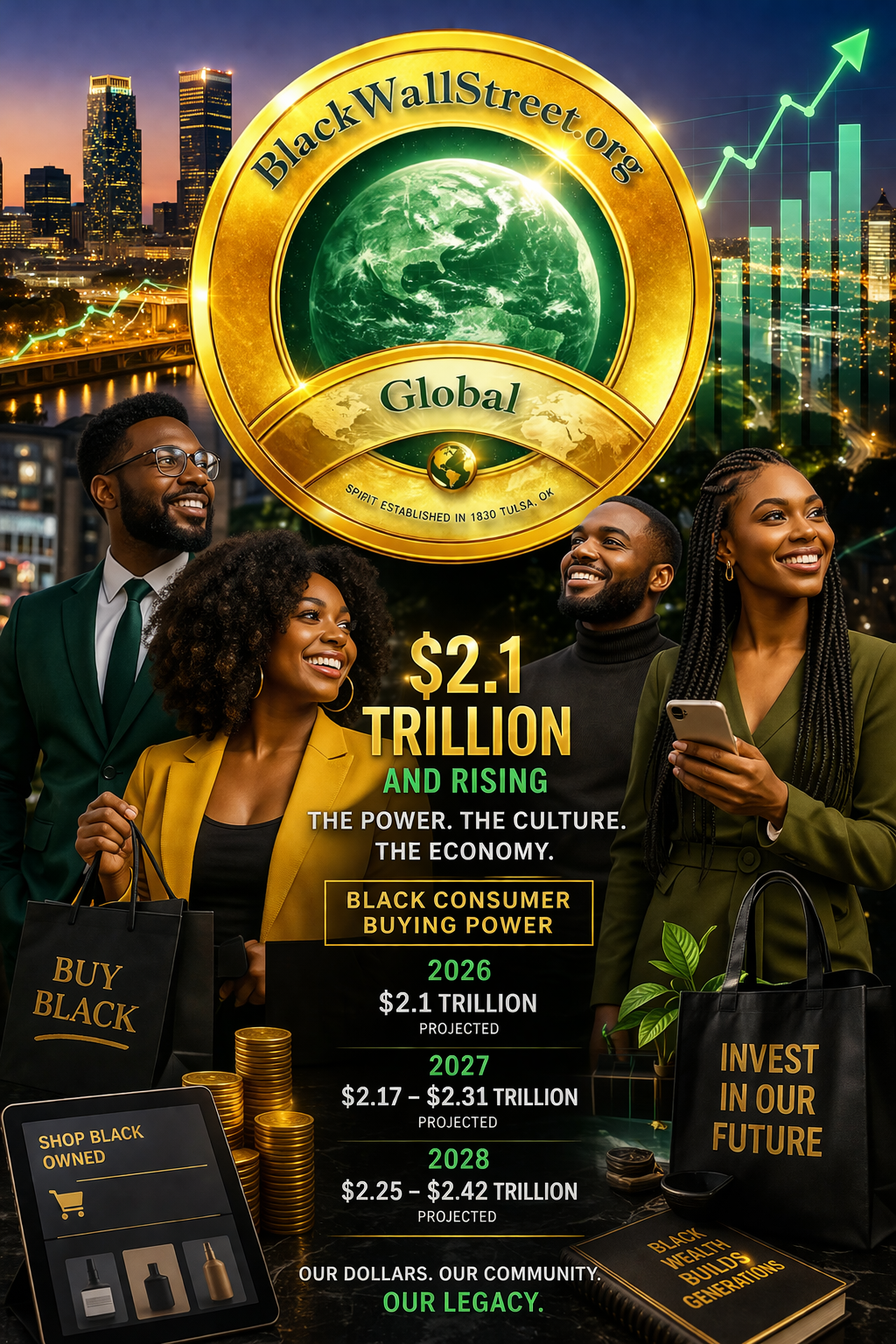
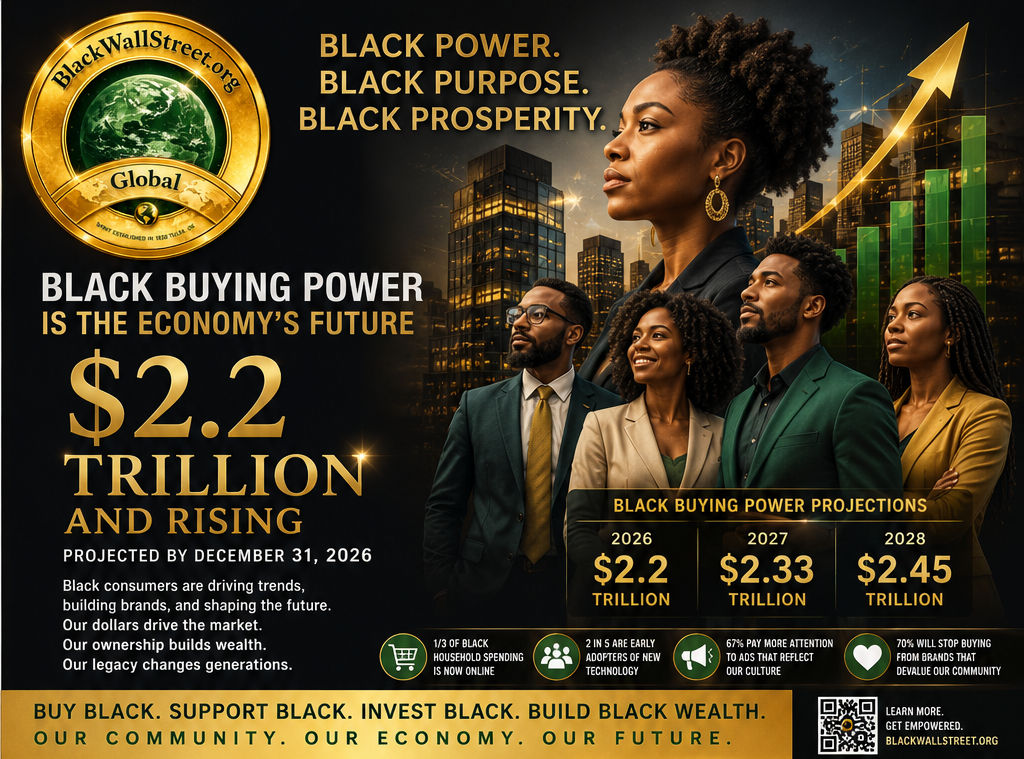
As reported to the Black Wall Street Chronicle, Black buying power is projected to land between $2.1 trillion and $2.2 trillion by December 31, 2026, depending on inflation and macroeconomic conditions. This projection reflects not a sudden surge, but the continuation of a steady and resilient growth trajectory that has unfolded over decades. Driven by population increases, rising levels of educational attainment, and expanding participation in professional and entrepreneurial sectors, this economic force has matured into one of the most influential components of the American marketplace.
However, raw spending power alone does not fully capture the depth of this influence. Black consumers consistently exert an outsized impact relative to their population size, particularly in industries where culture, identity, and innovation intersect. This influence extends beyond purchasing behavior into the shaping of trends, brand narratives, and product development strategies that often ripple across global markets.
In the beauty and personal care industry, Black consumers represent a powerful and trend-setting demographic. Their demand for inclusive products has pushed companies to expand shade ranges, reformulate products, and reconsider long-standing standards of beauty. This influence has not only increased representation but has also redefined what inclusivity means within the industry. Brands that once overlooked this market are now investing heavily to meet its expectations, recognizing that authenticity and quality are essential for long-term engagement.
Fashion and streetwear provide another clear example of this cultural and economic leadership. Styles that originate within Black communities frequently transition from niche expression to mainstream adoption, shaping global fashion cycles. Designers, influencers, and everyday consumers contribute to a dynamic ecosystem where creativity drives demand. This cycle of innovation and adoption reinforces the role of Black culture as a foundational force within the fashion industry.
Entertainment and media further illustrate the scale of this influence. Music, film, television, and digital content created by Black artists consistently define cultural conversations, both domestically and internationally. These creative outputs not only generate significant revenue but also shape perceptions, language, and social trends. As streaming platforms and digital distribution channels expand, the reach and impact of this content continue to grow, reinforcing its central role in the global economy.
The food and beverage sector is similarly shaped by Black cultural contributions. From culinary traditions rooted in history to modern innovations in food entrepreneurship, Black influence is evident in both flavor and branding. Restaurants, packaged goods, and beverage companies increasingly draw inspiration from these traditions, translating cultural authenticity into marketable experiences that resonate with a wide audience.
This broad cultural influence is amplified by demographic realities. The Black population in the United States is younger than the national average, with a significant proportion under the age of thirty-five. This youth-driven demographic brings with it a forward-looking mindset, characterized by early adoption of trends, digital fluency, and a willingness to experiment with new products and platforms. As a result, Black consumers often serve as early indicators of broader market shifts.
Digital engagement plays a critical role in amplifying this influence. Social media platforms, content creation tools, and online communities allow trends to emerge and spread rapidly. Black consumers are highly active in these spaces, shaping conversations and driving visibility for brands, products, and ideas. This digital presence enhances both cultural impact and economic power, creating feedback loops that accelerate adoption across wider audiences.
At the same time, this influence places increasing pressure on companies to respond thoughtfully. Representation in advertising is no longer sufficient; consumers expect brands to demonstrate genuine understanding and commitment. This includes investing in diverse leadership, supporting Black-owned businesses within supply chains, and engaging with communities in meaningful ways. Companies that fail to meet these expectations risk losing credibility and market share.
Importantly, the relationship between influence and ownership remains a central consideration. While Black consumers drive significant demand, the extent to which that demand translates into ownership and wealth creation within Black communities varies widely. Bridging this gap requires intentional efforts to support Black entrepreneurship, increase access to capital, and foster long-term investment strategies that build sustainable economic ecosystems.
Education and awareness are also key factors in maximizing this economic potential. As consumers become more informed about the impact of their spending, there is a growing emphasis on aligning purchasing decisions with values. This includes supporting businesses that prioritize equity, sustainability, and community engagement. Over time, these choices can contribute to broader structural changes within the marketplace.
Looking ahead, the projected $2.1 trillion to $2.2 trillion in buying power represents both an achievement and an opportunity. It underscores the significance of Black consumers as a driving force within the economy while highlighting the need for continued progress in areas such as equity, ownership, and representation. The challenge moving forward is to ensure that this influence is matched by proportional participation in wealth creation and decision-making.
Ultimately, Black market influence is not confined to a single sector or metric. It is a dynamic and evolving force that shapes industries, drives innovation, and redefines cultural norms. As this influence continues to expand, it will play an increasingly central role in determining the direction of the broader economy, ensuring that its impact is both enduring and transformative.
The Digital Economy: From Participation to Dominance
The digital transformation of commerce has created new opportunities—and new risks—for Black consumers and entrepreneurs. Over the past two decades, the rapid expansion of internet access, mobile technology, and digital platforms has fundamentally reshaped how goods and services are discovered, marketed, and purchased. For Black communities, this transformation represents a significant shift from historically restricted physical marketplaces to a more open, though still uneven, digital economy. While barriers have not disappeared, they have evolved, creating a landscape that is both more accessible and more complex.
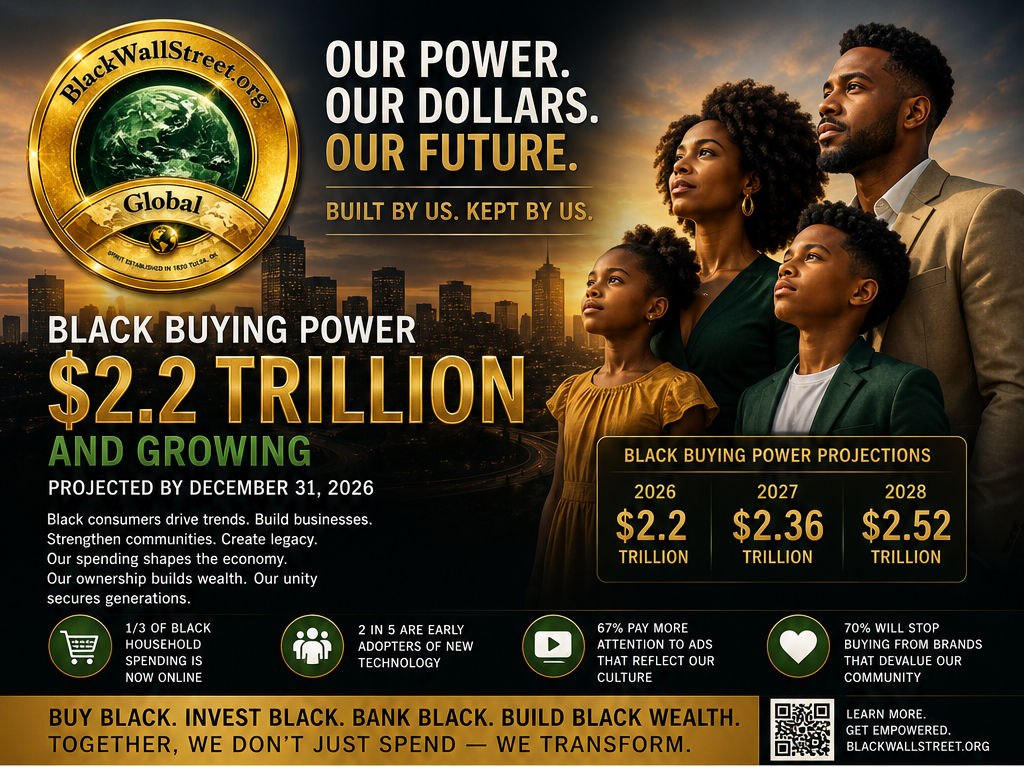
As reported to the Black Wall Street Chronicle, approximately 40% of Black consumers are early adopters of technology, positioning them at the forefront of digital consumption trends. This early adoption is not incidental; it reflects a broader cultural adaptability and responsiveness to innovation. Black consumers are often among the first to explore new platforms, test emerging applications, and integrate digital tools into everyday life. This behavior places them in a powerful position to influence how technologies are used and how markets respond to those uses.
High engagement with mobile commerce has become one of the defining characteristics of this digital participation. Smartphones serve not only as communication devices but as primary gateways to shopping, banking, entertainment, and social interaction. For many Black consumers, mobile-first experiences are the norm, shaping expectations around convenience, accessibility, and speed. Businesses that optimize for mobile platforms are therefore better positioned to capture and retain this audience.
Strong participation in e-commerce platforms further illustrates this shift. Online marketplaces have reduced traditional barriers to entry, enabling both consumers and entrepreneurs to engage in commerce without the limitations of geography or physical infrastructure. Black consumers are active participants in these ecosystems, driving demand across a wide range of categories, from fashion and beauty to electronics and household goods. This participation contributes to the overall growth of digital retail while simultaneously expanding consumer choice.
Significant influence on social media-driven purchasing adds another layer of impact. Platforms such as Instagram, TikTok, and YouTube have become powerful engines of discovery, where trends are created, amplified, and monetized. Black creators and influencers play a central role in this process, shaping consumer preferences and driving engagement. Their ability to translate cultural expression into economic activity underscores the interconnected nature of content, community, and commerce in the digital age.
By 2026, nearly one-third of Black household spending is expected to occur online, a figure that continues to rise annually. This shift reflects not only changing consumer habits but also broader structural changes in the economy. As digital infrastructure improves and online platforms become more integrated into daily life, the distinction between physical and digital commerce continues to blur. For Black consumers, this transition represents both increased access and increased dependence on digital systems.
On one hand, digital platforms democratize access, allowing Black-owned businesses to reach national and global audiences without traditional gatekeepers. Entrepreneurs can launch brands, market products, and build customer bases with relatively low upfront costs compared to brick-and-mortar operations. Social media, digital advertising, and e-commerce tools provide scalable pathways for growth, enabling businesses to expand rapidly when demand aligns with visibility and execution.
This democratization has led to a surge in Black-owned digital enterprises, ranging from independent creators to full-scale e-commerce brands. Many of these businesses leverage storytelling, authenticity, and cultural connection as core components of their value proposition. By engaging directly with consumers, they can build loyal communities that support long-term growth. In this sense, digital platforms have opened doors that were historically closed or difficult to access.
On the other hand, these same platforms are largely owned and controlled by major corporations, meaning that value extraction often occurs outside the community. Transaction fees, advertising costs, and platform dependencies can limit profit margins and constrain growth. Algorithms that determine visibility and reach are often opaque, leaving entrepreneurs vulnerable to sudden changes that can impact revenue and sustainability. As a result, while access has improved, control remains uneven.
This creates a paradox: Black consumers and creators generate immense digital value, yet the infrastructure capturing that value is rarely Black-owned. Every purchase, click, and interaction contributes to data ecosystems that benefit platform owners, often without equitable return to the communities driving engagement. This imbalance highlights the importance of not only participation but also ownership within the digital economy.
Addressing this imbalance requires a multifaceted approach. Investment in Black-owned technology platforms, digital infrastructure, and innovation ecosystems is critical to building long-term economic power. Supporting entrepreneurs who are developing alternative marketplaces, fintech solutions, and content platforms can help shift the balance of ownership. Additionally, increased access to venture capital and technical resources can enable these ventures to scale and compete more effectively.
Education also plays a key role in navigating the digital economy. Digital literacy, data ownership awareness, and strategic use of technology can empower consumers and entrepreneurs to make informed decisions. Understanding how algorithms work, how to optimize digital presence, and how to diversify revenue streams can reduce vulnerability and increase resilience in a rapidly changing environment.
Looking ahead, the continued growth of digital commerce will further amplify both opportunity and risk. Emerging technologies such as artificial intelligence, blockchain, and decentralized platforms have the potential to reshape ownership structures and economic participation. For Black communities, engaging with these technologies early and strategically can create new pathways for innovation and control.
Ultimately, the digital transformation of commerce is not just about access—it is about equity, ownership, and sustainability. While Black consumers and entrepreneurs are already leading in adoption and influence, the next phase of growth will depend on the ability to convert participation into lasting economic power. By aligning innovation with investment and community-focused strategies, the digital economy can become a space not only of opportunity, but of true economic empowerment.
Black audiences are among the most engaged media consumers in the United States. They spend more time watching, streaming, and interacting with content than the national average, making them a critical audience for advertisers and content creators. This elevated level of engagement is not simply a matter of volume, but of depth. Black audiences actively participate in shaping conversations, amplifying narratives, and driving cultural momentum across multiple platforms. As a result, their media consumption habits carry both cultural significance and measurable economic impact.
This engagement spans traditional and digital formats, but the most significant growth has occurred within streaming and mobile-based platforms. The shift away from linear television toward on-demand content has allowed Black viewers to curate their own media experiences, selecting content that reflects their identities, interests, and values. This autonomy has increased both the frequency and intentionality of media consumption, reinforcing the role of Black audiences as active participants rather than passive viewers.
Streaming platforms have become central to this dynamic. By 2026:
Streaming accounts for nearly half of total TV time among Black viewers, reflecting a decisive transition toward digital-first consumption. Platforms like Netflix, YouTube, and Tubi dominate engagement, offering diverse content libraries that appeal to a wide range of preferences. These platforms provide not only entertainment but also opportunities for discovery, education, and community connection, making them integral to daily media habits.
Digital creators wield significant influence over purchasing decisions, often serving as trusted voices within their communities. Unlike traditional advertising, which can feel distant or impersonal, content created by influencers is often perceived as authentic and relatable. This authenticity enhances credibility, allowing creators to shape opinions, introduce products, and drive consumer behavior in ways that traditional media cannot easily replicate.
Nearly 50% of Black consumers report making purchases based on digital content, including influencer recommendations and cultural trends. This statistic underscores the direct link between media engagement and economic activity. Content is no longer just a source of entertainment; it is a driver of commerce. Whether through product reviews, lifestyle content, or viral trends, digital media serves as a bridge between awareness and action.
As reported to the Black Wall Street Chronicle, this level of engagement transforms media consumption into economic leverage. Black audiences do not just consume content—they monetize it through influence, trendsetting, and community amplification. Cultural moments often originate within Black communities before spreading to broader audiences, creating cycles of innovation that drive both engagement and revenue across industries.
Social media platforms play a pivotal role in amplifying this influence. Real-time sharing, commenting, and remixing of content allow trends to spread rapidly, often reaching global audiences within hours. Black users are highly active within these ecosystems, contributing to a constant flow of ideas, styles, and narratives that shape the digital landscape. This activity not only generates visibility but also creates opportunities for monetization through partnerships, sponsorships, and brand collaborations.
At the same time, this influence highlights important questions about ownership and equity. While Black audiences and creators drive significant engagement and value, the platforms hosting this activity are largely owned by major corporations. This dynamic raises concerns about how revenue is distributed and whether creators are receiving fair compensation for their contributions. As digital media continues to evolve, addressing these disparities will be essential to ensuring sustainable economic participation.
Brands and advertisers are increasingly aware of the importance of this audience, leading to more targeted campaigns and collaborations. However, effectiveness depends on authenticity. Audiences are quick to identify superficial or performative efforts, favoring brands that demonstrate genuine understanding and respect. This has led to a shift in marketing strategies, with greater emphasis on partnerships with creators who have established trust within their communities.
Looking ahead, the influence of Black media consumption is expected to grow even further. Emerging technologies, including short-form video, live streaming, and interactive content, are expanding the ways in which audiences engage with media. These formats offer new opportunities for creators to connect with audiences and for brands to participate in evolving conversations. As adoption continues, the line between content creation and commerce will become increasingly blurred.
Ultimately, the significance of Black media engagement extends beyond entertainment. It represents a powerful intersection of culture, technology, and economics. By shaping narratives, driving trends, and influencing purchasing behavior, Black audiences are redefining the role of media in the modern economy. Their participation is not only impactful—it is foundational to understanding how value is created and distributed in a digital-first world.
Representation remains one of the most critical factors shaping Black consumer behavior. A significant majority of Black consumers—particularly those aged 18–34—express a strong desire to see themselves reflected in media, advertising, and brand narratives. This desire is not rooted in superficial preference but in a deeper expectation that brands recognize, respect, and accurately portray the lived experiences of Black communities. In a marketplace increasingly driven by identity, culture, and authenticity, representation has become a decisive factor influencing trust, loyalty, and purchasing decisions.
However, representation is not simply about visibility. It is about accuracy, nuance, and respect. The presence of Black faces in campaigns or content does not automatically translate into meaningful engagement. Consumers are highly attuned to the difference between genuine representation and performative inclusion. They evaluate not only who is visible, but how they are portrayed—whether the depiction reflects real experiences, avoids stereotypes, and acknowledges the diversity within the community. In this sense, representation operates as both a cultural signal and a measure of brand integrity.
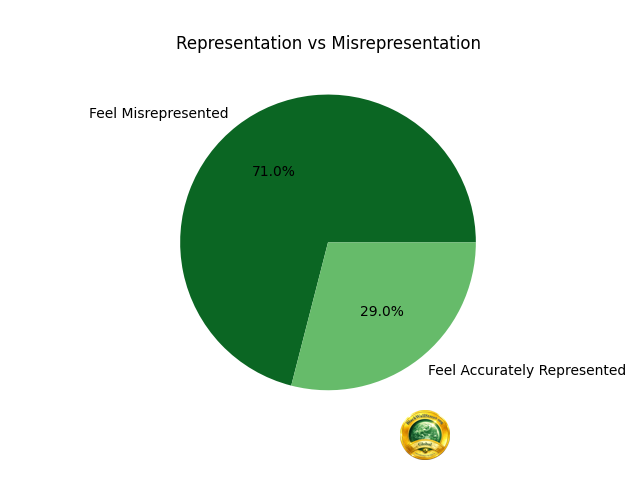
Despite increased attention to diversity, approximately 71% of Black consumers still feel misrepresented by brands. This disconnect highlights a persistent issue: many companies approach Black consumers with a one-dimensional lens, failing to recognize the diversity within the community. Black identity is not monolithic; it encompasses a wide range of backgrounds, perspectives, socioeconomic realities, and cultural expressions. When brands rely on narrow or outdated portrayals, they risk alienating the very audience they aim to engage.
This gap between intention and perception has significant economic implications. Misrepresentation can erode trust, reduce brand affinity, and ultimately impact revenue. In contrast, brands that invest in authentic representation often see stronger engagement, higher conversion rates, and deeper customer loyalty. The relationship between representation and economic performance is increasingly clear: authenticity is not only a cultural imperative but also a business advantage.
Younger consumers, in particular, are driving this shift. Black consumers under 35 are more likely to engage with brands that reflect their identities and values, and they are also more willing to disengage from those that do not. This generational dynamic amplifies the importance of representation, as younger audiences wield growing influence over market trends and brand trajectories. Their expectations are shaped by a digital environment where content is abundant, feedback is immediate, and authenticity is constantly scrutinized.
Social media has further elevated the stakes. Platforms that enable real-time communication and community feedback have made it easier for consumers to call out misrepresentation and amplify positive examples. A single campaign can generate widespread attention, either reinforcing a brand’s credibility or exposing its shortcomings. In this environment, representation is no longer a static decision but an ongoing dialogue between brands and their audiences.
At the same time, representation extends beyond marketing and advertising. It is closely tied to internal structures, including leadership, hiring practices, and decision-making processes. When Black voices are absent from these areas, it becomes difficult for brands to produce content that resonates authentically. Conversely, when diverse perspectives are integrated into the core of an organization, representation becomes more organic and sustainable. This alignment between internal diversity and external messaging is essential for building long-term credibility.
As reported to the Black Wall Street Chronicle, representation must evolve from symbolic inclusion to structural integration, where Black voices are present not only in front-facing campaigns but also in decision-making roles. This shift requires a rethinking of how companies approach diversity—not as a checklist item, but as a strategic priority embedded within every level of the organization. It involves investing in talent development, creating pathways to leadership, and ensuring that diverse perspectives influence key decisions.
The concept of structural integration also highlights the importance of ownership and agency. Representation is most effective when individuals have the authority to shape narratives, rather than simply appear within them. This distinction is critical, as it determines whether representation is driven by external assumptions or internal understanding. Empowering Black professionals to lead creative, strategic, and operational initiatives can significantly enhance the authenticity and impact of brand engagement.
Moreover, authentic representation has the potential to influence broader cultural narratives. Brands are powerful storytellers, capable of shaping perceptions and normalizing diverse experiences. When they approach representation thoughtfully, they contribute to a more inclusive and accurate portrayal of society. This influence extends beyond immediate business outcomes, affecting how communities are understood and valued within the larger cultural landscape.
Looking ahead, the importance of representation is expected to grow. As demographic shifts continue and younger generations gain greater economic influence, the demand for authenticity will only intensify. Brands that fail to adapt risk becoming increasingly disconnected from their audiences, while those that embrace meaningful representation are likely to thrive. The challenge lies in moving beyond surface-level efforts and committing to deeper, more sustained change.
Ultimately, representation is not a trend but a fundamental component of modern commerce. It reflects the intersection of culture, identity, and economics, shaping how consumers perceive and interact with brands. For Black consumers, it is a measure of respect, recognition, and inclusion. For businesses, it is a pathway to relevance, trust, and growth. Bridging the gap between intention and impact will require deliberate action, continuous learning, and a genuine commitment to understanding the communities they serve.
Black consumers are leading a broader shift toward values-based purchasing. Approximately 70% are willing to stop supporting brands that devalue their community, signaling a high level of economic accountability.
This shift reflects a deeper transformation in consumer behavior:
Purchasing decisions are tied to brand ethics
Social impact influences loyalty
Transparency is increasingly expected
Brands are no longer judged solely on product quality—they are evaluated on their alignment with community values.
As reported to the Black Wall Street Chronicle, this trend represents the emergence of economic activism, where consumers use their spending power to influence corporate behavior.
Despite the growth in spending power, the racial wealth gap remains a significant constraint. Wealth—defined by assets, investments, and ownership—lags far behind income and spending levels.
Key contributing factors include:
Lower rates of homeownership
Limited access to capital and investment opportunities
Barriers to business financing
Minimal generational wealth transfer
This creates a critical imbalance: Black consumers generate trillions in economic activity, but much of that value is not retained within Black communities.
As reported to the Black Wall Street Chronicle, addressing this gap requires a shift from consumption to capital formation.
To understand how spending power can be converted into wealth, it is important to examine emerging models of Black economic ecosystems.
1. Digital Marketplaces for Black-Owned Businesses
Platforms that aggregate and promote Black-owned brands are creating new pathways for visibility and revenue. These ecosystems allow consumers to intentionally direct their spending.
2. Community Investment Networks
Grassroots investment groups are pooling resources to fund Black entrepreneurs, bypassing traditional barriers to capital.
3. Cooperative Economics Community-based ownership models—such as co-ops and collective investment funds—are enabling shared wealth creation.
4. Cultural Entrepreneurship
Creators are leveraging cultural influence to build independent brands, retaining ownership and controlling distribution.
As reported to the Black Wall Street Chronicle, these models demonstrate that ownership is achievable when infrastructure aligns with intent.
Transforming spending power into generational wealth requires systemic change. Key policy areas include:
Expanding access to capital for Black entrepreneurs
Supporting minority-owned financial institutions
Promoting equitable lending practices
Investing in financial literacy education
Additionally, corporate accountability must be strengthened to ensure that diversity commitments translate into measurable outcomes.
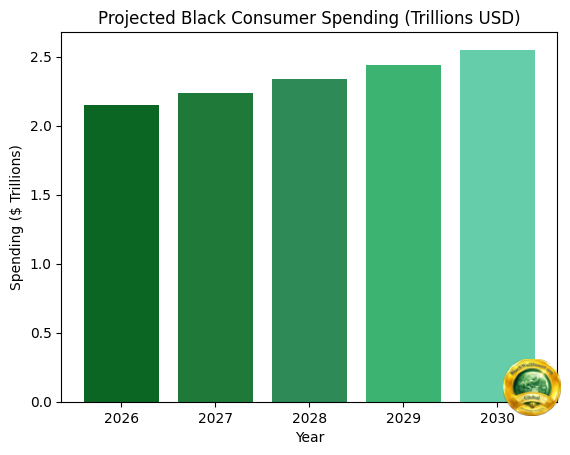
Based on current trends, Black consumer spending power is expected to continue its upward trajectory, reflecting both demographic momentum and increasing participation across multiple sectors of the U.S. economy. This growth is being driven by a combination of factors, including rising educational attainment, expanding access to professional careers, increased digital connectivity, and a growing entrepreneurial base. As income levels rise and consumer engagement deepens, the total volume of spending continues to expand, positioning Black consumers as one of the most influential economic forces in the nation.
By the end of 2026, projections estimate Black consumer spending will reach between $2.1 trillion and $2.2 trillion. This milestone represents not only a continuation of recent growth trends but also a symbolic marker of economic scale. At this level, Black consumer spending rivals the economic output of many developed nations, underscoring its significance within the broader global economy. However, this figure should not be viewed in isolation. It is part of a longer trajectory that suggests sustained expansion over the remainder of the decade.
Looking ahead to 2027, estimates place spending between $2.17 trillion and $2.31 trillion. This increase reflects steady growth consistent with broader economic conditions, including wage increases, population growth, and inflationary pressures. While these projections are considered conservative, they highlight the reliability of the upward trend. Even in the absence of major economic disruptions or policy shifts, the baseline expectation is continued expansion driven by structural factors already in motion.
By 2028, projections rise further to a range of $2.25 trillion to $2.42 trillion. At this stage, the compounding effects of growth become more pronounced. Small percentage increases year over year translate into substantial absolute gains in total spending power. Additionally, this period is expected to see increased influence from younger generations entering their peak earning years. These consumers are more digitally connected, more entrepreneurial, and more likely to engage in alternative forms of income generation, all of which contribute to expanding economic activity.
The year 2029 is projected to bring spending levels between $2.33 trillion and $2.55 trillion. By this point, the cumulative impact of consistent growth begins to reshape perceptions of Black economic influence. What was once considered a niche or segmented market becomes undeniably central to national economic performance. Businesses, policymakers, and investors increasingly recognize the importance of this consumer base, leading to greater attention and, potentially, more targeted engagement strategies.
By 2030, projections indicate that Black consumer spending could reach between $2.4 trillion and $2.7 trillion. Crossing this threshold would represent a transformative moment, not only in terms of scale but also in terms of potential. At nearly $3 trillion, the economic influence of Black consumers would be impossible to overlook, creating opportunities for increased leverage in shaping markets, influencing policy, and directing investment flows. However, the realization of this potential depends on how this spending power is utilized and managed.
These projections are based on a conservative annual growth rate of 3% to 5%, which aligns with historical patterns and broader economic forecasts. However, there is potential for acceleration beyond this range. One of the most significant drivers of possible growth is digital commerce. The rapid expansion of e-commerce platforms, mobile payment systems, and social media marketplaces has lowered barriers to entry for both consumers and entrepreneurs. This digital ecosystem enables faster circulation of money, increased access to markets, and the creation of new revenue streams that were not previously available.
Entrepreneurial expansion also plays a critical role in shaping future growth. As more Black entrepreneurs enter the marketplace, they not only generate income for themselves but also create jobs, services, and products that contribute to the overall economy. The rise of small businesses, startups, and independent ventures adds a layer of dynamism that can accelerate economic activity. When combined with digital tools and platforms, this entrepreneurial energy has the potential to significantly exceed baseline growth projections.
Despite these positive indicators, it is essential to recognize that growth alone does not guarantee economic advancement in a meaningful sense. The key variable is not simply how much is spent, but how much is retained. Retention refers to the extent to which money remains within a community, circulating through businesses, institutions, and investments rather than exiting immediately after initial transactions. Without strong retention mechanisms, even substantial increases in spending can fail to produce lasting wealth.
Historically, one of the primary challenges has been the limited recirculation of dollars within Black communities. A significant portion of consumer spending flows to businesses and entities that do not reinvest those dollars back into the community. This results in a leakage effect, where economic value is continuously extracted without corresponding reinvestment. Over time, this dynamic limits the accumulation of capital and reduces the potential for long-term growth and stability.
Addressing the issue of retention requires structural changes at multiple levels. It involves increasing support for Black-owned businesses so that a greater share of spending remains within the community. It also requires building institutions—such as financial organizations, supply chains, and distribution networks—that are capable of capturing and reinvesting economic value. Additionally, it calls for a shift in financial behavior, encouraging investment, savings, and ownership rather than purely consumption.
Another critical factor is the development of systems that facilitate reinvestment. This includes access to capital, investment networks, and financial education that empowers individuals to make informed decisions about wealth building. Without these systems, even well-intentioned efforts to increase retention may fall short. Infrastructure must be in place to support the flow of capital from consumption into assets that generate returns over time.
The interplay between growth and retention ultimately determines the trajectory of economic advancement. Growth expands the size of the economic pie, but retention determines how much of that pie is actually kept and utilized for long-term benefit. Focusing solely on growth without addressing retention risks perpetuating existing disparities, while focusing on retention without growth limits overall potential. A balanced approach is necessary to achieve sustainable progress.
In this context, the projections for 2026 through 2030 represent more than numerical forecasts. They serve as indicators of opportunity and urgency. The increasing scale of Black consumer spending creates a window for transformative change, but that window is not guaranteed to remain open indefinitely. Strategic action is required to ensure that this growth translates into tangible outcomes such as wealth accumulation, business ownership, and institutional strength.
Ultimately, the future of Black economic power will be shaped not only by how much spending grows, but by how effectively it is harnessed. The projected rise to as much as $2.7 trillion by 2030 is a powerful indicator of potential, but potential alone is not enough. The real measure of success will be whether this economic activity leads to lasting wealth, stability, and generational opportunity. Without structural changes, increased spending may continue to flow outward, limiting its impact. With intentional strategies focused on retention, however, this growth can become the foundation for a new era of economic empowerment.
The future of Black economic power depends on a fundamental shift—one that moves beyond surface-level participation in the economy and toward deep, structural transformation. For generations, Black economic activity has been characterized by strong consumption patterns but limited control over the systems that produce, distribute, and sustain wealth. While participation in the broader economy has increased, true power remains concentrated in ownership, decision-making authority, and institutional permanence. The next phase of economic advancement requires a deliberate and disciplined transition in mindset and practice.
The first dimension of this shift is the movement from consumption to ownership. Consumption demonstrates presence in the marketplace, but ownership determines who benefits from that presence over time. When goods and services are purchased, wealth is transferred. The critical question is where that wealth ultimately resides. Ownership ensures that the value generated through economic activity is retained, reinvested, and multiplied within the community. This includes ownership of businesses, real estate, intellectual property, and financial assets. Without ownership, even high levels of income and spending fail to translate into lasting wealth.
Transitioning from consumption to ownership requires intentional redirection of financial behavior. It involves prioritizing equity stakes over short-term spending gratification, understanding the power of compounding investments, and recognizing that ownership often demands patience and long-term vision. It also requires access to knowledge and capital, both of which have historically been unevenly distributed. Building pathways to ownership means expanding financial literacy, creating mentorship ecosystems, and fostering environments where investment is normalized and encouraged.
The second dimension is the movement from influence to control. Black culture has long held significant influence across industries such as music, fashion, sports, and entertainment. However, influence without ownership or governance often results in others controlling the economic outcomes of that influence. Control is established through decision-making power—ownership of platforms, leadership positions, and the ability to set terms within industries. It ensures that creative, cultural, and economic contributions are not only recognized but also equitably rewarded.
Achieving control means moving beyond being contributors to becoming architects of systems. It involves building companies rather than only working within them, creating distribution channels rather than relying solely on existing ones, and shaping narratives rather than simply participating in them. Control also requires legal and financial sophistication—understanding contracts, equity structures, and governance models. Without these tools, influence can be easily extracted without corresponding benefit.
The third dimension is the shift from participation to infrastructure. Participation indicates involvement, but infrastructure defines the foundation upon which economic activity occurs. Infrastructure includes financial institutions, supply chains, technology platforms, educational systems, and networks of distribution. Communities that control infrastructure are able to sustain and scale their economic activity, while those that rely entirely on external systems remain vulnerable to disruption and exclusion.
Building infrastructure is a complex and long-term endeavor. It requires collective investment, strategic planning, and coordination across sectors. This includes establishing and strengthening banks, credit unions, venture capital funds, and cooperative economic models that serve the specific needs of the community. It also involves investing in digital infrastructure, manufacturing capabilities, and logistics networks that support business growth and resilience. Infrastructure is what transforms isolated success into systemic strength.
Supporting Black-owned businesses is one of the most immediate and accessible steps within this broader transformation. Directing spending toward businesses that are owned and operated within the community increases the likelihood that dollars will recirculate, creating jobs, expanding services, and strengthening local economies. However, support must go beyond symbolic gestures. It requires consistency, quality expectations, and long-term commitment. Businesses, in turn, must be equipped with the resources and training needed to scale and compete effectively in broader markets.
Investing in assets and equity is another critical component. Income alone does not create wealth; assets do. Equity ownership in businesses, stocks, real estate, and other appreciating assets allows individuals and communities to benefit from growth over time. This requires shifting financial priorities toward saving and investing, even in small amounts initially. Collective investment models, such as investment clubs and cooperative funds, can help overcome barriers to entry and create shared opportunities for wealth accumulation.
Building institutions that retain wealth is essential for long-term sustainability. Institutions serve as anchors of economic activity, providing stability, continuity, and the ability to mobilize resources at scale. Historically, the lack or destruction of such institutions has limited the ability to maintain economic gains. Re-establishing and expanding institutions—whether in finance, education, media, or commerce—ensures that wealth is not only generated but also preserved and transferred across generations.
Strengthening community networks is equally important. Economic activity does not occur in isolation; it is shaped by relationships, trust, and shared purpose. Strong networks facilitate information sharing, collaboration, and mutual support. They enable entrepreneurs to access customers, investors to identify opportunities, and communities to coordinate efforts. In an increasingly digital world, these networks can extend beyond geographic boundaries, creating national and global connections that amplify impact.
This transformation also requires a cultural shift. Economic decisions are influenced by values, habits, and perceptions of success. Elevating the importance of ownership, investment, and collective advancement within cultural narratives can reshape behavior over time. This includes redefining success not only as individual achievement but as contribution to a broader economic ecosystem. Media, education, and leadership all play roles in reinforcing these values.
As reported to the Black Wall Street Chronicle, this transformation is not optional—it is essential for long-term economic sustainability. The scale of economic participation has already been established. The challenge now is to ensure that this participation translates into power that endures. Without intentional change, existing patterns will continue, and opportunities for wealth creation will remain limited.
The path forward demands discipline, coordination, and vision. It requires individuals to make conscious financial choices, businesses to pursue excellence and scalability, and communities to invest in shared goals. It also requires recognizing that economic empowerment is a process, not a single event. Progress may be incremental, but its cumulative impact can be profound.
Ultimately, the shift from consumption to ownership, from influence to control, and from participation to infrastructure represents a redefinition of economic engagement. It is about moving from being participants in someone else’s system to being builders of one’s own. If fully realized, this shift has the potential to create not only wealth, but stability, resilience, and generational opportunity on a scale not previously achieved.