Op-Ed
Live

What happens when we turn the mirror toward ourselves?
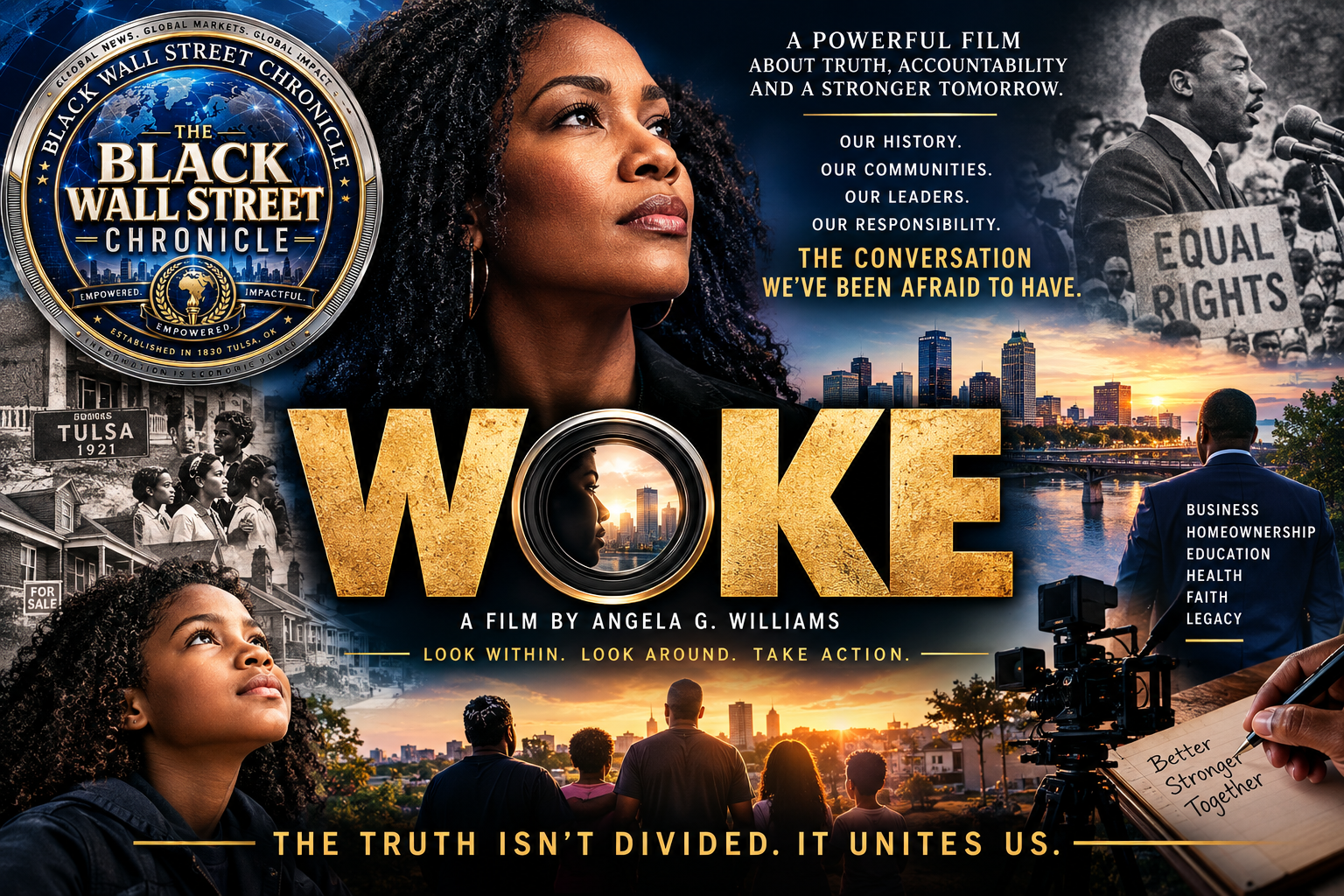
WOKE: The Conversations We Are Afraid to Have with Ourselves
I am making a film called WOKE. But it may not be the film people expect when they hear that word. I am not making WOKE to tell Black people that racism doesn't exist. It does.
I am not making it to pretend that discrimination, segregation, redlining, unequal access to capital, disparities in homeownership and generations of exclusion simply disappeared because America passed civil-rights laws. They did not. The evidence of those inequalities remains around us. I am making WOKE because I believe there is another conversation we have become afraid to have.
What happens when we turn the mirror toward ourselves? I Had to Begin With Me
My film doesn't begin with politicians. It doesn't begin with protesters, statistics or accusations. It begins with me. My face. My life. My family. My children. That was intentional. Before I ask anyone else to examine themselves, I have to be willing to examine myself. I have lived long enough to understand that life will teach you things nobody can prepare you for. I have also learned that family isn't perfect. But family is supposed to be the place where you belong. And somewhere along my journey, my understanding of family became larger than the people who share my blood.
My community became part of my family. And when you love your family, sometimes love requires you to tell the truth. Two Things Can Be True: America has a long, documented history of policies and practices that restricted Black Americans' access to property, capital and economic opportunity. We should never rewrite that history. But acknowledging that history should not prevent us from asking another question: What are we doing now? Two things can be true. We can confront racism while demanding accountability from Black institutions. We can recognize white supremacy without treating every failure inside our communities as something somebody else did to us. We can celebrate Black leadership while still asking Black leaders to produce measurable results. And we can honor the Black church's extraordinary role in our history while asking what role our churches should play in addressing the economic and social conditions confronting families today. Accountability is not betrayal. Questions are not disrespect. And loving Black people should never require silence.
Representation Is Not the Same as Results! There was a time when seeing a Black person sitting in a position of authority represented something generations before us could barely imagine. That representation matters. But representation cannot be the finish line. A Black face occupying an office does not, by itself, tell us whether struggling Black families are better off. The questions should be about outcomes. What changed? Who was helped? How many businesses survived? How many families moved toward stability? How many people became homeowners? How many young people find meaningful opportunities? How much money was allocated? Where did it go? And what happened after it arrived? Those aren't partisan questions. They are accountability questions. When Poverty Becomes Valuable, there is another phrase that makes people uncomfortable: poverty pimping. I use that phrase carefully. I am not using it to accuse every nonprofit organization, community leader or service provider of wrongdoing. Many people devote their lives to serving others, often for far less compensation and recognition than their work deserves. But I believe we should be willing to examine a troubling possibility. What happens when poverty becomes an industry? What happens when organizations receive money because people are struggling, but year after year the same communities remain in crisis?
What happens when grant proposals describe our pain beautifully, yet the people whose suffering justified the funding cannot identify what changed in their lives? That doesn't automatically prove misconduct. But it should produce questions. We should normalize asking organizations receiving resources in the name of our communities to demonstrate outcomes. Not slogans. Not photographs. Not another press conference. Results.
What Is the Black Church's Role Now?
I am a woman of faith. So this part of the conversation is deeply personal. The Black church has an extraordinary place in American history. Black churches were centers of spiritual life, community organization and civil-rights activism. That history deserves enormous respect. But respecting an institution's history does not mean refusing to examine its present. What does ministry look like when families cannot afford housing? What does ministry look like when a Black entrepreneur cannot find capital? When an elder is isolated? When a child needs mentorship? When a father needs employment?
When families need financial education, homeownership opportunities and pathways toward generational wealth?
Prayer matters to me. God matters to me. And I also believe faith should move us toward service. The question isn't whether the Black church has done anything. Thousands of churches serve their communities every day. The question I want WOKE to ask is harder:
Are our institutions meeting the magnitude of the need before us? Why Does It Take Death to Get Our Attention? One of the most painful questions in my film concerns tragedy. When a Black person is killed under circumstances that capture national attention, America knows what comes next. Cameras. Statements. Protests. Civil-rights organizations. Political leaders. Microphones. People arrive from everywhere. Sometimes that attention is necessary. Sometimes it has helped to expose injustice that might otherwise have remained invisible.
But I keep asking myself: Where was everybody before the tragedy? Where are we when the Black business owner is quietly losing everything?
Where are we when a mother is trying to keep her family housed? Where are we when an elder needs someone? Where are we when a young entrepreneur has an idea but no capital? Where are we when families need intervention before their lives become somebody's headline? A Black life should matter while that person is still living it.
The Mirror Does Not Erase the System. Some people may hear these questions and conclude that I am letting America off the hook. I'm not. Minnesota itself continues to document substantial racial disparities. Its 2024 housing report found a wide homeownership gap between White/non-Latino households and Indigenous, Black and other households of color. The system still deserves scrutiny. But so do we. I refuse to accept the idea that I must choose between examining systemic racism and examining accountability within my own community. I believe mature communities should be capable of doing both. If we fail to support one another, we should talk about it.
If we protect titles rather than people, we should talk about it. If public or charitable money is promised for community benefit, we should follow it and examine the results.
If our leaders are effective, the evidence should help demonstrate that.
And where something isn't working, asking for change should not make somebody the enemy. What Does Woke Mean? The word woke has become political. It has been embraced, mocked, weaponized and argued over. I'm taking it somewhere else. For me, being woke means having the courage to see the whole picture. Even when I am somewhere in that picture. Even when someone I respect is in it. Even when an institution I love is in it. Even when the truth challenges something I have believed for years. I can love Black people and question Black leadership. I can believe racism exists and demand accountability inside my community. I can respect the Black church and ask more of it. I can honor civil-rights history while asking what civil-rights leadership looks like in the present. I can fight injustice while also insisting on responsibility. Those ideas do not have to be enemies. What Are We Leaving Behind?
Ultimately, WOKE isn't about anger. It's about legacy. My children are part of why I keep going and why leaving something behind matters to me. I don't want the next generation merely to inherit another explanation of everything that went wrong. I want them inheriting something tangible. Knowledge. Businesses. Property. Opportunity. Institutions that work.
Accountability. Truth. And the courage to improve what our generation did not finish.
One generation should not have to begin exactly where the generation before it began.
So perhaps the most important question isn't whether you call yourself awake. The question is much simpler.
Now that you see it, what are you going to do about it?
Angela G. Williams is an emerging filmmaker and State Director of Black Wall Street Minnesota. WOKE is an independent film project currently in development. The views expressed here are the author's own.