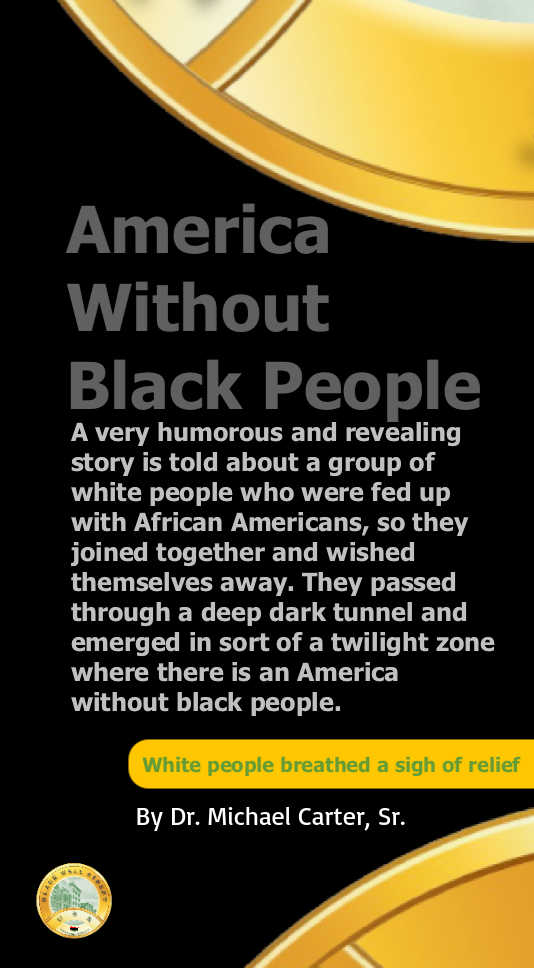
But as reality began to set in, they quickly realized this “new America” was not the America they knew. In fact, it was barely America at all. What they discovered was a barren land, devoid of much of the infrastructure, culture, and progress that had defined the nation. The absence of Black people meant the absence of countless contributions that shaped America’s foundation, innovation, and identity.
The first signs of trouble came when they observed the state of agriculture. The vast fields that once yielded abundant crops were now barren. The reason became immediately clear: much of America’s agricultural economy had been built on a slave-supported system. Enslaved African Americans had toiled on these lands, cultivating crops like cotton, tobacco, and sugarcane that became the backbone of the nation’s wealth. Without the forced labor of enslaved Black people, America’s agricultural system would never have reached the scale or success it had achieved.
Moreover, the ingenuity of African American inventors like Henry Blair, who received a patent for his corn planter and cotton seed planter, was instrumental in revolutionizing farming methods. These contributions increased efficiency and productivity, enabling the nation’s agricultural economy to thrive. Without them, the agricultural foundations of this “new America” were weak and unsustainable.
As the group ventured further, they noticed a lack of towering skyscrapers in the cities. In this new world, there were no elevators to make high-rise buildings functional, as Alexander Miles, a Black man, had invented the automatic elevator doors that made modern elevators possible. The absence of this invention made reaching higher floors a cumbersome and inefficient task, stalling the growth of urban landscapes.
The absence of cars also became glaringly apparent. Richard Spikes’ invention of the automatic gearshift, Joseph Gambol’s development of the Super Charge System for Internal Combustion Engines, and Garrett Morgan’s creation of the traffic signal were all contributions from African Americans that revolutionized transportation. Without these innovations, the streets were eerily quiet, as the vehicles that once roared through them were now impractical or nonexistent.
The situation grew even more dire as they attempted to navigate public transportation. The rapid transit systems they had once relied on were gone, as Albert R. Robinson, a Black man, had invented the electric trolley. Even the streets themselves were in disarray, cluttered with debris and litter, because Charles Brooks’ invention of the street sweeper no longer existed. The absence of African American contributions to transportation and urban maintenance revealed the deep interconnectedness of these innovations with daily life. The group began to realize that their vision of a “better” America was unraveling before their very eyes.
As they sought to document their experiences in this strange new world, they discovered another unsettling truth: the tools of communication and documentation were severely limited. Without John Love’s pencil sharpener, William Purveys’ fountain pen, or Lee Barrage’s typewriting machine, even the act of writing became a challenge. The absence of W. A. Love’s advanced printing press meant that newspapers, magazines, and books were scarce. Communication, both written and printed, was stunted, leaving the group isolated and disconnected.
Even the postal system was in disarray. William Barry’s invention of the Postmarking and Canceling Machine, William Purveys’ Hand Stamp, and Philip Downing’s Letter Drop were all innovations by African Americans that had streamlined the postal service. Without these inventions, the simple act of sending and receiving mail became a cumbersome ordeal.
Their frustrations continued to mount as they observed the deteriorating state of homes and public spaces. The lawns were brown and wilted because Joseph Smith’s lawn sprinkler and John Burr’s lawn mower, both invented by Black men, were no longer available to maintain them. Inside the homes, conditions were even worse. Poor ventilation and inadequate heating made the living spaces uncomfortable, as Frederick Jones had invented the air conditioner and Alice Parker the heating furnace.
The absence of these innovations left homes sweltering in the summer and freezing in the winter. The homes were dimly lit, as Lewis Latimer’s carbon filament for electric light bulbs, Michael Harvey’s lantern, and Granville T. Woods’ automatic cutoff switch were missing. The lack of these contributions left homes and streets shrouded in darkness, amplifying the sense of despair.
Hygiene and cleanliness also became major challenges. The homes were filthy because Thomas W. Steward’s mop and Lloyd P. Ray’s dustpan, both invented by African Americans, were no longer available to aid in cleaning. Even basic grooming and clothing maintenance became a struggle. Their children greeted them at the door barefooted and unkempt because Jan E. Matzelinger’s shoe-lasting machine, which revolutionized shoe production, was no longer there to provide affordable footwear. Walter Sammons’ invention of the comb, Sarah Boone’s ironing board, and George T. Samon’s clothes dryer were also absent, leaving their appearance disheveled and their clothes wrinkled.
As they prepared to sit down for dinner, they faced yet another crisis. The food they had stored had spoiled because John Standard, an African American, had invented the refrigerator. Without refrigeration, preserving food became nearly impossible, leading to waste and scarcity. The absence of this vital invention underscored the reliance on African American ingenuity for something as basic as food storage.
The group’s despair deepened as they realized the full extent of what was missing in this new America. The medical field, for instance, was set back by decades. Dr. Charles Drew’s pioneering work in blood plasma preservation had made blood banks possible, saving countless lives during emergencies and surgeries. Without his contributions, medical advancements stalled, and life expectancy plummeted. Dr. Patricia Bath’s invention of the Laserphaco Probe for cataract treatment was also absent, leaving many without access to vision-restoring procedures. The absence of these and other contributions from African American medical innovators created a healthcare crisis of unimaginable proportions.
Even the possibility of space exploration was erased from this new America. The work of Katherine Johnson, Dorothy Vaughan, and Mary Jackson, whose mathematical calculations were instrumental in NASA’s space missions, was no longer part of the nation’s history. Without their contributions, milestones like the moon landing and advancements in space travel would never have been achieved. The stars themselves seemed further away in a world without African Americans.
As the group reflected on the state of this barren land, they began to understand that African American contributions extended far beyond inventions and innovations. Black culture, art, and music had been the heartbeat of America, shaping its identity and soul. Without the creativity and resilience of African Americans, there was no jazz, blues, hip-hop, or rock and roll. Icons like Louis Armstrong, Billie Holiday, Jimi Hendrix, and Tupac Shakur had redefined music and influenced generations. The absence of this cultural richness left the nation devoid of its vibrancy and spirit.
The group also realized that the fight for equality and justice, led by African Americans, had been instrumental in shaping the nation’s legal and social framework. Figures like Rosa Parks, Martin Luther King Jr., Malcolm X, and countless others had fought tirelessly to challenge oppression and expand civil rights. Without their efforts, the nation would have remained mired in a rigid, oppressive caste system, unable to progress toward equality and justice.
As they came to terms with the full scope of what was missing in this new America, the group understood a profound truth: the contributions of African Americans were not just additions to America’s history—they were foundational to its very existence. The absence of Black people revealed an America stripped of its innovation, culture, and humanity. Black history is not a separate narrative but an integral part of the American story. From the earliest days of the nation to the modern era, African Americans have shaped and defined what it means to be American.
Martin Luther King Jr. once said, “By the time we leave for work, millions of Americans have depended on the inventions from the minds of Blacks.” This statement resonates deeply when considering the vast array of contributions made by African Americans across every field of human endeavor. The nation’s progress, prosperity, and promise are inseparably tied to the ingenuity, resilience, and brilliance of African Americans.
The story of America without Black people is not just a cautionary tale but a reminder of the enduring impact and legacy of African Americans in building and sustaining the nation.
If you like what you have read here and want to support our efforts click to send Cash.app or donate here.
Copyright Infringement Policy for BlackWallStreet.org
The content published on BlackWallStreet.org, including but not limited to articles, op-eds, commentary, reports, graphics, and multimedia, is protected under United States Copyright Law (Title 17 of the U.S. Code) and international copyright treaties. Unauthorized use, reproduction, distribution, or modification of this content without explicit permission from the copyright owner is a violation of intellectual property rights and will result in legal and financial consequences.
This policy outlines the ownership of content, steps to gain permission for use, consequences of infringement, and the procedures for reporting violations.
1. Ownership of Content
All intellectual property published on BlackWallStreet.org, unless otherwise noted, is the exclusive property of the site or its contributors.
Contributors grant BlackWallStreet.org a license to publish, promote, and distribute their works while retaining their individual copyright unless otherwise agreed upon.
Any third-party content included on the site is used with proper licensing or attribution as required by law.
2. Prohibited Activities
Without prior written consent from BlackWallStreet.org or the respective copyright holder, the following activities are prohibited:
Republishing full articles, excerpts, or commentary in any medium (print, digital, or otherwise).
Modifying or creating derivative works from content published on the site.
Using content for commercial purposes, including in advertising, fundraising, or promotional materials.
Copying or scraping content for redistribution on websites, blogs, or social media platforms.
3. Gaining Permission for Usage
BlackWallStreet.org supports appropriate use of its content under specific guidelines. To obtain permission:
Contact: Submit a formal request via the designated Content Usage Request Form or email permissions@blackwallstreet.org. Details: Include the specific content, intended purpose, distribution method, and audience. Licensing Agreement: Depending on the intended use, a licensing fee or written agreement may apply. Acknowledgment: All approved uses must provide proper attribution to BlackWallStreet.org and any identified author(s). Fair Use Exceptions: Limited use of content may qualify as “fair use” under copyright law, such as for educational, nonprofit, or critical commentary purposes. Determinations will be made on a case-by-case basis. 4. Legal and Financial Consequences BlackWallStreet.org takes copyright infringement seriously and will enforce its rights under the law. Consequences include: Legal Consequences: Cease and Desist Orders: Infringers will be formally notified to remove unauthorized content immediately. Civil Lawsuits: BlackWallStreet.org may pursue legal action for statutory damages, actual damages, or lost profits caused by infringement. Court-Ordered Injunctions: Preventing further use or distribution of the copyrighted material. Legal Fees: Infringers may be held responsible for covering court and attorney fees. Financial Penalties: Statutory Damages: Up to $150,000 per instance for willful infringement under U.S. Copyright Law. Licensing Fees: Retroactive fees may be charged for unauthorized use, at rates significantly higher than those for pre-approved permissions. 5. Reporting Copyright Infringement If you believe your intellectual property has been unlawfully used on BlackWallStreet.org, or if you suspect content from this site is being infringed upon elsewhere, follow these steps: Submit a Complaint: Email copyright@blackwallstreet.org with the following details: Your contact information. Description of the copyrighted material. The location (URL) of the unauthorized content. Verification: Provide evidence of ownership, such as original drafts, registration certificates, or publication timestamps. Resolution: BlackWallStreet.org will investigate and, if necessary, remove infringing material or pursue enforcement actions against the violator. 6. Protection and Monitoring BlackWallStreet.org employs tools to monitor and enforce copyright protection: Digital Watermarking: Certain content may be embedded with unique identifiers to track unauthorized use. Copyright Monitoring Services: Regular scans ensure that intellectual property rights are upheld across online platforms. 7. Policy Updates This copyright infringement policy is subject to periodic updates. Users are encouraged to review it regularly to remain compliant with any changes. Respecting intellectual property rights fosters a fair and vibrant environment for creators and consumers alike. BlackWallStreet.org reserves all rights to enforce this policy and appreciates your cooperation in upholding ethical content usage. For further inquiries, please contact legalcounsel@blackwallstreet.org. This detailed policy ensures transparency, protects intellectual property rights, and provides a clear framework for legal recourse in case of violations.