Neither slavery nor involuntary servitude, except as a punishment for crime whereof the party shall have been duly convicted, shall exist within the United States, or any place subject to their jurisdiction.
Section 2.
Congress shall have power to enforce this article by appropriate legislation.
Amendment XIII Examination
Long build-up timeline to passage
1772 — Somerset v. Stewart (England) galvanizes antislavery thought in America.
1787 — U.S. Constitution protects slavery implicitly (Three-Fifths Clause; slave trade compromise) while the Northwest Ordinance of 1787 bans slavery in the Northwest Territory “except for the punishment of crimes”—the precise phrasing later echoed in the 13th.
1808 — Congress ends the transatlantic slave trade (importation), but domestic slavery deepens.
1820 — Missouri Compromise: sectional fault lines harden.
1831 — Nat Turner’s rebellion; Southern legislatures intensify repression; Northern abolition gains urgency.
1830s–50s — The organized abolition movement expands (Black abolitionists and white allies, underground networks, antislavery press).
1842 — Prigg v. Pennsylvania strengthens federal power over fugitive rendition, enraging Northern free Black communities.
1850 — Fugitive Slave Act nationalizes slavecatching; resistance spikes in Boston, Philadelphia, and across the Midwest.
1854 — Kansas–Nebraska Act shreds previous compromises; “Bleeding Kansas.”
1857 — Dred Scott v. Sandford: people of African descent can’t be citizens; Congress can’t ban slavery in the territories.
1861 — Civil War begins; enslaved people self-emancipate by fleeing to Union lines; “contraband” policy.
1862 — Confiscation Acts; Lincoln edges toward emancipation as a war measure. Jan 1, 1863 — Emancipation Proclamation frees enslaved people in rebelling states (limited reach; doesn’t amend Constitution).
Apr 8, 1864 — Senate passes a constitutional abolition amendment (38–6). June 1864 — House initially fails to pass. Lincoln and allies regroup; 1864 election strengthens Republicans.
Jan 31, 1865 — House passes the amendment (119–56).
Spring–Fall 1865 — States ratify; Union victory; Dec 6, 1865 — Georgia’s ratification secures adoption.
1865–66 — Southern states enact Black Codes; widespread convict leasing follows; Civil Rights Act of 1866; 14th Amendment begins to fight the backlash.
1867 — Peonage Act outlaws debt bondage nationwide; Reconstruction briefly opens political space before Jim Crow descends.
The Thirteenth Amendment, ratified in December 1865, is remembered as the great constitutional rupture that abolished slavery in the United States, yet its passage was neither inevitable nor sudden. It was the product of nearly a century of political compromise, agitation, rebellion, and bloodshed. From the moment the Constitution was drafted in 1787, slavery existed as the nation’s original sin, woven deeply into its founding fabric while simultaneously contested by those who saw it as incompatible with republican ideals. To grasp why a constitutional amendment was finally necessary in 1865, one must retrace the long chain of events, each crisis and turning point layering pressure upon the next, until abolition could no longer be deferred.
At Philadelphia in 1787, the men who framed the Constitution were forced to grapple with slavery, though they did so indirectly. Southern delegates insisted on protections for their human property, while many Northern delegates sought union above all else. The result was compromise. The Three-Fifths Clause inflated Southern political power by counting enslaved people toward representation. The Fugitive Slave Clause mandated the return of those who fled bondage. And the Slave Trade Clause prohibited Congress from banning the importation of enslaved Africans until 1808. Nowhere was the word “slavery” written, but the institution was secured within the nation’s charter. At the same time, that same summer, the Confederation Congress passed the Northwest Ordinance, banning slavery in the territories north of the Ohio River but with an exception: involuntary servitude could exist as punishment for crime. This phrasing foreshadowed what would later reappear in the Thirteenth Amendment itself. From the outset, American law displayed its paradox—liberty and bondage entwined.
The first decades of the Republic only deepened that paradox. In 1808, Congress abolished the transatlantic slave trade, fulfilling the constitutional compromise, but rather than weakening slavery, this fueled the domestic slave trade. Enslaved families were torn apart as men, women, and children were marched from Virginia and Maryland to the booming cotton and sugar frontiers of the Deep South. Eli Whitney’s cotton gin had made cotton the foundation of the global textile economy, and enslaved labor powered its production. By the 1820s, the United States was the world’s leading cotton exporter, and slavery was more profitable than ever. Any illusion that the institution might die a natural death evaporated.
The first major national crisis came with Missouri’s application for statehood in 1819. Northern politicians balked at admitting another slave state without restrictions, while Southerners cried foul at any attempt to limit the spread of slavery. After bitter debate, the Missouri Compromise of 1820 admitted Missouri as a slave state, Maine as a free state, and drew a geographic line across the Louisiana Territory, barring slavery north of 36°30′ latitude. The compromise preserved peace for the moment but set the precedent that the Union depended on a delicate balance between free and slave states. Behind the balance lay human lives—hundreds of thousands still in chains, their fates traded in the halls of Congress as bargaining chips.
During the same era, free Black Americans were establishing the earliest institutions of organized resistance. Richard Allen and Absalom Jones had founded the African Methodist Episcopal Church in 1816, providing a base of independence and critique. Figures like Paul Cuffe and Prince Hall articulated visions of Black self-determination and equality. These leaders recognized the hypocrisy of a republic born in revolution against tyranny yet complicit in slavery. Their voices joined a growing global chorus, as Britain’s abolition of the slave trade in 1807 and eventual emancipation in the 1830s demonstrated that slavery could be dismantled by law.
In 1831, Nat Turner’s rebellion in Southampton, Virginia, shook the South to its core. Turner, a deeply religious enslaved preacher, led an uprising that killed dozens of white people before it was suppressed. The retaliation was ferocious: scores of enslaved and free Black people were executed, laws tightened restrictions on literacy and movement, and fear of insurrection haunted the white South. For abolitionists, Turner’s revolt revealed slavery’s inherent instability and the desperate desire of the enslaved for freedom. For defenders of slavery, it justified harsher controls and an insistence that the institution was necessary for social order.
That same year, William Lloyd Garrison launched The Liberator, declaring slavery a moral abomination and demanding immediate abolition. His uncompromising rhetoric galvanized a new abolitionist movement. In 1833, the American Anti-Slavery Society formed, drawing thousands of men and women into activism, while Black abolitionists like Frederick Douglass, Sojourner Truth, Henry Highland Garnet, and Frances Ellen Watkins Harper rose to prominence, bringing lived experience and eloquence to the cause. Douglass, who escaped slavery in 1838, became the movement’s most famous voice, arguing that the Constitution, rightly interpreted, could be a weapon against slavery rather than its shield.
In response, Congress imposed a “gag rule” in 1836 to prevent antislavery petitions from being discussed, revealing how divisive the issue had become. Former President John Quincy Adams defied the gag, becoming a symbol of resistance within the House of Representatives. Meanwhile, enslaved people themselves continued to resist, escaping via the Underground Railroad, aided by conductors like Harriet Tubman and William Still. Each act of flight chipped away at slavery’s legitimacy, dramatizing the enslaved as active seekers of liberty rather than passive victims.
The 1840s brought new crises as the United States expanded westward. The war with Mexico from 1846 to 1848 added vast new territories, immediately igniting the question of whether slavery would be allowed to spread into them. The Wilmot Proviso, introduced in 1846, sought to ban slavery from all lands taken from Mexico, passing in the House but failing in the Senate. Although it never became law, the Proviso revealed deepening sectional divisions: Northerners increasingly viewed the expansion of slavery as a threat to free labor and democracy, while Southerners saw restrictions as existential assaults on their way of life.
The Compromise of 1850, following the war, attempted to resolve these disputes by admitting California as a free state, strengthening the Fugitive Slave Act, and allowing popular sovereignty in new territories. The Fugitive Slave Act in particular inflamed Northern opinion, as it compelled citizens to participate in the capture of escaped slaves and denied alleged fugitives due process. Resistance erupted across the North, with mobs rescuing fugitives from custody and states passing personal liberty laws in defiance.
The decade that followed only deepened the crisis. The Kansas–Nebraska Act of 1854 repealed the Missouri Compromise line and allowed settlers to decide the slavery question themselves. This unleashed violence in “Bleeding Kansas,” where pro-slavery and antislavery settlers clashed in a miniature civil war. Out of the chaos emerged the new Republican Party, dedicated to preventing the spread of slavery into the territories. Its rise marked the collapse of the old Whig Party and the crystallization of sectional politics. In 1857, the Supreme Court’s Dred Scott decision declared that Black people could never be citizens and that Congress had no authority to bar slavery in the territories. The ruling outraged Northerners and emboldened slaveholders, hardening positions further.
By 1860, the nation had reached a breaking point. The election of Abraham Lincoln on a Republican platform opposed to slavery’s expansion, though not calling for immediate abolition, triggered secession by Southern states. South Carolina led the way in December 1860, followed by six others before Lincoln even took office. They formed the Confederate States of America, explicitly founded on the defense of slavery. Lincoln’s initial goal was to preserve the Union, not to abolish slavery, but the dynamics of war quickly changed the calculus. Enslaved people fled to Union lines in massive numbers, forcing the federal government to confront the issue. Congress passed the Confiscation Acts and, in 1863, Lincoln issued the Emancipation Proclamation, freeing enslaved people in Confederate-held territory. While limited in scope and justified as a war measure, it signaled that slavery’s days were numbered.
By the end of the war, it was clear that emancipation required more than presidential proclamation. Only a constitutional amendment could permanently eradicate slavery and prevent its restoration. The long chain of compromises, rebellions, court rulings, political battles, and war had finally led to the threshold of the Thirteenth Amendment. Its language drew from the Northwest Ordinance, carrying forward the penal exception, but its significance was revolutionary. For the first time, the Constitution named slavery directly in order to abolish it. The journey to that moment had taken nearly a century, each stage marked by the clash between liberty and bondage, between a republic founded on human equality and an economy built on human enslavement.
The Civil War years mark the critical acceleration that forced the question of slavery to its breaking point, shaping the conditions under which the Thirteenth Amendment could be proposed, debated, and finally passed. When Abraham Lincoln took office in March 1861, he sought to reassure the slaveholding states that he had no intention of interfering with slavery where it already existed. His position was pragmatic, born of a desire to preserve the Union above all else, but the assurances fell on deaf ears. Seven states had already seceded, forming a Confederacy whose vice president, Alexander Stephens, openly proclaimed its cornerstone to be the inequality of races and the enslavement of Black people. With the firing on Fort Sumter in April 1861, the war began, and the question that had haunted every compromise since 1787 could no longer be deferred.
At the outset, Lincoln and most Union leaders insisted the conflict was about saving the Union, not ending slavery. Border states like Kentucky and Missouri, which allowed slavery but had not seceded, were crucial to the Union cause, and Lincoln believed that premature moves against slavery would drive them into the Confederacy. Thus, early in the war, fugitive enslaved people who reached Union lines were often returned to their enslavers, much to the outrage of abolitionists and to the dismay of Black communities who expected the war for Union to also be a war for freedom. But reality quickly outpaced policy. Enslaved men and women, understanding the stakes of the conflict, began to flee en masse to Union armies. These so-called “contrabands of war” forced Union generals to decide whether to honor the Fugitive Slave Act or treat enslaved people as confiscated enemy property.
Congress soon intervened, passing the First Confiscation Act in 1861, which declared enslaved people used in support of the Confederacy to be free, followed by the more sweeping Second Confiscation Act in 1862. These laws revealed a shifting consensus: slavery was no longer untouchable. At the same time, Congress abolished slavery in the District of Columbia in April 1862, offering compensation to loyal slaveholders but recognizing emancipation as a matter of federal authority. The territories were also declared free of slavery that same year. Each measure nudged the country closer to a national reckoning, signaling that slavery’s constitutional protections were unraveling.
Lincoln, ever cautious, moved in stages. By mid-1862, after Union defeats on the battlefield and mounting pressure from abolitionists, he began drafting the Emancipation Proclamation. He waited for a military victory to announce it, issuing the preliminary proclamation after the Battle of Antietam in September 1862. On January 1, 1863, the final proclamation took effect, declaring enslaved people free in Confederate-held areas. While limited—excluding the border states and areas under Union control—it transformed the war into a struggle not just for Union, but for freedom. It also allowed for the enlistment of Black soldiers in the Union army, a decision that would prove decisive. Nearly 200,000 African American men would serve, their courage and sacrifice demonstrating not only their right to freedom but their claim to citizenship.
The Emancipation Proclamation, however, was a wartime measure, justified under Lincoln’s war powers as commander-in-chief. Its legality could be challenged in peacetime, and its scope did not reach all enslaved people. Lincoln himself understood this limitation. He recognized that only an amendment to the Constitution could uproot slavery in every corner of the country, settle the question permanently, and withstand legal assault. Thus, even as the war raged, political leaders began to consider what had once seemed unthinkable: a constitutional amendment abolishing slavery.
The debates began in earnest in 1864. By that point, the war had dragged on for three years, with staggering casualties and no swift resolution in sight. The Confederacy remained defiant, and Northern Democrats, particularly the so-called Copperheads, agitated for peace without emancipation. In this environment, Republicans pushed forward the amendment to abolish slavery. The Senate passed it in April 1864, but the House of Representatives, where Democrats held stronger numbers, initially rejected it in June. The defeat revealed the persistence of deep divisions, even in the midst of a war whose scale and bloodshed had become nearly incomprehensible.
Outside Congress, however, momentum grew. Black leaders, abolitionists, and radical Republicans kept pressing the cause. Frederick Douglass met with Lincoln on multiple occasions, urging him to commit fully to Black freedom and enlistment. Sojourner Truth, Harriet Tubman, and other activists worked tirelessly to assist fugitives and rally support for emancipation. Radical Republicans like Charles Sumner and Thaddeus Stevens insisted that nothing short of abolition would give meaning to the sacrifices of war. For them, the amendment was not merely a legal formality but the moral culmination of the Union’s struggle.
As the 1864 presidential election approached, Lincoln staked his political future on the promise of abolition. His reelection campaign, with Andrew Johnson as his running mate, ran under the banner of the National Union Party and embraced the amendment as essential to national renewal. Early in the campaign, his chances looked dim, with war weariness running high. But Union military victories in late summer, particularly General William T. Sherman’s capture of Atlanta, shifted momentum. Lincoln won reelection decisively in November 1864, which he interpreted as a mandate to press forward with constitutional abolition.
In January 1865, the amendment returned to the House floor. This time, Lincoln and his allies engaged in tireless lobbying, persuading wavering Democrats and border-state representatives with appeals to patriotism, unity, and history. Some were swayed by promises of patronage; others by the inevitability of slavery’s collapse. On January 31, 1865, the House voted 119 to 56 to approve the amendment, surpassing the required two-thirds majority by a narrow margin. Cheers erupted in the chamber, with members and onlookers celebrating the moment as a turning point in history. The language was stark and sweeping: “Neither slavery nor involuntary servitude, except as a punishment for crime whereof the party shall have been duly convicted, shall exist within the United States, or any place subject to their jurisdiction.”
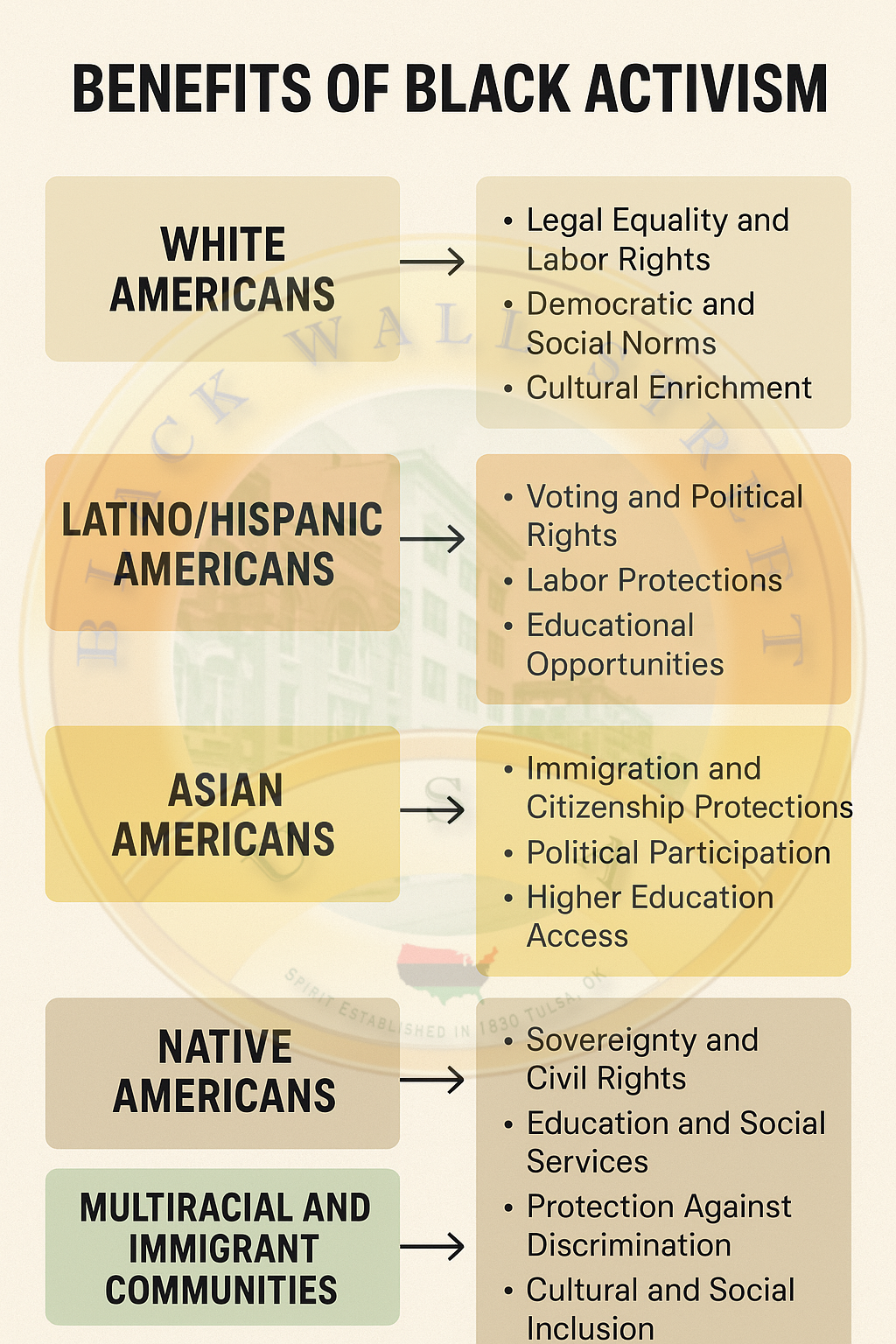
That exception clause, echoing the Northwest Ordinance of 1787, preserved the possibility of coerced labor through the criminal justice system, a compromise that abolitionists would later regret but which at the time seemed necessary to secure passage. In the jubilant atmosphere of 1865, however, the focus remained on the end of slavery as a legal institution. Lincoln, speaking shortly before his assassination, declared that the amendment was “a King’s cure for all the evils. It winds the whole thing up.”
Ratification by the states proceeded quickly in the aftermath of Union victory. By December 1865, the requisite three-fourths of states had approved it, making the Thirteenth Amendment part of the Constitution. For millions of Black men, women, and children, it meant the long-awaited end of formal enslavement. Yet, as subsequent generations would discover, freedom proclaimed in law did not guarantee equality in practice. The penal exception, combined with the rise of Black Codes, convict leasing, and later the prison industrial complex, would ensure that the struggle over the meaning of freedom continued long after 1865.
The long buildup to the Thirteenth Amendment reveals both the tenacity of slavery and the persistence of those who opposed it. From the compromises of the Founding to the abolitionist agitation of the antebellum era, from slave resistance to bloody civil war, every stage built the momentum that made constitutional abolition possible. The amendment was the fruit of generations of struggle—of enslaved people who resisted, of Black leaders who demanded justice, of white allies who fought politically and morally, and of soldiers who laid down their lives on battlefields from Antietam to Appomattox. It represented both a triumph and a beginning, the closure of one chapter and the opening of another in the unfinished story of American freedom.
The ratification process that followed the congressional passage of the Thirteenth Amendment reflected both the triumph of the Union cause and the unresolved tensions of Reconstruction. By the spring of 1865, the Confederacy was collapsing, and the end of the Civil War was near. Lincoln, in his Second Inaugural Address delivered in March, framed the conflict as divine punishment for the national sin of slavery, declaring that the war would not end until “every drop of blood drawn with the lash shall be paid by another drawn with the sword.” His words underscored that emancipation was not only a political necessity but a moral reckoning.
With the amendment’s approval by Congress in January, the matter moved to the states. Ratification required approval from three-fourths of them, and the Union’s victory provided leverage. As Confederate states were conquered and reoccupied, their readmission into the Union was conditioned on embracing emancipation. Several Union states, including Illinois, Rhode Island, Michigan, and Maryland, moved swiftly to ratify, setting the pace. Border states that had clung to slavery with reluctance, such as Kentucky and Delaware, resisted, but the momentum was unstoppable. By December 6, 1865, Georgia’s ratification tipped the scales, ensuring the amendment would become law of the land. Lincoln did not live to see that moment, having been assassinated in April, but his vision of constitutional emancipation had prevailed.
For formerly enslaved people, the announcement of ratification was both jubilant and bittersweet. Generations had prayed for deliverance, and now, at last, slavery was formally abolished. In the contraband camps, on plantations, and in towns across the South, celebrations erupted. Freedmen and women took new surnames, reunited families torn apart by sale, and built schools and churches to anchor their freedom. The Freedmen’s Bureau, established in March 1865, offered some measure of support, though never on the scale necessary to meet the enormity of need. The promise of “forty acres and a mule” remained largely unfulfilled, as land confiscated from Confederates was returned, leaving many freed families vulnerable to the exploitative systems of sharecropping that soon emerged.
The Black leaders who had long campaigned for abolition greeted the amendment as vindication of decades of struggle. Frederick Douglass declared that slavery was not simply ended but constitutionally destroyed. Yet Douglass and others quickly recognized that the fight for equality had only begun. Citizenship and suffrage remained unsettled, as did the economic foundation of freedom. Without land, education, and political power, emancipation risked becoming symbolic rather than substantive. The penal exception clause, allowing involuntary servitude as punishment for crime, loomed as a threat. Southern legislatures exploited it almost immediately, passing Black Codes that criminalized vagrancy and petty offenses, funneling freedmen into convict leasing systems that replicated slavery in all but name.
Generationally, the impact of the Thirteenth Amendment was profound but uneven. For those alive in 1865, it marked the end of chattel slavery, a transformation that reshaped family structures, cultural expression, and spiritual life. Children born after its ratification were not legally enslaved, but they grew up in a society that quickly erected new structures of racial control—first through Black Codes, then Jim Crow segregation, and later through mass incarceration. The promise of abolition, filtered through the penal exception and systemic racism, became a partial victory whose contradictions echoed for generations.
The linkage between the amendment and the modern prison industrial complex is not accidental but structural. By embedding the exception for criminal punishment, the amendment left a constitutional loophole that allowed states to reinvent coerced labor under new legal forms. Throughout the late nineteenth century, Southern states leased convicts to private companies for labor in mines, railroads, and plantations. Many of those caught in the system were Black men arrested under discriminatory laws. This practice, which persisted well into the twentieth century, blurred the line between slavery and imprisonment. In later generations, as incarceration rates soared, especially among African Americans, scholars and activists drew direct connections back to the Thirteenth Amendment’s language.
The generational struggle to realize the full promise of the amendment carried forward into the civil rights movement of the twentieth century and beyond. Martin Luther King Jr., echoing Douglass, insisted that freedom was incomplete without equality, that the abolition of slavery was only the beginning of America’s redemption. The Voting Rights Act and Civil Rights Act of the 1960s represented new constitutional reckonings, extending the promise of freedom into civic and political life. Yet even in that era, mass arrests and imprisonment of civil rights protesters hinted at how the penal system remained a tool of control. By the late twentieth and early twenty-first centuries, the rise of the prison industrial complex, mandatory sentencing, and disproportionate policing of Black communities revealed how the unfinished business of the Thirteenth Amendment persisted.
Looking backward, the long buildup to its passage—from the Constitution’s compromises through secession and civil war—demonstrates how deeply entrenched slavery was in the American political order. Looking forward, the amendment’s passage was both revolutionary and incomplete, a foundation upon which further struggles for justice had to be built. It marked a generational turning point, yet it also left legacies of inequality that demanded continuous resistance. The amendment closed one chapter of legalized bondage, but by preserving the penal exception, it left open a pathway through which new forms of servitude and racial subjugation could emerge.
The long arc from 1787 to 1865, culminating in the Thirteenth Amendment, reveals a history defined by paradox. A republic founded on liberty accommodated slavery for nearly a century. A nation that proclaimed equality compromised again and again until civil war made compromise impossible. An amendment hailed as abolition embedded the seeds of future oppression. Yet within that paradox lies the testimony of generations of Black freedom fighters—enslaved people who resisted bondage, leaders who articulated visions of justice, and soldiers who fought for liberation. Their voices and sacrifices made possible the destruction of slavery in law, and their descendants have carried forward the struggle to hold America to its promises.
In December 1865, when the Thirteenth Amendment was certified, bells rang, churches filled with thanksgiving, and communities celebrated a new birth of freedom. But in the quiet after the jubilation, a deeper realization dawned: abolition was not an endpoint, but a threshold. The amendment had removed the legal chains of slavery, but the weight of history, prejudice, and systemic inequality remained. The long buildup to its passage thus stands not only as a testament to the end of one of humanity’s darkest institutions but as a reminder that freedom is never secured once for all—it must be claimed and reclaimed across generations, shaped by the unfinished work of those who believe in justice.
The debates around the Thirteenth Amendment were not only about whether slavery should be abolished, but about what kind of freedom would emerge in its place. When the Senate first took up the amendment in 1864, the language of abolition appeared simple and sweeping, but embedded within it was a clause that raised deep unease among Black leaders and abolitionists alike: “except as a punishment for crime whereof the party shall have been duly convicted.” At first glance, this appeared to be little more than a continuation of phrasing that had appeared in the Northwest Ordinance of 1787. Yet its presence carried immense consequences, for it created a loophole that preserved coerced labor under the guise of criminal punishment. In the years after its ratification, that exception would become the legal foundation for convict leasing, chain gangs, and, ultimately, the prison industrial complex. But in 1864 and 1865, it was largely treated as a minor detail, a relic of legislative tradition, rather than as the poison pill it would later become.
The core opposition to the amendment came from Northern Democrats, especially those sympathetic to the South, who still clung to a vision of white supremacy and property rights that included human chattel. In the Senate, men like Garrett Davis of Kentucky, a staunch defender of slavery, railed against abolition as an attack on the constitutional order. In the House, Democratic leaders such as Fernando Wood of New York, a former mayor and outspoken defender of Southern interests, dismissed the amendment as unnecessary, arguing that slavery was a matter for the states, not the federal government.
His brother Benjamin Wood, also a New York Democrat, echoed these views, representing the interests of Northern merchants who had long profited from trade with the South. Clement Vallandigham of Ohio, the notorious Copperhead leader, denounced emancipation as tyranny and accused Lincoln of destroying the Union under the guise of saving it. Their rhetoric combined constitutional formalism with naked racism, insisting that white supremacy was natural and that federal power must not be stretched to undo it.
Slaveholders themselves, though largely outside of Congress after secession, made their opposition known through Confederate leadership. Jefferson Davis, president of the Confederacy, denounced the very idea of abolition as an assault on the civilization of the South. Alexander Stephens, his vice president, had already declared in 1861 that the Confederacy’s cornerstone was the subordination of the Black race. Planters from South Carolina, Mississippi, and Louisiana, including the wealthy cotton aristocracy such as the Hamptons, the Butlers, and the Lamars, viewed the amendment as a death knell not only for their fortunes but for the racial hierarchy upon which their identities were built. These families had enslaved thousands, built empires of land and wealth, and wielded political power that reached the highest levels of Washington. For them, the Thirteenth Amendment was not a matter of abstract law but of personal ruin, and they fought to preserve their world even as Confederate armies collapsed around them.
Northern corporations were not neutral in this struggle either. Many had long ties to the slave economy, from textile mills in Massachusetts that processed Southern cotton to Wall Street firms that financed plantations. The Brown Brothers firm of New York, predecessors to Brown Brothers Harriman, had profited directly from the slave trade and loans to Southern planters. Lehman Brothers, founded in Alabama before moving to New York, built its fortune on cotton, the very product of enslaved labor. Insurance companies like Aetna and New York Life sold policies that insured enslaved people as property, calculating the value of human lives in actuarial tables. The amendment threatened to sever these ties and force new economic arrangements, and while most of these corporations publicly aligned with the Union by 1864, their private reluctance to embrace abolition was well known. They feared not only the collapse of Southern markets but the social upheaval that free Black labor might introduce.
Religious opposition to the amendment also persisted, even though many churches had split over the issue decades earlier. The Southern Baptist Convention, formed in 1845 when Baptists divided over slavery, openly supported the institution and justified it through scripture. Southern Methodist leaders echoed the same, declaring that slavery was divinely sanctioned and woven into the natural order. In the North, certain conservative ministers, while not defending slavery outright, warned that radical abolition threatened God’s ordained social hierarchy. Men like Horatio Seymour, governor of New York and a devout Episcopalian, couched their political opposition to abolition in religious language about order and tradition. In the South, countless preachers thundered from pulpits that the Thirteenth Amendment was an act of Satanic rebellion against divine authority, reinforcing the conviction of enslavers that they were engaged in a holy defense.
Against this wall of resistance stood the advocates who fought for the amendment with unyielding conviction. Radical Republicans such as Charles Sumner in the Senate and Thaddeus Stevens in the House spearheaded the cause. Sumner, a Massachusetts statesman who had been nearly beaten to death by South Carolina’s Preston Brooks in 1856 for his antislavery speech, saw in the amendment the fulfillment of his life’s work. Stevens, a Pennsylvanian who believed slavery must be rooted out entirely and land redistributed to freed people, argued that nothing short of abolition would redeem the Union. Their arguments were uncompromising: slavery was a crime against humanity, and only constitutional prohibition could prevent its return.
Black leaders amplified this case with urgency born of experience. Frederick Douglass wrote and spoke tirelessly, framing the amendment as not only a legal necessity but a moral imperative. Sojourner Truth traveled and preached that true freedom required more than words—it demanded protections for Black women and men to work, worship, and live as equals. Harriet Tubman, though less visible in the congressional debates, embodied the reality of Black agency, her wartime service as a scout and nurse a living testimony to the role of the formerly enslaved in saving the Union. Henry Highland Garnet, once a radical voice calling for enslaved people to rise in revolt, became the first Black minister to address Congress in 1865, his sermon urging members to complete the work of God by abolishing slavery. Their voices carried moral weight that no amount of legalistic opposition could erase.
The “punishment for crime” clause, though not the central point of congressional debate at the time, reflected the deeper anxieties of white lawmakers. For many, even those willing to abolish slavery, there remained a belief that Black people needed discipline, control, and supervision. Crime provided a legal framework through which that control could be reasserted. Some legislators worried that without the clause, prisons could not operate with coerced labor, a notion that reveals how deeply the assumption of forced work was embedded in American institutions. It was easier to retain the language from the Northwest Ordinance than to risk a fight that might sink the amendment entirely. What abolitionists understood only dimly in 1865 became tragically clear in the years to follow: the clause allowed white elites, especially in the South, to reinvent slavery through criminal law.
Even within the jubilant celebrations after the amendment’s passage, some foresaw the dangers. Douglass warned that the spirit of slavery would survive unless equal rights were enshrined in law and protected by force. Stevens insisted that freedom without land or power was fragile, that the freed people could be dragged back into conditions little different from bondage. Black communities themselves, while overjoyed, expressed concern about how quickly Southern legislatures were writing new laws to restrict their freedom. Their caution proved prescient, for within months of ratification, the Black Codes criminalized idleness, vagrancy, and breach of labor contracts, funneling thousands into prisons where they could be leased out as laborers. The penal exception clause became the mechanism by which white elites could preserve economic exploitation while claiming fidelity to the Constitution.
The debates over the Thirteenth Amendment, therefore, were not simply a clash between abolitionists and slaveholders but a window into the broader struggle over what America would be. White leaders who opposed it did so to preserve their power, wealth, and ideology, drawing support from corporations that profited from slavery and churches that sanctified it. Those who supported it envisioned a rebirth of the nation, though many still compromised by leaving in place the language that would haunt generations. The controversies surrounding its passage reveal not only who stood where in 1864 and 1865 but also why the struggle over freedom, justice, and equality has never truly ended.
The debates around the Thirteenth Amendment were not only about whether slavery should be abolished, but about what kind of freedom would emerge in its place. When the Senate first took up the amendment in 1864, the language of abolition appeared simple and sweeping, but embedded within it was a clause that raised deep unease among Black leaders and abolitionists alike: “except as a punishment for crime whereof the party shall have been duly convicted.” At first glance, this appeared to be little more than a continuation of phrasing that had appeared in the Northwest Ordinance of 1787. Yet its presence carried immense consequences, for it created a loophole that preserved coerced labor under the guise of criminal punishment. In the years after its ratification, that exception would become the legal foundation for convict leasing, chain gangs, and, ultimately, the prison industrial complex. But in 1864 and 1865, it was largely treated as a minor detail, a relic of legislative tradition, rather than as the poison pill it would later become.
The core opposition to the amendment came from Northern Democrats, especially those sympathetic to the South, who still clung to a vision of white supremacy and property rights that included human chattel. In the Senate, men like Garrett Davis of Kentucky, a staunch defender of slavery, railed against abolition as an attack on the constitutional order. In the House, Democratic leaders such as Fernando Wood of New York, a former mayor and outspoken defender of Southern interests, dismissed the amendment as unnecessary, arguing that slavery was a matter for the states, not the federal government.
His brother Benjamin Wood, also a New York Democrat, echoed these views, representing the interests of Northern merchants who had long profited from trade with the South. Clement Vallandigham of Ohio, the notorious Copperhead leader, denounced emancipation as tyranny and accused Lincoln of destroying the Union under the guise of saving it. Their rhetoric combined constitutional formalism with naked racism, insisting that white supremacy was natural and that federal power must not be stretched to undo it.
Slaveholders themselves, though largely outside of Congress after secession, made their opposition known through Confederate leadership. Jefferson Davis, president of the Confederacy, denounced the very idea of abolition as an assault on the civilization of the South. Alexander Stephens, his vice president, had already declared in 1861 that the Confederacy’s cornerstone was the subordination of the Black race. Planters from South Carolina, Mississippi, and Louisiana, including the wealthy cotton aristocracy such as the Hamptons, the Butlers, and the Lamars, viewed the amendment as a death knell not only for their fortunes but for the racial hierarchy upon which their identities were built. These families had enslaved thousands, built empires of land and wealth, and wielded political power that reached the highest levels of Washington. For them, the Thirteenth Amendment was not a matter of abstract law but of personal ruin, and they fought to preserve their world even as Confederate armies collapsed around them.
Northern corporations were not neutral in this struggle either. Many had long ties to the slave economy, from textile mills in Massachusetts that processed Southern cotton to Wall Street firms that financed plantations. The Brown Brothers firm of New York, predecessors to Brown Brothers Harriman, had profited directly from the slave trade and loans to Southern planters. Lehman Brothers, founded in Alabama before moving to New York, built its fortune on cotton, the very product of enslaved labor.
Insurance companies like Aetna and New York Life sold policies that insured enslaved people as property, calculating the value of human lives in actuarial tables. The amendment threatened to sever these ties and force new economic arrangements, and while most of these corporations publicly aligned with the Union by 1864, their private reluctance to embrace abolition was well known. They feared not only the collapse of Southern markets but the social upheaval that free Black labor might introduce.
Religious opposition to the amendment also persisted, even though many churches had split over the issue decades earlier. The Southern Baptist Convention, formed in 1845 when Baptists divided over slavery, openly supported the institution and justified it through scripture. Southern Methodist leaders echoed the same, declaring that slavery was divinely sanctioned and woven into the natural order. In the North, certain conservative ministers, while not defending slavery outright, warned that radical abolition threatened God’s ordained social hierarchy.
Men like Horatio Seymour, governor of New York and a devout Episcopalian, couched their political opposition to abolition in religious language about order and tradition. In the South, countless preachers thundered from pulpits that the Thirteenth Amendment was an act of Satanic rebellion against divine authority, reinforcing the conviction of enslavers that they were engaged in a holy defense.
Against this wall of resistance stood the advocates who fought for the amendment with unyielding conviction. Radical Republicans such as Charles Sumner in the Senate and Thaddeus Stevens in the House spearheaded the cause. Sumner, a Massachusetts statesman who had been nearly beaten to death by South Carolina’s Preston Brooks in 1856 for his antislavery speech, saw in the amendment the fulfillment of his life’s work. Stevens, a Pennsylvanian who believed slavery must be rooted out entirely and land redistributed to freed people, argued that nothing short of abolition would redeem the Union. Their arguments were uncompromising: slavery was a crime against humanity, and only constitutional prohibition could prevent its return.
Black leaders amplified this case with urgency born of experience. Frederick Douglass wrote and spoke tirelessly, framing the amendment as not only a legal necessity but a moral imperative. Sojourner Truth traveled and preached that true freedom required more than words—it demanded protections for Black women and men to work, worship, and live as equals. Harriet Tubman, though less visible in the congressional debates, embodied the reality of Black agency, her wartime service as a scout and nurse a living testimony to the role of the formerly enslaved in saving the Union. Henry Highland Garnet, once a radical voice calling for enslaved people to rise in revolt, became the first Black minister to address Congress in 1865, his sermon urging members to complete the work of God by abolishing slavery. Their voices carried moral weight that no amount of legalistic opposition could erase.
The “punishment for crime” clause, though not the central point of congressional debate at the time, reflected the deeper anxieties of white lawmakers. For many, even those willing to abolish slavery, there remained a belief that Black people needed discipline, control, and supervision. Crime provided a legal framework through which that control could be reasserted. Some legislators worried that without the clause, prisons could not operate with coerced labor, a notion that reveals how deeply the assumption of forced work was embedded in American institutions. It was easier to retain the language from the Northwest Ordinance than to risk a fight that might sink the amendment entirely. What abolitionists understood only dimly in 1865 became tragically clear in the years to follow: the clause allowed white elites, especially in the South, to reinvent slavery through criminal law.
Even within the jubilant celebrations after the amendment’s passage, some foresaw the dangers. Douglass warned that the spirit of slavery would survive unless equal rights were enshrined in law and protected by force. Stevens insisted that freedom without land or power was fragile, that the freed people could be dragged back into conditions little different from bondage. Black communities themselves, while overjoyed, expressed concern about how quickly Southern legislatures were writing new laws to restrict their freedom. Their caution proved prescient, for within months of ratification, the Black Codes criminalized idleness, vagrancy, and breach of labor contracts, funneling thousands into prisons where they could be leased out as laborers. The penal exception clause became the mechanism by which white elites could preserve economic exploitation while claiming fidelity to the Constitution.
The debates over the Thirteenth Amendment, therefore, were not simply a clash between abolitionists and slaveholders but a window into the broader struggle over what America would be. White leaders who opposed it did so to preserve their power, wealth, and ideology, drawing support from corporations that profited from slavery and churches that sanctified it. Those who supported it envisioned a rebirth of the nation, though many still compromised by leaving in place the language that would haunt generations. The controversies surrounding its passage reveal not only who stood where in 1864 and 1865 but also why the struggle over freedom, justice, and equality has never truly ended.
By the time the Thirteenth Amendment returned to the House floor in January 1865, the political landscape had shifted dramatically, yet the battles over its passage remained fierce. Supporters, led by Thaddeus Stevens and John Bingham of Ohio, pushed the argument that constitutional abolition was essential not only to end slavery but to secure the Union’s moral legitimacy. Stevens, who had endured decades of attacks for his radical views, denounced slavery as an institution that corrupted the nation’s laws, politics, and moral sense. He warned that half-measures would fail, and that only by enshrining the complete abolition of slavery into the Constitution could the United States fulfill its promise of liberty. Bingham, a former Ohio congressman who had long advocated for civil rights, emphasized that without federal enforcement, emancipation could be reversed once Southern states reasserted local control. Their speeches, delivered with both legal rigor and moral force, were buttressed by appeals to the sacrifices of Union soldiers, many of whom had given their lives in the struggle against an institution that was both cruel and antithetical to republican ideals.
Opposition on the House floor was equally vocal, though less morally grounded. Figures such as Fernando Wood and Alexander Long of Ohio, aligned with the Democratic minority, railed against what they called an unconstitutional seizure of states’ rights. They portrayed the amendment as an assault on property and warned that it would ignite civil unrest throughout the South and potentially the North. Some Northern industrialists who had formerly profited from Southern cotton, including representatives linked to New York banking families like the Wood and Brown families, voiced concerns over economic disruption, claiming that the sudden abolition of slavery threatened commercial stability. Southern sympathizers, though largely absent due to secession, had sent petitions and communications imploring their allies in Congress to resist the measure, arguing that property rights extended to human beings and that the amendment would undermine both social order and economic development.
Religious leaders who opposed the amendment did so with appeals to divine providence and natural hierarchy. Some Southern Baptist and Methodist ministers denounced the amendment from pulpits, framing abolition as rebellion against God’s will. Northern conservatives echoed these arguments in letters and newspapers, suggesting that social hierarchies were part of divine order and that emancipation would lead to chaos. Horatio Seymour, the Democratic governor of New York and devout Episcopalian, publicly criticized the amendment as morally presumptuous, asserting that it placed human judgment above God’s providence. Clergy and congregations in both the North and South published pamphlets warning that radical change would disrupt families, communities, and the natural social order. Their interventions reinforced resistance among wavering lawmakers and underscored the way religious ideology was mobilized to defend slavery, even as the Union fought to destroy it.
The amendment’s language, particularly the “except as punishment for crime” clause, received surprisingly little attention on the floor of Congress, though some members expressed concern. A few legislators, including Stevens, understood that leaving this exception in place could create future loopholes, but they were overruled by pragmatism. Many feared that striking the clause entirely would alienate key border-state representatives, whose support was essential to secure the two-thirds majority needed for passage. In effect, the clause was a political concession intended to prevent the amendment from failing entirely, a strategic compromise that would have unintended consequences for generations to come. Among Black leaders, Frederick Douglass acknowledged the compromise reluctantly, emphasizing that the primary objective was to end chattel slavery; yet he warned that freedom secured only through law, without social and economic empowerment, remained fragile.
The debates extended beyond Congress and into the public sphere. Newspapers such as the New York Times, Harper’s Weekly, and the Philadelphia Inquirer published both editorials and letters to the editor reflecting deep divisions. The New York Times largely supported the amendment, portraying it as a necessary step toward national salvation, while the New York World, aligned with Democratic interests, denounced it as a radical overreach. In the South, Confederate newspapers and Northern sympathizers labeled abolition a violation of constitutional rights and warned that freed Black populations would destabilize society. The press thus amplified tensions, shaping public perception and influencing legislators who feared backlash from their constituents. Corporations, though generally silent in formal statements, began preparing for the economic implications. Cotton mills and shipping firms braced for disruptions, while insurers and banks adjusted their assessments of Southern assets, now imperiled by the elimination of enslaved labor.
Once the amendment passed the House on January 31, 1865, with 119 votes in favor and 56 against, the reactions were immediate and polarized. Supporters celebrated triumphantly, recognizing that decades of activism, rebellion, and political maneuvering had finally borne fruit. Thaddeus Stevens called the vote a vindication of morality and justice, declaring that “no human being shall again be considered property in these United States.” John Bingham described it as the culmination of a struggle for liberty that began with the nation’s founding and had been pursued tirelessly by Black leaders, abolitionists, and righteous allies. Among Black communities, churches rang bells, schools and mutual aid societies organized celebrations, and former slaves expressed hope for a new era.
Yet the celebration was tempered by concern over the penal exception. Within weeks, Southern legislatures enacted Black Codes criminalizing minor offenses and exploiting the exception to coerce labor. Vagrancy, loitering, and breach of labor contracts became criminal offenses, and thousands of freedmen were arrested and leased to private businesses. States like Mississippi, Alabama, and Georgia explicitly codified systems in which Black prisoners were rented out to railroads, mines, and plantations, often enduring conditions indistinguishable from slavery. The architects of these systems—white politicians, judges, and law enforcement officials—were well aware of the loophole the amendment had left open. It provided legal cover to maintain racial hierarchy and economic exploitation without technically violating the new constitutional mandate.
White corporations, particularly in the South but also in Northern urban centers, quickly capitalized on this opportunity. Railroads, mining companies, and textile mills employed leased convict labor, often under contract with county governments. Banks and insurers, formerly tied to enslaved property, adapted by underwriting the costs and profits associated with convict leasing. These practices illustrate the way the penal exception enabled the transformation of slavery rather than its total eradication. Religious leaders, many of whom had opposed the amendment, often endorsed these practices implicitly or explicitly, framing them as moral and legal mechanisms to teach discipline and maintain social order. Preachers and congregations reinforced the ideology that Black labor must remain controlled, now justified through crime rather than chattel ownership.
The debates surrounding the amendment thus reveal a profound tension between principle and pragmatism. Abolitionists and Black leaders viewed the amendment as a moral and legal necessity, yet the inclusion of the penal exception demonstrates the compromises lawmakers were willing to make to secure passage. The clause was rationalized as a political expedient, necessary to bring border-state representatives and moderate Republicans on board. Yet it codified a loophole that allowed white elites—political, economic, and religious—to reconstruct systems of coerced labor under new guises. While chattel slavery was legally ended, structural exploitation persisted, demonstrating how legal victories can be partial and how social change often lags behind constitutional reform.
The debates also illuminate the personalities and power structures behind opposition. White politicians like Fernando Wood, Clement Vallandigham, and Alexander Long represented both Southern sympathies and Northern economic interests, reflecting the entanglement of slavery and capitalism. Confederate leaders, including Jefferson Davis and Alexander Stephens, though physically removed from Congress, shaped discourse through petitions and propaganda. White religious leaders, from Southern Baptist and Methodist preachers to Northern conservative clergy, mobilized theology to oppose the amendment. Corporations, from Wall Street financiers to industrial mills, calculated economic risks and leveraged political influence to resist abolition. On the other side, leaders like Thaddeus Stevens, Charles Sumner, Frederick Douglass, Sojourner Truth, and Harriet Tubman countered these forces with moral clarity, political strategy, and the irrefutable example of enslaved people’s resistance. The contest was ideological, legal, political, and moral, reflecting the depth and stakes of the struggle.
Even as the amendment passed and was ratified, the “except as punishment for crime” clause left a legacy that would haunt generations. During Reconstruction, the Reconstruction Acts and the Freedmen’s Bureau sought to enforce freedom and equality, yet the combination of discriminatory laws and the penal exception allowed white elites to maintain economic and social dominance. Black communities faced cycles of arrest, forced labor, and systemic discrimination that traced directly back to the compromises made in 1865. Over time, these practices evolved into the convict leasing system, chain gangs, and the foundations of mass incarceration, showing that the debates of 1864–1865 were not merely historical curiosities but blueprints for future oppression.
The passage of the Thirteenth Amendment was therefore both revolutionary and constrained, a moment of legal triumph shadowed by structural compromise. Its debates expose the intersection of political power, economic interest, racial ideology, and moral principle. White politicians, corporations, and religious leaders who opposed the amendment did so to preserve property, hierarchy, and social control. Black leaders and radical Republicans insisted on the moral imperative of abolition, often overcoming significant resistance, intimidation, and personal risk. The compromise embedded in the penal exception created opportunities for the perpetuation of racialized labor control, illustrating how even landmark legal victories can carry seeds of future inequality. The debates over the Thirteenth Amendment, and the strategies employed by both supporters and opponents, illuminate the complex interplay of morality, law, and power in the creation of modern America.
Following the ratification of the Thirteenth Amendment in December 1865, the promise of freedom faced immediate tests on the ground, particularly in the Southern states that had seceded. While the legal institution of chattel slavery had been abolished, the mechanisms of racial control and economic exploitation adapted swiftly. Southern legislatures moved rapidly to craft Black Codes—laws designed explicitly to restrict the freedoms of formerly enslaved people and to channel them into labor arrangements that closely resembled slavery.
Mississippi, Alabama, South Carolina, and Georgia passed statutes criminalizing vagrancy, loitering, and the failure to sign annual labor contracts, effectively converting everyday existence into grounds for arrest. These laws relied directly on the Thirteenth Amendment’s penal exception clause, allowing involuntary servitude to continue under the guise of criminal punishment. The architects of these codes—white politicians, judges, and law enforcement officers—sought not merely to maintain social hierarchy but to preserve the South’s economic lifeblood: the coerced labor of Black Americans.
In Mississippi, for example, vagrancy laws enabled sheriffs to arrest freedmen for minor offenses, then lease them to private landowners or railroad companies. Plantation owners, many of whom had been wealthy enslavers before the war, quickly reasserted control over the Black labor force under this legal cover. White families such as the Clarks, the Basses, and the Hoods returned to prominence, exploiting Black labor while outwardly complying with the constitutional abolition of slavery. Alabama implemented similar statutes, criminalizing unemployment or “idleness” among freedmen, then contracting prisoners to textile mills, coal mines, and timber operations. These practices were explicitly designed to replace lost plantation labor, demonstrating that while the Thirteenth Amendment abolished slavery in name, economic incentives ensured the continuity of coerced work.
Corporations played a critical role in institutionalizing this new form of forced labor. Railroads, mining companies, and textile firms leased convicts directly from counties, profiting from their labor while avoiding the costs of hiring free workers. Northern banks and insurance companies facilitated these arrangements, providing financing and underwriting for leases. Firms such as the Southern Railway and mining operations in Alabama and Georgia used leased convict labor extensively, often under brutal conditions. Aetna and other insurers profited by insuring the health and productivity of prisoners, replicating the financial relationships they had maintained with enslaved people prior to abolition. This economic continuity illustrates how deeply embedded the system of racialized labor was, and how the penal exception provided a legal framework for its perpetuation.
Religious leaders, particularly in the South, offered tacit approval for these practices. Many Southern Baptist and Methodist ministers argued that the penal exception aligned with divine order, framing coerced labor for criminals as morally legitimate. Some clergy even preached that freedmen required discipline to thrive in freedom, using the law as a tool to enforce moral and social hierarchy. Northern conservatives, meanwhile, often turned a blind eye, preferring to focus on Reconstruction as a political project rather than a social transformation. This religious legitimization reinforced the perception that freedom could be curtailed if society deemed it necessary, embedding racialized coercion into moral as well as legal structures.
The early years of Reconstruction highlighted the tensions inherent in the amendment’s language. Freedmen sought to assert autonomy, moving away from plantations, establishing independent farms, and building schools and churches. Figures like Frederick Douglass and Blanche K. Bruce emphasized the importance of land ownership and political participation, arguing that freedom required both legal rights and social empowerment. Freedmen’s Bureau agents worked to protect Black laborers from exploitation, negotiate contracts, and provide relief, yet the sheer scale of need overwhelmed their efforts. Black Codes, combined with systemic intimidation by white elites and the continued threat of coercive labor under the penal exception, ensured that freedom was contested at every turn.
Case studies reveal the immediate consequences of the penal exception. In South Carolina, vagrancy laws were applied disproportionately to Black men, who were arrested for trivial offenses and leased to plantation owners. Georgia’s chain gangs employed thousands of Black prisoners in infrastructure projects, with labor conditions closely resembling slavery. In Louisiana, Black Codes restricted movement and economic independence, forcing many freedmen into long-term labor arrangements under threat of arrest. In each case, the amendment’s penal exception served as the legal hinge that allowed white elites to maintain control while formally complying with the Constitution. The continuity of coerced labor across states demonstrates how the compromise embedded within the amendment had profound, lasting consequences.
The connection between the Thirteenth Amendment’s penal exception and the modern prison industrial complex becomes apparent in this historical trajectory. The systems of convict leasing and chain gangs established in the immediate post-war years evolved over decades into the mass incarceration structures of the twentieth and twenty-first centuries. Laws criminalizing poverty, vagrancy, and minor offenses disproportionately targeted Black communities, echoing the mechanisms first codified during Reconstruction. Corporations continued to profit from the labor of incarcerated people, while governments leveraged criminal codes to maintain racialized social control. Scholars and activists today trace the origins of mass incarceration directly to the compromise language in the Thirteenth Amendment, demonstrating the generational impact of a clause originally designed as a political expedient.
The generational consequences of this compromise extend beyond labor and incarceration. Families disrupted by slavery continued to face systemic discrimination, education and economic opportunities were limited, and communities were subject to both legal and extralegal oppression. Leaders such as W.E.B. Du Bois, Marcus Garvey, and later civil rights figures recognized the continuity between slavery, the penal exception, and systemic racial inequality. The Thirteenth Amendment’s promise, while legally transformative, was socially and economically constrained, leaving Black Americans to navigate a landscape of freedom circumscribed by racialized law and practice.
Resistance to these structures emerged quickly. Black communities organized mutual aid societies, churches, and schools to assert autonomy and protect themselves from exploitation. Freedmen’s conventions, political mobilization, and advocacy for civil rights highlighted the awareness within Black communities that legal abolition was only the first step toward true equality. Frederick Douglass repeatedly emphasized that freedom without political and economic empowerment was hollow, warning that the penal exception could become a tool for subjugation rather than liberation. Sojourner Truth, Blanche K. Bruce, and other leaders worked to educate and mobilize freedpeople, pressing for enforcement of constitutional rights, land redistribution, and protection from coerced labor.
The debates surrounding the Thirteenth Amendment, therefore, did not end with its ratification. Its legacy was contested in the courts, legislatures, and daily life. White politicians, corporations, and religious institutions adapted to the new legal reality, exploiting loopholes and reinforcing social hierarchies. Black leaders and communities engaged in continuous struggle to translate formal freedom into lived equality, building institutions and alliances to counteract exploitation. The penal exception, initially a minor point in congressional debate, became a structural mechanism through which the promises of abolition were deferred, demonstrating how legal compromises can produce long-term social consequences.
In examining the debates, passage, and immediate aftermath of the Thirteenth Amendment, it becomes clear that the struggle over freedom, labor, and racial hierarchy did not end in 1865. White elites—political, economic, and religious—mobilized against the amendment and subsequently exploited its compromises to maintain power. Black leaders, formerly enslaved people, and abolitionist allies fought to realize the amendment’s full promise, laying the groundwork for Reconstruction and future civil rights struggles. The debates over the penal exception, and the ways in which it was leveraged, illuminate a fundamental tension in American history: the law can declare freedom, but the social, economic, and racial structures that shape its implementation may tell a very different story.
The ratification of the Thirteenth Amendment in 1865 signaled a legal end to chattel slavery, but for Black leaders and communities across the United States, the task of securing true freedom had only begun. Frederick Douglass, whose voice had long been central in advocating for emancipation, immediately recognized that legal abolition did not automatically guarantee social, economic, or political equality. He emphasized that the struggle for freedom was ongoing and warned that the penal exception clause embedded in the amendment could be exploited to continue systems of racial subjugation under a new guise. In speeches delivered across the North and South, Douglass urged Black communities to organize, to claim citizenship rights, and to ensure that freedpeople would not be coerced back into labor arrangements resembling slavery. His advocacy became a blueprint for the emerging network of Black activism during Reconstruction.
Reconstruction presented both opportunities and obstacles. The Freedmen’s Bureau, established in 1865, was intended to assist formerly enslaved individuals in education, employment, and legal matters. Leaders such as Blanche K. Bruce in Mississippi and Hiram Revels in the Senate worked within federal structures to defend Black rights and counteract white supremacist backlash. Freedmen’s conventions, organized in states from Georgia to Louisiana, articulated demands for land, labor protections, and legal enforcement of civil rights. These gatherings were not purely symbolic; they generated legislation, influenced public policy, and trained a new generation of Black political leaders who would shape governance during and after Reconstruction.
Despite these gains, white elites, often supported by corporate and religious structures, actively sought to undermine freedom. The Black Codes enacted across Southern states criminalized behaviors like loitering, vagrancy, or failure to maintain labor contracts, providing legal justification for coerced labor through incarceration. Wealthy planters, many of whom had formerly enslaved people, exploited this loophole to lease convicts to plantations, railroads, and mining operations. Northern corporations, particularly those involved in shipping, railroads, and finance, adapted to these new systems of labor, effectively profiting from the same exploitation that had underpinned slavery. Religious institutions, especially Southern Baptist and Methodist churches, often framed coerced labor as morally legitimate discipline, ensuring that ideological and spiritual authority reinforced legal and economic subjugation.
Black leaders responded to these conditions with persistent activism. Douglass continued to press Congress for protections against discriminatory laws and practices, arguing that freedom was meaningless if people could be arrested and coerced at the discretion of local authorities. Frederick Douglass’ advocacy helped lay the groundwork for the Civil Rights Act of 1866 and the Fourteenth Amendment, which attempted to enshrine equal protection under the law. Figures such as Robert Smalls, a former enslaved sailor turned Congressman from South Carolina, championed policies to expand Black land ownership, public education, and civic participation, emphasizing that emancipation required economic as well as legal rights. Sojourner Truth, having helped secure emancipation through activism and moral persuasion, continued to organize communities in the North, advocating for women’s suffrage alongside racial justice, highlighting the intersectionality of oppression and liberation.
By the late nineteenth century, as Reconstruction waned and federal enforcement receded, the structures built to maintain freedom were increasingly undermined. Jim Crow laws institutionalized racial segregation and economic inequality, while the penal exception of the Thirteenth Amendment provided legal cover for the expansion of convict leasing. States like Alabama, Georgia, and Louisiana systematically arrested Black men and women under vaguely defined criminal codes, using them as laborers for industrial projects, agricultural operations, and infrastructure development. The convicts endured brutal working conditions, frequently indistinguishable from the experience of enslaved people prior to 1865. This continuity demonstrated that, while the Thirteenth Amendment ended chattel slavery, it did not dismantle the economic and social mechanisms that had sustained it for centuries.
The twentieth century saw both progress and new challenges. The Great Migration, beginning in the 1910s, moved millions of Black Americans from the rural South to Northern industrial cities, seeking economic opportunity and escaping the violent enforcement of Jim Crow. Leaders such as W.E.B. Du Bois, Mary McLeod Bethune, and A. Philip Randolph emphasized the importance of political organization, education, and labor rights in sustaining freedom. Du Bois, through the NAACP, challenged discriminatory laws and practices that criminalized Black communities disproportionately, drawing direct connections between racialized arrests and systemic inequality. Bethune built institutions for education and civic engagement that empowered young Black generations to resist structural oppression, while Randolph organized labor strikes and advocated for fair employment, demonstrating that freedom required active, collective effort.
The penal exception continued to shape the lived reality of Black Americans throughout the twentieth century. During the Jim Crow era, arrests for minor infractions—vagrancy, loitering, or violating curfew laws—funneled Black men and women into prison labor programs. Chain gangs, convict leasing, and labor contracts exploited incarcerated individuals to maintain local economies, often with corporate participation. Northern corporations benefited indirectly as well, through contracts and supply chains dependent on Southern labor output. This pattern of criminalization, incarceration, and coerced labor established structural precedents for the modern prison industrial complex. Legal loopholes, combined with systemic racism, ensured that incarceration became a tool for social and economic control long after formal slavery had ended.
Civil rights activism in the mid-twentieth century directly confronted these legacies. Martin Luther King Jr., Malcolm X, Fannie Lou Hamer, and other freedom fighters recognized that racialized incarceration and economic exploitation were extensions of slavery’s enduring structures. King’s campaigns emphasized the moral imperative of dismantling systemic inequality, linking civil rights, voting rights, and labor justice to the incomplete promises of emancipation. Malcolm X highlighted how the criminal justice system functioned to maintain Black subjugation, drawing explicit historical connections to slavery and the penal exception. Activists organized around mass incarceration, police violence, and discriminatory sentencing, laying the foundation for contemporary movements addressing the prison industrial complex.
During this period, corporations, often with tacit government approval, continued to exploit incarcerated labor. Textile mills, agricultural operations, and state-supported infrastructure projects frequently relied on prison labor, paying minimal wages while generating substantial profit. Banks, insurance companies, and industrial contractors facilitated these arrangements, often lobbying against reforms that would limit access to convict labor. Religious institutions, while increasingly involved in civil rights advocacy, had historically provided moral justification for such systems, demonstrating how ideological, legal, and economic mechanisms interwove to perpetuate oppression even after the Thirteenth Amendment.
By the late twentieth and early twenty-first centuries, the structures rooted in the penal exception had evolved into the modern prison industrial complex. The disproportionate incarceration of Black Americans, mandatory minimum sentences, and privatization of prison labor echo the historical patterns established during Reconstruction and Jim Crow. Organizations such as the ACLU, Color of Change, and the Equal Justice Initiative trace these systems directly back to the Thirteenth Amendment’s exception clause, arguing that mass incarceration functions as a continuation of coerced labor and racial control. Scholars note that the clause created a constitutional pathway for legalized exploitation under the guise of criminal justice, one that persists across generations.
Contemporary activism reflects continuity with the strategies developed by Black leaders from Douglass through King. Grassroots organizing, legal challenges, policy advocacy, and public education aim to dismantle structural inequalities embedded in the criminal justice system. Movements such as Black Lives Matter explicitly connect police violence, incarceration, and economic exploitation to historical patterns rooted in slavery and the penal exception. Activists emphasize that achieving the full promise of the Thirteenth Amendment requires not only legal reform but transformation of the social, economic, and political conditions that sustain racialized oppression.
The generational impact of the amendment, when read alongside the penal exception, illustrates a paradox. Legally, slavery ended in 1865; morally, the nation took a monumental step toward justice; socially and economically, structures of racial control adapted to survive. Black leaders and freedom fighters have continuously pushed against these adaptations, insisting that emancipation is not a static event but a process requiring vigilance and struggle. From Reconstruction to the civil rights movement to contemporary campaigns for prison reform, the throughline of activism demonstrates the enduring struggle to convert legal abolition into lived freedom.
The historical arc from Reconstruction to modern mass incarceration underscores the structural consequences of the Thirteenth Amendment’s compromises. White political leaders, corporate actors, and religious institutions repeatedly leveraged the penal exception to maintain economic exploitation and social control. Black leaders, freedom fighters, and communities consistently resisted, creating schools, churches, labor movements, and political organizations to assert autonomy and protect civil rights. The interplay of oppression and resistance across generations illustrates that the amendment, while transformative, was not sufficient in itself to secure justice. Its promise has been realized incrementally, through decades of activism, struggle, and moral persistence.
Even today, the legacy of the Thirteenth Amendment’s penal exception shapes the United States’ criminal justice system. Incarceration rates, racial disparities, and the exploitation of prison labor reflect structural continuities with Reconstruction-era practices. Activists draw a direct line from the loophole that permitted coerced labor for criminals to contemporary systems in which Black communities bear disproportionate burdens of incarceration and economic exploitation. The amendment, while legally abolishing slavery, created a legal mechanism for perpetuating systemic inequities, demonstrating how historical compromises can resonate across centuries.
Black leadership, activism, and intellectual intervention have consistently challenged these structures. Scholars, lawyers, and organizers trace the connections between Reconstruction-era convict leasing, Jim Crow criminalization, and modern mass incarceration. Community organizations, advocacy groups, and faith-based initiatives continue the struggle, emphasizing both the historical and contemporary dimensions of racialized coercion. Activists insist that understanding the Thirteenth Amendment is incomplete without acknowledging its penal exception and the generations of resistance it engendered.
The struggle to convert legal emancipation into tangible freedom continued across the Reconstruction and Jim Crow eras, as Black leaders and communities confronted entrenched systems of racial oppression. Figures such as Robert Smalls, who had famously commandeered a Confederate ship during the Civil War, transitioned into political leadership to secure civil rights for formerly enslaved people. Smalls served in the U.S. House of Representatives from South Carolina, advocating for land redistribution, education, and legal protections against discriminatory laws.
His work highlighted the understanding among Black leaders that freedom required not only the absence of slavery but also control over economic resources and civic institutions. Similarly, Blanche K. Bruce, the first elected Black senator to serve a full term, used his position to push for equitable access to federal programs and to protect Black communities from violent white supremacist intimidation. Their political efforts reflected a sophisticated strategy: legal and institutional engagement combined with grassroots mobilization to counteract the effects of the penal exception embedded in the Thirteenth Amendment.
Freedmen’s conventions, which proliferated in Southern states during Reconstruction, became vital platforms for collective action and political education. These gatherings, often organized by ministers, educators, and former Union soldiers, developed resolutions demanding the enforcement of labor contracts, equitable wages, and the right to vote. They created networks for disseminating information about discriminatory laws and police practices, prefiguring modern civil rights organizing. Black leaders understood that systemic oppression could not be fully addressed through legislation alone; it required community-based structures to enforce rights and empower individuals. The clergy often played a dual role, serving as moral authorities while also organizing mutual aid societies and schools. This strategy of layered activism—combining legal advocacy, political engagement, and community self-determination—remains a throughline in Black liberation movements to this day.
Despite these efforts, Southern states quickly adapted legal mechanisms to maintain coerced labor and racial control. The Black Codes, enacted immediately after the Civil War, criminalized minor behaviors and created the basis for mass incarceration of Black Americans. Minor infractions such as loitering, vagrancy, or failure to sign a labor contract became grounds for arrest, allowing county governments to lease prisoners to plantations, railroads, and mining operations. In Alabama, Georgia, and Mississippi, these systems became formalized into convict leasing programs, where predominantly Black prisoners were subjected to harsh labor conditions, often for years at a time. Wealthy white landowners and industrialists—including the same families who had held enslaved people before the war—profited directly from these arrangements, demonstrating that economic exploitation persisted despite the formal abolition of slavery.
This historical continuity illustrates the structural roots of the modern prison industrial complex. The penal exception clause, initially intended as a political compromise, provided the constitutional justification for coerced labor under criminal punishment. Over generations, legal, economic, and social structures evolved, sustaining systems in which incarceration disproportionately affected Black communities and labor exploitation remained profitable. Historians trace a direct line from convict leasing and chain gangs to twentieth-century prison labor programs, mandatory sentencing laws, and mass incarceration. Each of these systems relied on legal mechanisms that criminalized poverty, restricted mobility, and enabled exploitation, echoing the loophole left in the Thirteenth Amendment.
Civil rights activism throughout the early to mid-twentieth century directly confronted these structures. Leaders like W.E.B. Du Bois emphasized that legal equality must be accompanied by economic opportunity, education, and political empowerment. Du Bois’ writings and NAACP advocacy highlighted systemic patterns of arrest and incarceration that disproportionately targeted Black Americans, arguing that racialized criminalization was a continuation of slavery’s oppressive structures. Mary McLeod Bethune focused on education and community organization, creating institutions that empowered Black youth to challenge social and economic constraints. A. Philip Randolph mobilized labor to demand fair employment and civil rights, connecting economic justice with racial liberation. Their activism demonstrates the continuity of struggle against both legal loopholes and societal norms designed to maintain racial hierarchy.
The mid-twentieth century witnessed further evolution of these systems. Jim Crow laws institutionalized segregation and economic inequality, while criminal codes continued to funnel Black individuals into coerced labor. Chain gangs, prison farms, and industrial prison labor programs replicated many conditions of slavery, often with corporate participation. Northern and Southern industrial interests profited from this labor, facilitated by banks, insurers, and government contracts. Legal challenges were often insufficient to dismantle these systems, illustrating the limitations of formal rights without social enforcement. Religious institutions, historically complicit in justifying coerced labor, increasingly aligned with civil rights advocacy, but the moral and structural legacy of the penal exception continued to shape policy and practice.
The modern prison industrial complex reflects these historical continuities. Mass incarceration, racial disparities in sentencing, and privatized prison labor demonstrate the long-term consequences of the Thirteenth Amendment’s compromise. Organizations such as the Equal Justice Initiative and Color of Change trace the origins of mass incarceration to the penal exception, highlighting how legal frameworks intended to end slavery were repurposed to maintain economic exploitation and social control. Policies such as mandatory minimum sentences, the war on drugs, and the privatization of correctional facilities replicate the logic of coerced labor and racialized policing established in Reconstruction and reinforced under Jim Crow.
Contemporary Black leaders continue to draw connections between historical patterns and present-day struggles. Activists in the Black Lives Matter movement emphasize that systemic racism, economic marginalization, and mass incarceration are interrelated, tracing the lineage of oppression to both slavery and the penal exception. Scholars, lawyers, and community organizers highlight that the amendment’s promise of freedom remains incomplete, requiring structural reforms, legal advocacy, and sustained social mobilization. Educational initiatives, public policy campaigns, and grassroots organizing reflect strategies developed over generations, linking the activism of Douglass, Sojourner Truth, Smalls, Bruce, King, and Malcolm X to contemporary struggles against mass incarceration and economic exploitation.
The generational impact of the Thirteenth Amendment’s penal exception manifests in every facet of social and economic life for Black communities. Families disrupted by slavery faced systemic obstacles in education, employment, and property ownership, compounded by discriminatory criminal justice practices. Communities organized to mitigate these challenges, creating churches, schools, and civic organizations to protect autonomy and advance political rights. The continuity of struggle across Reconstruction, Jim Crow, civil rights, and modern eras demonstrates that the amendment, while legally transformative, was socially and economically constrained. Black leadership and activism have persistently sought to expand the amendment’s promise, highlighting the ongoing necessity of collective action to achieve full freedom.
Case studies illustrate this continuity vividly. In Louisiana, convict leasing persisted into the early twentieth century, with Black prisoners subjected to inhumane labor on plantations, railroads, and levee projects. In Georgia, chain gangs maintained extreme discipline and forced labor, echoing conditions of slavery even as legal abolition had been achieved. Activists like Ida B. Wells exposed lynching and the use of criminal charges to terrorize Black communities, linking economic exploitation and racial violence. During the civil rights era, litigation and public advocacy challenged discriminatory policing, biased sentencing, and exploitative labor in correctional facilities, demonstrating the persistent relevance of the Thirteenth Amendment’s compromises.
The long historical trajectory from Reconstruction to the present highlights the inseparability of legal language, social enforcement, and economic exploitation. The penal exception, initially a minor point in congressional compromise, created a mechanism by which racialized coercion could persist, adapting to evolving legal and economic contexts. Black leaders, activists, and communities responded through sustained efforts to protect autonomy, secure civil rights, and challenge systemic inequality. The interplay of oppression and resistance over generations reveals that freedom, as envisioned in 1865, was neither automatic nor complete, requiring ongoing vigilance and activism to transform legal abolition into lived equality.
The persistence of the penal exception clause in shaping American law and society came into sharper focus in the late twentieth century, as mass incarceration emerged as one of the defining features of racial inequality in the United States. The so-called “War on Drugs,” initiated in the 1970s and escalated in the 1980s, provided a policy framework that dramatically expanded the prison population. Laws mandating harsh sentences for nonviolent offenses, especially those involving crack cocaine, disproportionately targeted Black communities.
Scholars such as Michelle Alexander later argued in The New Jim Crow that these policies created a caste-like system that replicated the subordination once enforced by slavery and Jim Crow. The connection to the Thirteenth Amendment was not merely rhetorical; prison labor programs were expanded during this period, with incarcerated individuals—many of them Black—working in agriculture, manufacturing, and service industries for pennies on the dollar. The historical arc from convict leasing to prison labor was complete, showing that the penal exception remained a tool of economic exploitation.
Black leaders and activists of this era mounted vigorous resistance. Angela Davis, a leading intellectual and activist, placed the prison system at the center of her critique of racial capitalism. Davis, who herself had been incarcerated, drew attention to the structural relationship between slavery, Jim Crow, and prisons, arguing that the penal exception clause made possible a system of modern enslavement. She became a founding voice in the prison abolition movement, calling not simply for reform but for the dismantling of the prison system as it existed. Similarly, groups like the Black Panther Party in the late 1960s and early 1970s emphasized that police violence, mass arrests, and prison labor were tools of racial control designed to perpetuate white supremacy. Their community programs, such as free breakfast initiatives and political education classes, directly countered the conditions that funneled young Black people into the criminal justice system.
Religious leaders also entered this debate, often drawing on liberation theology to expose the immorality of profiting from incarceration. Black churches, long at the forefront of civil rights organizing, developed prison ministries that highlighted both the human dignity of incarcerated individuals and the systemic injustices that led to their imprisonment. Pastors like Reverend Jesse Jackson and Reverend Al Sharpton tied criminal justice reform to broader struggles for civil rights and economic justice. They argued that incarceration functioned as a modern system of racial and economic domination, echoing the conditions that the Thirteenth Amendment was supposed to end. By mobilizing congregations and engaging the political process, they extended the spiritual and moral dimensions of the fight against mass incarceration.
The 1990s brought new challenges as the Clinton administration passed the 1994 Crime Bill, which expanded funding for prisons, encouraged states to adopt “three strikes” laws, and further entrenched mandatory minimum sentences. While billed as a bipartisan effort to reduce crime, the effects fell hardest on Black and Latino communities. The rapid growth of private prison companies such as Corrections Corporation of America and GEO Group signaled a new stage in the prison industrial complex. These corporations, often backed by banks and investment firms with deep historical ties to slavery-era finance, profited immensely from incarceration, illustrating the continuity of racialized economic exploitation. The labor of incarcerated individuals, contracted out to major corporations, continued to generate profits that eerily resembled those once produced by enslaved labor.
Against this backdrop, new Black leaders emerged to challenge the system. The work of Bryan Stevenson and the Equal Justice Initiative brought attention to wrongful convictions, juvenile sentencing, and the racial biases embedded in capital punishment. Stevenson consistently traced these injustices back to America’s failure to fully confront the legacy of slavery, pointing directly to the penal exception as a constitutional root of mass incarceration. His efforts to build the National Memorial for Peace and Justice in Montgomery, Alabama, underscored the historical continuum from slavery to lynching to modern prisons. Other organizations, such as Critical Resistance, co-founded by Angela Davis, promoted prison abolition as a framework for imagining justice beyond incarceration. Their advocacy helped to shift public discourse from a focus on crime control to one on racial justice, human rights, and economic restructuring.
The rise of the Movement for Black Lives in the 2010s further amplified these critiques. Activists connected police violence, mass incarceration, and economic disenfranchisement as intersecting forms of oppression rooted in the history of slavery. Campaigns such as #EndPrisonSlavery explicitly referenced the Thirteenth Amendment’s exception clause, calling for its repeal or revision. Strikes by incarcerated workers in 2016 and 2018 brought national attention to the conditions of prison labor, where men and women earned a few cents an hour for demanding work that often enriched private companies and state agencies. These strikes evoked the resistance of enslaved people and freedom fighters, positioning incarcerated workers as part of the long continuum of struggle against forced labor.
Generational effects of the penal exception clause are visible not only in economic and social statistics but also in cultural memory. Families fragmented by incarceration reflect patterns of separation once inflicted under slavery, where individuals were torn from their loved ones and denied agency. Communities destabilized by high incarceration rates mirror the economic disenfranchisement imposed during Reconstruction through convict leasing and Black Codes. Education, housing, and employment opportunities are systematically limited for those with criminal records, perpetuating cycles of poverty and marginalization. Black intellectuals and artists have used literature, film, and music to expose these dynamics, from the poetry of Sonia Sanchez to the documentaries of Ava DuVernay, whose film 13th directly linked the amendment’s exception clause to the crisis of mass incarceration.
Legal and policy reforms have emerged in recent decades, but they remain partial. The Fair Sentencing Act of 2010 reduced, but did not eliminate, disparities in crack versus powder cocaine sentencing. States have experimented with decriminalization, bail reform, and reentry programs, yet the structural profit motive embedded in the prison system continues. Several states, including Colorado, Utah, and Tennessee, have moved to revise their constitutions to remove penal exception clauses, signaling growing recognition of the problem. These efforts are often spearheaded by coalitions of formerly incarcerated individuals, civil rights organizations, and faith communities, echoing the grassroots organizing traditions that stretch back to the abolitionist movement.
The debates around the Thirteenth Amendment’s penal exception thus remain active and consequential. For over 150 years, Black leaders, freedom fighters, and communities have challenged the exploitation and oppression facilitated by this constitutional loophole. From Reconstruction-era conventions and political leaders like Smalls and Bruce, through civil rights leaders like Du Bois, Wells, King, and Malcolm X, to contemporary activists like Davis, Stevenson, and the Movement for Black Lives, the continuity of resistance demonstrates the unfinished nature of emancipation. The amendment ended slavery in name, but by permitting involuntary servitude for those convicted of crimes, it created a mechanism for its reconstitution in new forms.
Understanding this history is essential for addressing the present. The prison industrial complex is not an accidental byproduct of modern policy but the direct descendant of compromises made in 1865. The wealth of corporations, the authority of institutions, and the suffering of Black communities are all tied to the failure to fully abolish slavery. Generational trauma, economic exclusion, and political disenfranchisement continue to flow from this constitutional compromise. Yet so too does generational resistance: a lineage of Black leadership and activism that has never ceased to push for true liberation. The Thirteenth Amendment, once a beacon of freedom, must be re-examined in light of its long shadow, for only by confronting its loophole can the nation fulfill its unkept promise of liberty and justice for all.
The ratification of the Thirteenth Amendment was hailed as the legal end of slavery, yet its consequences unfolded unevenly across generations. The promise of freedom was codified in law, but economic structures, political power, and social hierarchies were slow to adjust, often actively resisting change. The exception clause, permitting involuntary servitude as punishment for crime, created a constitutional opening that allowed systemic exploitation to persist under new forms. Black families who had survived the violence of slavery now faced a series of constraints—legal, economic, and social—that restricted opportunities for upward mobility. The generational trauma of slavery, compounded by the legal loophole in the amendment, reverberated through Reconstruction, Jim Crow, and the modern era, shaping the lived realities of Black communities across the United States.
From the Reconstruction era, the interaction between law and economics became central to understanding these generational impacts. Wealthy white landowners who had lost enslaved labor quickly adapted to the postwar legal environment. Families such as the Clarks in Mississippi, the Basses in Alabama, and the Hoods in Georgia orchestrated the reintroduction of coerced labor through Black Codes and vagrancy statutes. Corporations, including railroads, textile manufacturers, and insurance firms, actively participated in convict leasing programs, benefiting from cheap labor and secure contracts backed by state and county governments. Even banks that had historically financed slavery continued to profit by underwriting these arrangements, demonstrating continuity between antebellum exploitation and postwar economic practices. The consequence was the creation of an intergenerational economic system that reinforced racialized poverty and constrained Black communities’ capacity to accumulate wealth.
Education and civic participation became critical battlegrounds in the struggle to counteract these structures. Black leaders such as Blanche K. Bruce, Robert Smalls, and Mary McLeod Bethune recognized that legal freedom was insufficient without access to knowledge and political power. Freedmen’s schools, established through both the Freedmen’s Bureau and private initiatives, served as centers for literacy, civic education, and community mobilization. These institutions trained generations of Black Americans to challenge discriminatory laws and resist exploitation. Simultaneously, the persistent threat of arrest and coerced labor created a climate of fear that undermined long-term social stability, affecting family structures, migration patterns, and employment opportunities for decades.
During the Jim Crow era, the penal exception facilitated the entrenchment of systemic inequality. Chain gangs, prison farms, and labor programs relied heavily on Black prisoners, often arrested for minor infractions or fabricated charges. These systems were directly linked to private and public economic beneficiaries. Corporations such as the Southern Railway and coal mining companies contracted convict labor, while insurance firms and banks provided financial mechanisms to sustain the system.
Even Northern industrial interests indirectly profited, as Southern goods produced by coerced labor entered national markets. Religious institutions, which had previously justified slavery under moral and divine frameworks, adapted to endorse punitive labor as socially necessary. The result was a multi-generational cycle: legal loopholes and social enforcement enabled economic exploitation, which reinforced patterns of poverty and marginalization for Black communities.
Black intellectuals and activists recognized and documented these dynamics. W.E.B. Du Bois emphasized that freedom required more than legal emancipation—it required economic and social equity. Ida B. Wells highlighted the intersection of racialized criminalization, lynching, and economic control, illustrating how Black lives were constrained both physically and economically. Figures like A. Philip Randolph organized labor and political movements, connecting civil rights advocacy to economic liberation. These leaders established a pattern of resistance that spanned generations, combining legal challenges, grassroots mobilization, and institutional development to counteract structural oppression.
The twentieth century brought both continuity and innovation in the exploitation of the penal exception. Mass incarceration, especially following the War on Drugs, represented a modern adaptation of centuries-old mechanisms. Mandatory minimum sentences, disproportionately applied to Black Americans, expanded prison populations while supplying labor for private and public enterprises. Corporations such as Corrections Corporation of America and GEO Group profited immensely, contracting prisoners for industrial labor at minimal cost. Financial institutions continued to underpin these arrangements, demonstrating that the economic incentives sustaining slavery persisted in transformed forms. These developments cemented generational inequities, as families were fragmented and communities destabilized, echoing historical patterns of oppression.
Civil rights and anti-prison movements in the latter half of the twentieth century built on this historical foundation. Martin Luther King Jr. and Malcolm X directly addressed systemic inequalities in law, policing, and labor. Angela Davis and the Black Panther Party emphasized prison abolition, labor rights, and community self-determination. Legal advocacy from figures like Bryan Stevenson highlighted the enduring consequences of the penal exception, including wrongful convictions, juvenile incarceration, and racial disparities in sentencing. Activists employed both legal and social strategies, demonstrating that the struggle against coerced labor and systemic oppression required persistent multi-generational effort.
Cultural interventions also played a significant role in highlighting intergenerational impact. Art, literature, music, and film have consistently documented the continuum from slavery to modern mass incarceration. Works like Ava DuVernay’s 13th trace the connections between the Thirteenth Amendment’s penal exception and the contemporary prison industrial complex. Poetry, novels, and visual art by Black creators illuminate the social, economic, and emotional consequences of racialized incarceration. These narratives reinforce the understanding that the amendment’s legal framework alone was insufficient to secure liberty, and that social consciousness and activism are necessary complements to legal reform.
Corporate beneficiaries of the penal exception have evolved but maintain historical continuity. Early participation by railroads, plantation owners, and banks transitioned into modern prison labor contracts, privatized correctional facilities, and corporate supply chains reliant on incarcerated workers. Industries ranging from agriculture to textiles, call centers, and manufacturing continue to profit from low-cost prison labor. This economic dimension underscores the amendment’s long shadow: a legal compromise made in 1865 facilitated centuries of exploitation, creating enduring profit streams for predominantly white corporations while perpetuating poverty in Black communities. The interplay between law, profit, and race reveals the deep structural consequences of what may initially have appeared as a minor clause in the Constitution.
Generational impacts extend beyond economics into family and community structures. High rates of incarceration disrupt intergenerational stability, limiting parental presence, educational attainment, and economic mobility. Patterns established under convict leasing and Black Codes persist in modern forms, demonstrating that the penal exception clause created vulnerabilities that have compounded over time. Activists, scholars, and community organizers argue that understanding these impacts is critical to designing meaningful interventions, whether through policy reform, restorative justice programs, or systemic restructuring.
Contemporary movements continue to link these historical patterns to ongoing struggles. Black Lives Matter, Critical Resistance, the Equal Justice Initiative, and other organizations frame mass incarceration as a continuation of slavery enabled by the Thirteenth Amendment. Campaigns to remove or amend the penal exception, reform sentencing laws, and abolish private prison labor demonstrate an awareness of the historical lineage from Reconstruction-era convict leasing to modern mass incarceration. Grassroots advocacy emphasizes that legal change, while necessary, must be accompanied by structural reforms in economic, social, and educational systems to address generational inequities.
The long-term consequences of the Thirteenth Amendment’s compromise are evident in social, economic, and political disparities. Black Americans continue to experience disproportionate rates of incarceration, wealth inequality, and limited access to education and housing. Communities historically subjected to coerced labor face structural barriers that reflect the ongoing influence of laws and practices designed to exploit marginalized populations. The cumulative effect of these policies illustrates the generational dimension of the penal exception, showing how a legal compromise intended to facilitate passage of abolition created enduring structural inequities. Yet, the history of resistance demonstrates the possibility of transformation. From Frederick Douglass to contemporary activists, Black leadership has consistently challenged the constraints imposed by the penal exception. Institutions built to empower communities—schools, churches, legal aid organizations, and political associations—serve as counterweights to structural oppression. Legal victories, policy reforms, and public awareness campaigns illustrate that multigenerational advocacy can produce tangible change, even in the face of entrenched economic and political interests. The persistence of this activism reflects a moral and strategic continuity spanning more than a century and a half.
The legacy of the Thirteenth Amendment is therefore paradoxical. It legally abolished slavery, yet it embedded within the Constitution a mechanism that allowed exploitation to persist. Corporate and economic beneficiaries have adapted over time, while Black communities have resisted, organized, and persisted through generations. The interplay between oppression and activism demonstrates that emancipation was never a single event but an ongoing struggle requiring vigilance, education, and structural reform. Understanding the amendment’s legacy requires tracing these interwoven threads of law, economics, and social justice across more than 150 years of American history.
To fully reckon with this legacy, modern movements advocate not merely for reform but for systemic transformation. Proposals to repeal or amend the penal exception, abolish private prison labor, and implement restorative justice initiatives reflect a recognition that legal emancipation alone was insufficient. These efforts situate contemporary struggles within a long continuum of Black leadership and activism, linking historical resistance to modern campaigns for economic and social justice. By contextualizing the Thirteenth Amendment within this multigenerational narrative, scholars and activists emphasize that freedom is a process, not a static achievement, requiring continued engagement to dismantle structural inequities and realize the amendment’s original promise.
The historical throughline from Reconstruction, through Jim Crow, civil rights, and mass incarceration, illustrates both the enduring consequences of the penal exception and the persistence of Black agency. Legal frameworks, corporate profit motives, and social norms adapted to maintain racialized economic and social hierarchies, yet generations of leaders and activists have consistently resisted. Figures from Douglass and Sojourner Truth to King, Davis, and Stevenson provide a continuous lineage of critique, advocacy, and institution-building. Their work underscores that emancipation’s promise must be actively realized through structural transformation, economic justice, and social empowerment.
The historical trajectory of the Thirteenth Amendment demonstrates a complex interplay between legal innovation and structural compromise. While the formal abolition of slavery in 1865 was celebrated as a moral and political triumph, the embedded penal exception clause created a legal pathway through which racialized labor exploitation persisted. This clause allowed involuntary servitude “as punishment for crime,” which, over time, became a mechanism for systemic oppression across generations.
Black communities, emerging from centuries of slavery, faced the dual challenge of navigating newfound legal freedom while resisting institutional and economic structures designed to restrict autonomy and perpetuate inequality. Understanding the full generational impact of this constitutional compromise requires an examination of specific case studies, the role of corporate and financial actors, and the ongoing social and economic consequences that continue into the twenty-first century.
One illustrative case is the post-Civil War South, where wealthy planters, industrialists, and local officials quickly adapted to the abolition of chattel slavery. Families such as the Clarks in Mississippi, the Bass family in Alabama, and the Hood family in Georgia had previously depended on enslaved labor to sustain agricultural enterprises. With legal slavery ended, they turned to the Black Codes, a series of state laws that criminalized behaviors such as loitering, vagrancy, and breach of labor contracts.
These laws, enforced by local courts, created a constant flow of Black men and women into the penal system. Convict leasing programs, implemented by state governments in partnership with private businesses, allowed these wealthy white landowners and industrialists to secure cheap labor while maintaining social and economic dominance. Railroads, mining operations, and levee construction projects relied heavily on convict labor, reflecting a seamless transition from slavery to coerced labor under the guise of legality.
Corporate participation in this system extended beyond the Southern states. Northern textile manufacturers, shipping companies, and banks benefited indirectly from products produced by forced labor or provided financing for operations that profited from convict leasing. Financial institutions that had historically supported slavery through credit and insurance policies continued to profit under new arrangements. Insurance companies underwrote plantations and industrial projects that employed convicts, demonstrating continuity between antebellum finance and postwar exploitation.
These economic incentives created a structural perpetuation of inequality, where Black labor remained devalued and controlled, despite formal legal emancipation. Religious institutions, including Southern Baptist and Methodist churches, often provided moral justification for these practices, framing coerced labor as a means of discipline or redemption, further entrenching societal acceptance of racialized exploitation.
Educational and civic strategies emerged as vital mechanisms of resistance. Leaders such as Blanche K. Bruce, Robert Smalls, and Mary McLeod Bethune recognized that legal freedom without access to knowledge and political power would be insufficient to secure true autonomy. Freedmen’s schools and community education initiatives provided literacy, civic training, and political mobilization, creating a foundation for intergenerational empowerment.
Schools founded by the Freedmen’s Bureau, as well as private philanthropic initiatives, cultivated a cadre of Black educators, lawyers, and political activists who could advocate for legal protections, economic opportunity, and social justice. This dual strategy—building institutions to educate and organize communities while simultaneously challenging discriminatory laws—became a defining characteristic of Black resistance from Reconstruction onward.
The generational consequences of the Thirteenth Amendment’s penal exception manifested in family and community structures. The systemic criminalization of Black life disrupted household stability, with parents frequently incarcerated under minor or fabricated charges. Children were left without caretakers, educational opportunities were curtailed, and economic stability was undermined. These patterns mirrored the dislocations caused by slavery itself, demonstrating the continuity of trauma across generations.
Scholars have traced the demographic and economic impacts of mass incarceration and prior penal systems, highlighting persistent disparities in wealth accumulation, home ownership, and educational attainment among Black Americans. Communities historically subjected to these practices often remain segregated, under-resourced, and politically marginalized, illustrating the enduring legacy of the amendment’s compromise.
The twentieth century intensified these structural dynamics. The Jim Crow era institutionalized racial segregation and reinforced the exploitation of convict labor. Chain gangs, prison farms, and penal labor programs subjected Black prisoners to grueling work with minimal compensation. Corporations such as Southern Railway, coal mining firms, and agricultural conglomerates contracted convict labor to maximize profits. Financial institutions continued to facilitate these arrangements, offering loans, credit, and insurance to entities exploiting prison labor. Even Northern industrial concerns indirectly benefited, purchasing goods produced under these coercive systems. This period exemplifies how legal loopholes, economic incentives, and social norms coalesced to perpetuate oppression, showing the enduring relevance of the Thirteenth Amendment’s penal exception.
Activism and intellectual critique arose in response to these systemic inequities. W.E.B. Du Bois and the NAACP consistently highlighted racial disparities in law enforcement, criminal justice, and economic opportunity. Du Bois argued that freedom required structural transformation, linking legal emancipation to access to land, education, and political representation. Ida B. Wells documented lynching and the criminalization of Black communities, exposing the intersection of racial violence and economic exploitation. A. Philip Randolph organized labor and political movements to demand fair employment and resist discriminatory practices. These leaders established an enduring model of resistance that combined legal challenge, grassroots mobilization, and community institution-building—a model that would persist into the civil rights era and inform contemporary movements against mass incarceration.
The civil rights movement of the mid-twentieth century further exposed the ongoing consequences of the penal exception. Martin Luther King Jr. and Malcolm X emphasized that systemic inequalities in policing, incarceration, and labor perpetuated racial oppression. Angela Davis emerged as a leading intellectual and activist, connecting the historical continuity of slavery, Jim Crow, and mass incarceration. Davis framed prisons as extensions of a racial capitalist system, where the legal framework of the Thirteenth Amendment facilitated ongoing exploitation. The Black Panther Party, through community programs and political education, actively challenged these structures, creating support systems for Black communities while confronting the criminal justice system.
Mass incarceration, particularly after the implementation of the War on Drugs, revealed the modern dimensions of this historical pattern. Policies enacted during the 1970s and 1980s led to the disproportionate incarceration of Black Americans, creating a new class of exploited labor. Privatized correctional facilities, exemplified by companies such as Corrections Corporation of America and GEO Group, profited from low-cost prison labor while benefiting from government contracts. Banks and investment firms continued to facilitate financing and operations for these enterprises, maintaining economic incentives that had persisted since the antebellum period. The penal exception remained central, providing legal cover for the exploitation of incarcerated individuals while enabling corporations and state actors to derive economic benefit from racialized incarceration.
Contemporary activism explicitly links historical slavery to modern mass incarceration. Organizations such as the Equal Justice Initiative, Critical Resistance, and the Movement for Black Lives emphasize that the Thirteenth Amendment’s penal exception is not merely historical trivia but a structural foundation for systemic oppression. Campaigns to amend or repeal the exception clause, abolish private prison labor, and implement restorative justice initiatives directly confront these historical continuities. Grassroots organizing, public education campaigns, and policy advocacy illustrate the ongoing struggle to transform legal emancipation into lived equality, demonstrating continuity between abolitionist strategies and modern social movements.
Cultural interventions have also played a significant role in documenting the generational impact of the Thirteenth Amendment. Literature, film, music, and visual arts explore the historical and contemporary consequences of racialized incarceration. Ava DuVernay’s documentary 13th traces the direct line from slavery to modern mass incarceration, while novels, poetry, and visual art by Black creators illuminate the intergenerational trauma, economic exploitation, and social dislocation that persist. These cultural productions reinforce the notion that emancipation was not a single event but an ongoing process requiring social, political, and economic engagement.
The analysis of corporate beneficiaries across time highlights the persistence of economic structures built on racialized labor exploitation. From antebellum plantations financed by banks and insurers, to post-Reconstruction convict leasing, to twentieth- and twenty-first-century private prisons, the economic incentives for controlling and profiting from Black labor remain consistent. Industries as varied as agriculture, manufacturing, logistics, and digital services continue to contract prison labor, producing profit while limiting economic mobility for incarcerated populations. These patterns illustrate that structural oppression adapts to legal and social constraints, maintaining economic hierarchies over generations.
The generational impacts of the penal exception also manifest in community and family structures. Disrupted households, limited access to education, and intergenerational poverty reflect systemic patterns established during Reconstruction and perpetuated under Jim Crow and mass incarceration. Research shows that communities subjected to high rates of incarceration experience diminished social cohesion, reduced political engagement, and increased vulnerability to economic exploitation. Activists argue that addressing these structural inequalities requires both legal reform and comprehensive social programs, connecting historical injustices to contemporary policy solutions.
Legal and policy reforms over recent decades have produced partial victories but have yet to fully address the structural legacies of the Thirteenth Amendment. Efforts such as the Fair Sentencing Act, decriminalization initiatives, and bail reform demonstrate incremental progress. Some states have moved to remove or revise penal exception clauses in their constitutions, acknowledging the historical consequences of legal loopholes. Nevertheless, the combination of entrenched economic interests, structural racism, and political inertia ensures that the struggle to realize the amendment’s full promise remains ongoing.
The historical synthesis reveals that the Thirteenth Amendment’s legacy is profoundly paradoxical. It abolished slavery formally but embedded within the Constitution a mechanism for its reproduction in new forms. Corporate actors, financial institutions, and state governments have repeatedly adapted to exploit the legal and social loopholes, while Black communities and leaders have persistently resisted, building institutions and movements to protect autonomy and advance civil rights. Figures spanning from Frederick Douglass and Sojourner Truth to Martin Luther King Jr., Angela Davis, and Bryan Stevenson exemplify the continuity of resistance and the ongoing struggle to achieve genuine emancipation.
Understanding this legacy requires integrating legal, economic, and social perspectives. The amendment’s penal exception facilitated centuries of racialized labor exploitation, economic marginalization, and social control. The generational trauma resulting from these structures continues to affect Black families and communities, while corporations and financial institutions have historically benefited from these systems. Activists, scholars, and cultural producers trace these continuities, emphasizing the necessity of structural reform to transform legal freedom into lived equality.
Contemporary movements for criminal justice reform, prison abolition, and economic justice situate themselves within this multigenerational framework. They recognize that legal emancipation was only the first step, and that the interplay of law, economics, and social norms must be addressed to achieve genuine liberation. Efforts to dismantle private prison labor, reform sentencing, and implement restorative justice models reflect the enduring influence of abolitionist strategies and Black leadership. These contemporary efforts continue the centuries-long struggle to convert constitutional promise into social reality.
Ultimately, the Thirteenth Amendment serves as both a milestone and a cautionary tale. Its ratification marked a formal end to one of the most brutal institutions in human history, yet its compromise enabled new forms of racialized exploitation. The generational impacts are evident in family disruption, economic inequality, and mass incarceration, while the beneficiaries—from antebellum corporations to modern private prisons—demonstrate the adaptability of structural exploitation. Black leadership, activism, and intellectual critique across generations reveal that emancipation is an ongoing process, requiring vigilance, organization, and moral courage to realize fully.